You know how sometimes those little jobs come along that you put off as you think that it’s going to be a bit of a pain to do…. well this was one of them.
On all three of the front windows the plastic insert trim for the rubber window surround was slowly pulling out of the corners. The worst was the front lower corners on the big central window. I’d ordered 15 metres of replacement from Leisureshopdirect.com(the part I ordered can be found here) for about 99p per metre. It was one of those jobs I’d been putting off for a while as I thought it was going to be a bit of a nightmare to do.
However on a recent jolly to Riverside Touring Park at Betws-y-Coed, one afternoon sat looking at it I decided I’d sat looking at it far too long and that it just had to be attacked head on.
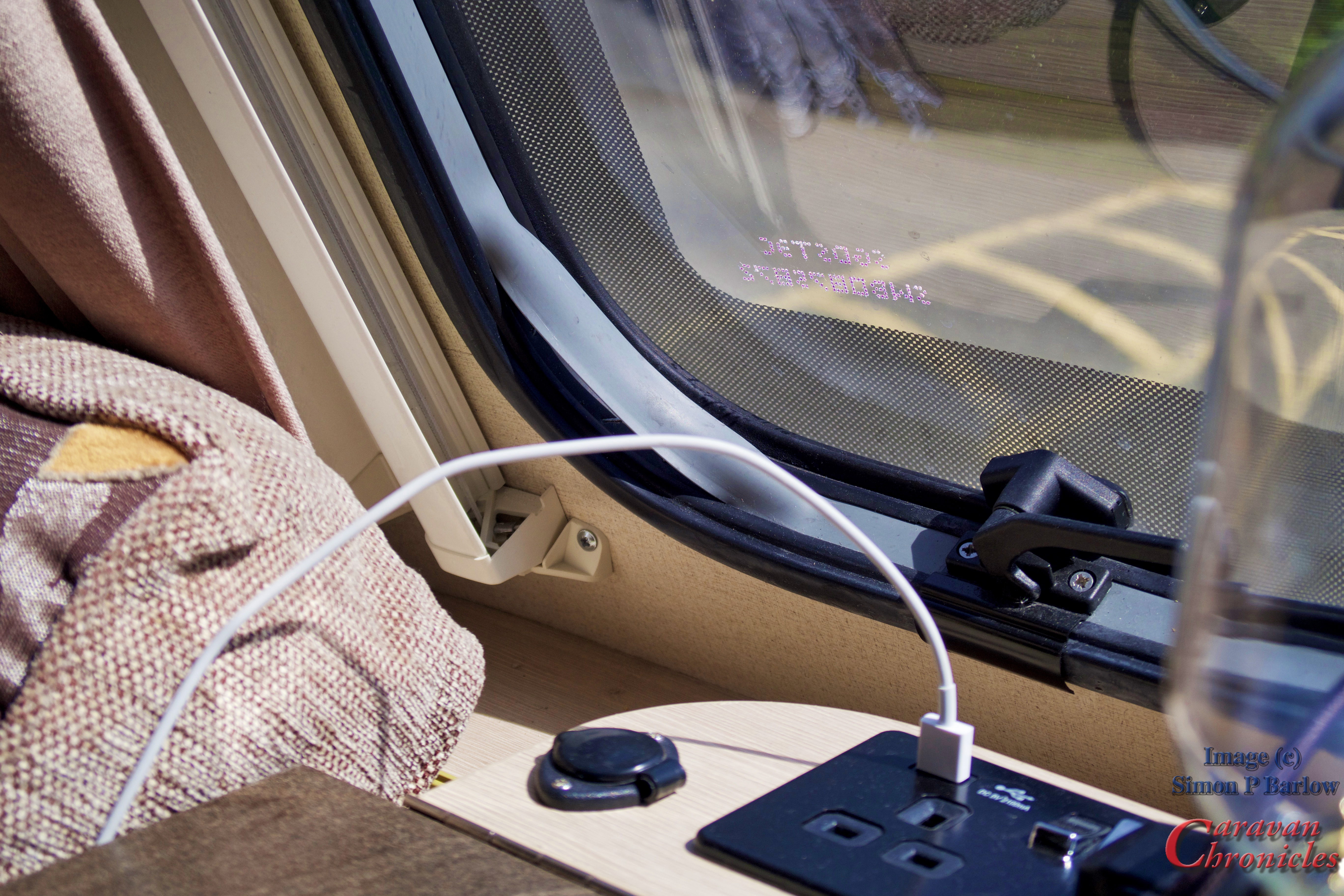
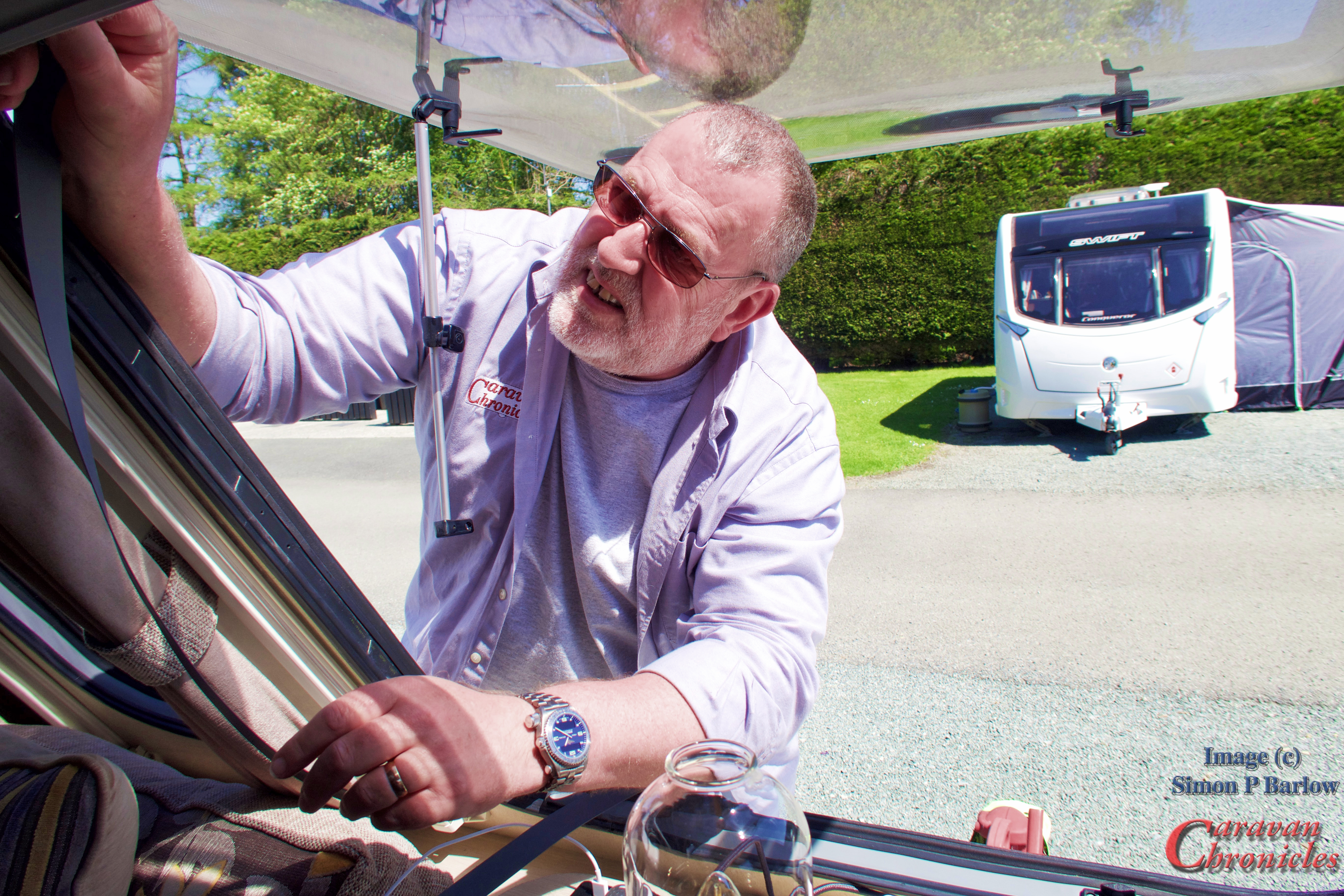
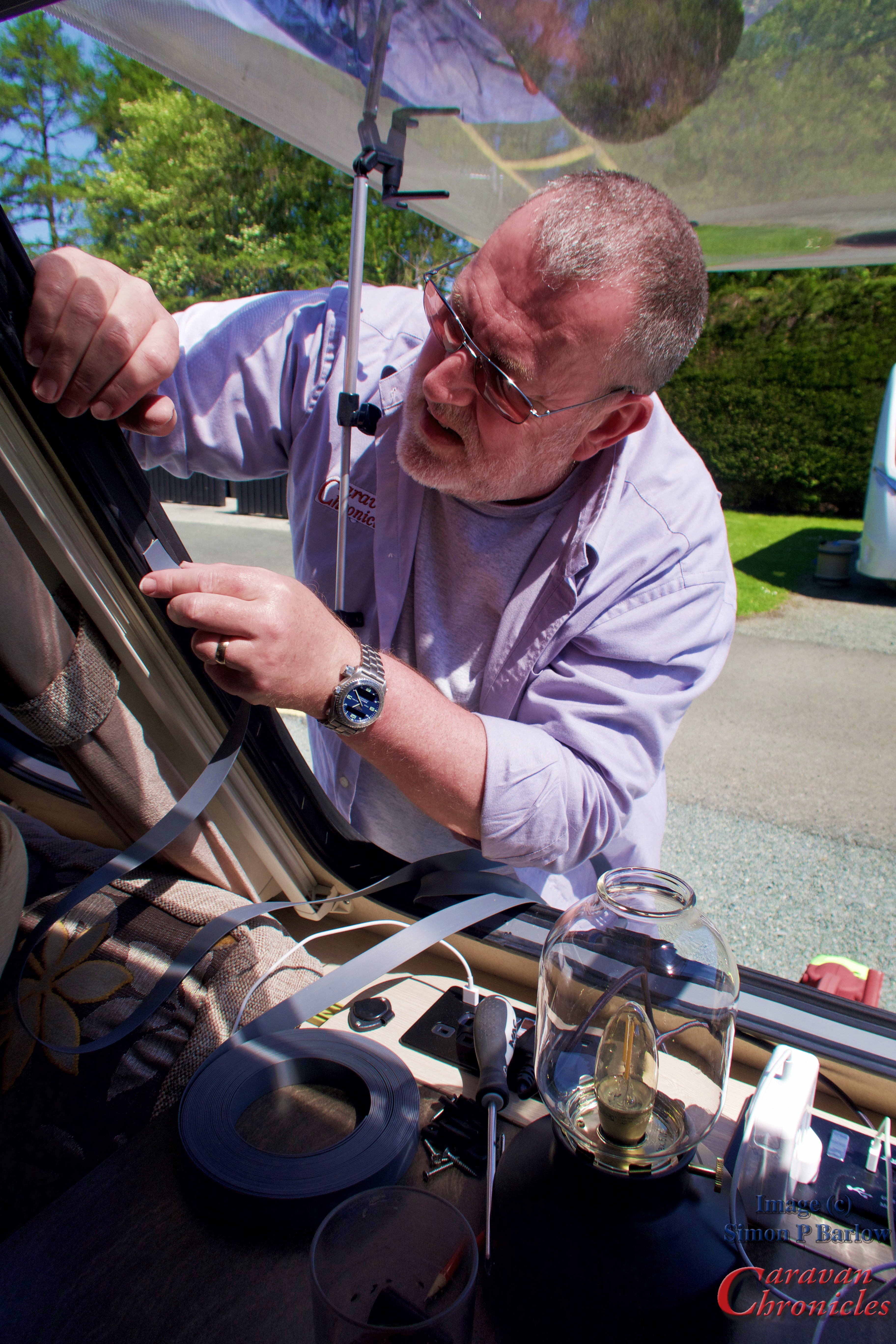
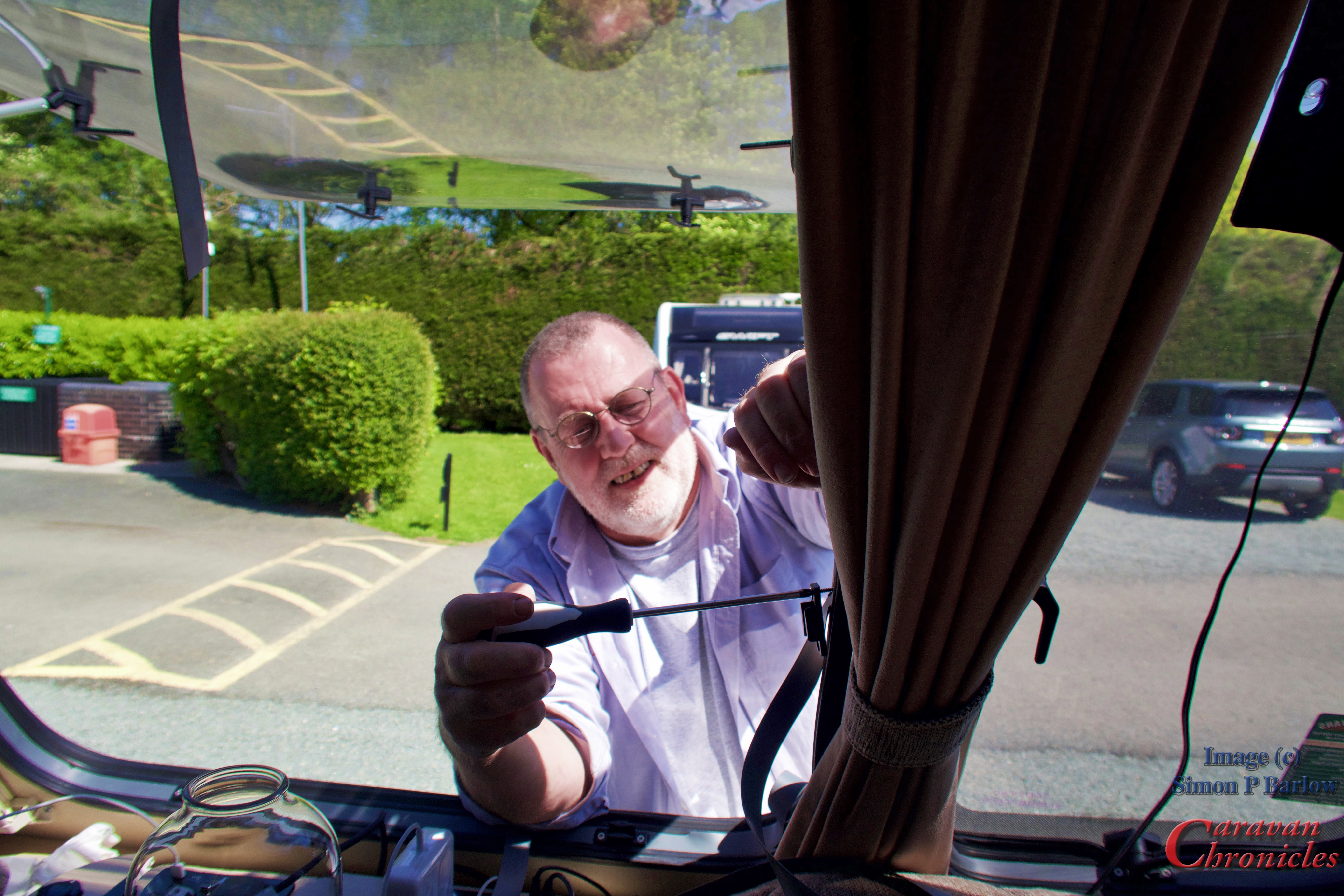
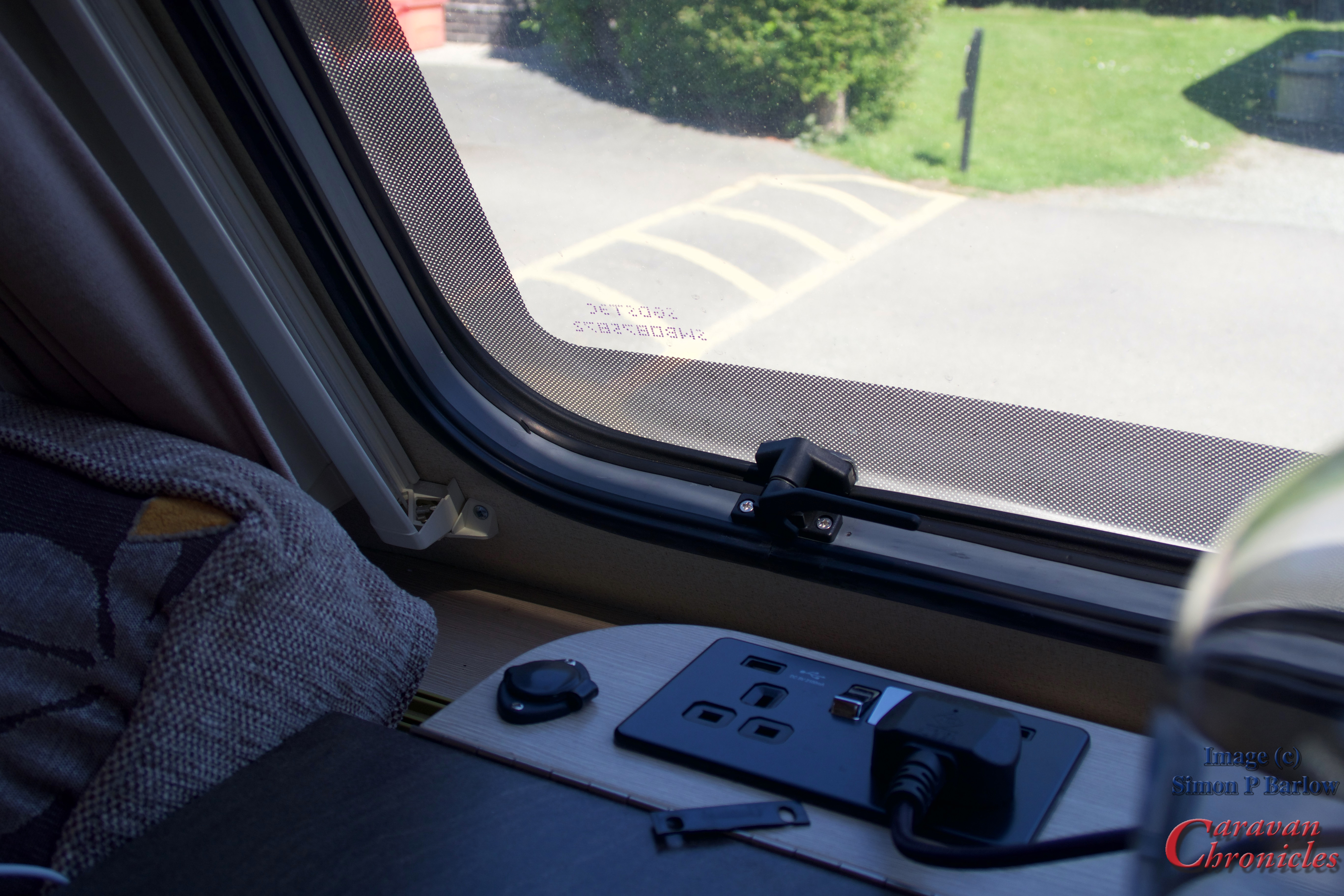
Tackling it from outside, releasing the window hardware on one side – marking where the screw holes were on the rubber in pencil first, was easy enough. Two cross head screws held in each window latch and window strut to the frame of the caravan. The join in the old strip was in the centre at the top and getting a small flat blade screwdriver under the edge was easy and the the strip simply pulled out across the top and down one side.
I started by checking the width. When you order there are two widths available and two colour options. I’d previously checked the existing strip and measured it to be about 23mm wide. On the web site it was listed as 23 mm or 25mm and available in grey air white.The replacement was however around 50% thicker making it a lot stiffer to insert.
However it soon worked out that this additional thickness was to my advantage. I could now push the strip into the recess on the caravan side and simply run a small cross head screwdriver round the outer ‘flange’ (I had to get “flange” in there somewhere… silent nod in the direction of Miranda Hart) and flip it over the edge of the strip. The first corner was a bit tricky but my technique was improving all the time.
Once I’d completed the first section from the top down to the middle of the bottom of the frame, I re-attached the window hardware and removed the opposite side…
This was all going terribly well! It didn’t take too long to remove the hardware from the other side of the window, pull out the old strip and continue around the frame fitting the new strip in.
I wasn’t sure what caused the original material to pull out of the corners but I guessed there might have been some stretching when it was originally installed and maybe repeated heating and cooling over the last 8 years caused it to return to it’s original dimensions. With the new strip, I did try to ensure I’d not pulled it tight and used the handle of a large screwdriver to try and massage the strip into the corners as much as possible.
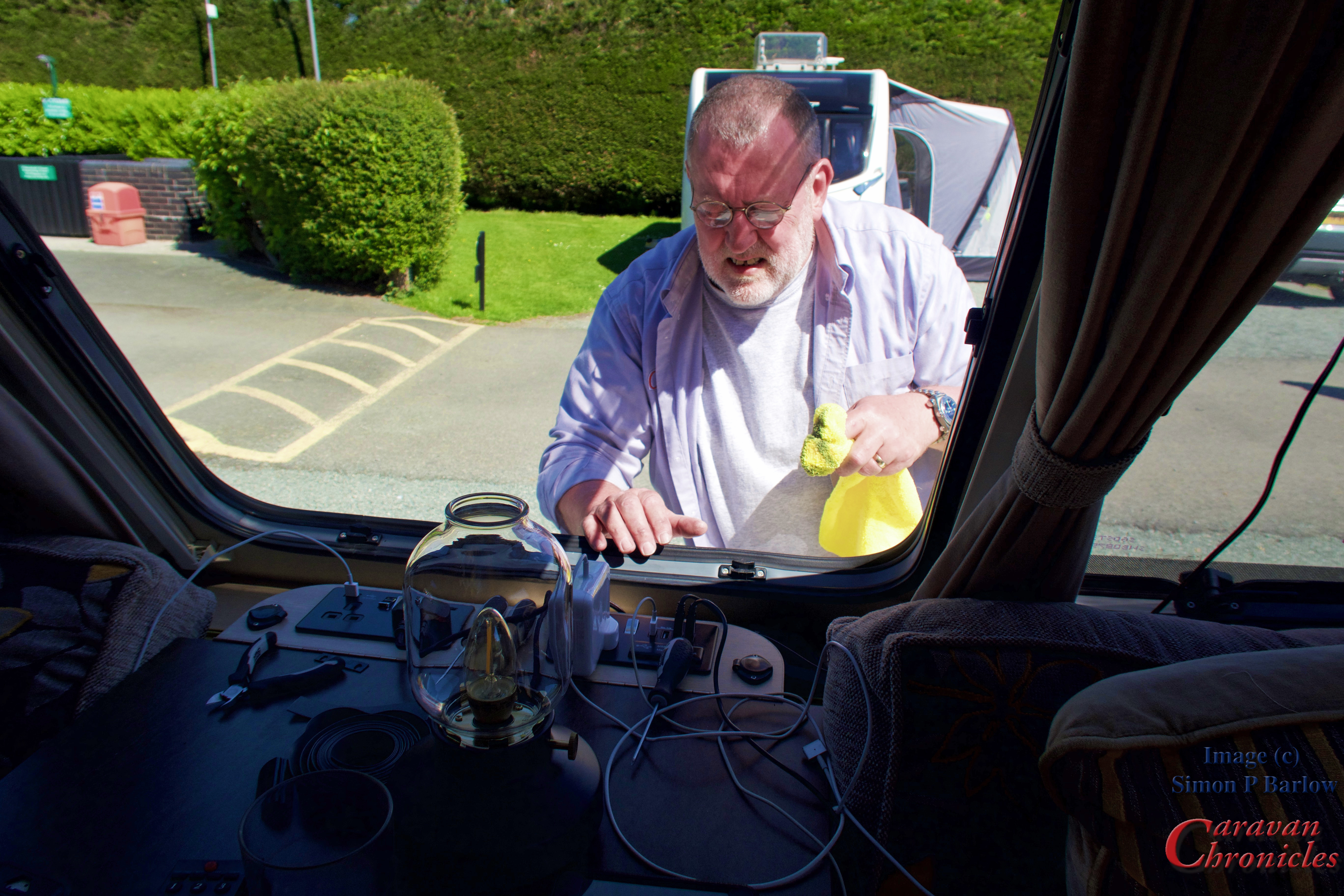
All that remained was to re-install the window hardware on this side and check for fit and finish. Everything seemed OK and Granville was summoned with his cloth…
A light squirt of silicone designed for rubber window seals and a quick polish with a microfibre cloth finished the job off nicely.
All totalled the main centre window took about 30 minutes to complete start to finish. Next trip out up to Barnard Castle in a couple of weeks time…. I’ll get the other two smaller windows done.
Finally, before anyone asks, yes I did choose to do this on the warmest day in North Wales so far this year!
As many of you know I don’t really do reviews… I occasionally buy things and put my thoughts on the product in a post. Companies do contact me and ask if I’d review their ‘Do-Hicky Mark 4’ on the blog and most of the time I decline. Why? Well a lot of them stipulate that they want to see anything I write before it’s posted, we’ll sorry no. If I think it’s crap, I want to be able to say so. There are a couple of companies that I deal with that say “We are thinking of importing/manufacturing/marketing the ‘Functionvardle Mark 9’ we would like to send one for your feedback and not for reviewing on your blog.” They do get an honest feedback and I never mention the company or the product in my blog…. Even if the “Functionvardle Mark 9” makes it to market.
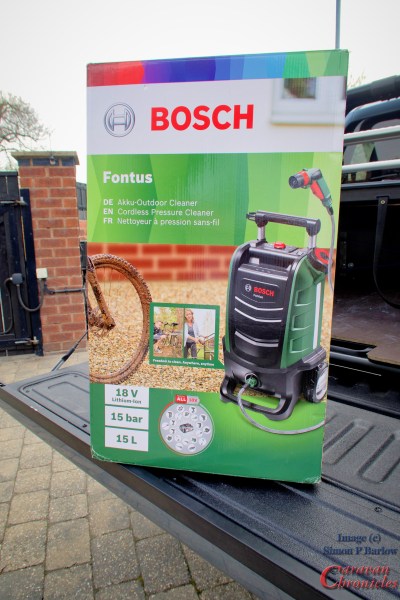
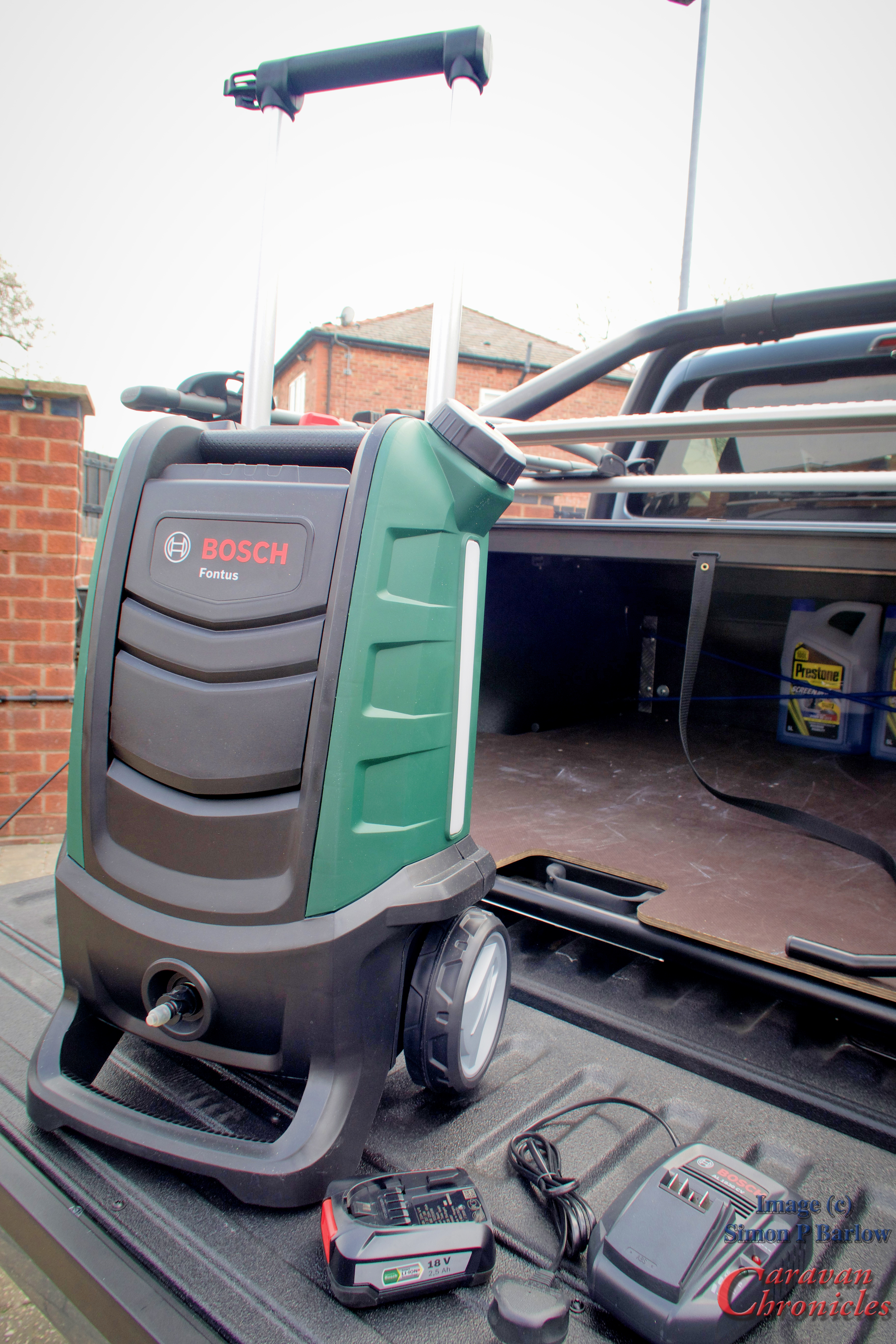
This was slightly different. The PR department simply said “We’d like to send you a Bosch Fontus for review” No requests for editorial control, previews before publishing, promises of ‘it’s yours to keep’ if we like the review. What made me say “Yes” to this particular request?
Well, for a while I’d been procrastinating on coming up with a contrivance of my own that did a similar job. I’d bought one of those bright yellow overgrown pump up spray things when they were on offer for rinsing down the caravan after cleaning… we have no water or electricity at the storage site we use. I’d already got three of those 25 litre water containers that I’d throw in the trailer along with the buckets, brushes, ladders… everything for a cleaning mission down at the caravan storage yard… and I thought it wasn’t beyond the realms of reality (and my awesomeness) to throw a 12 volt pump…. some hose…. a couple of hose connectors…. length of cable…. fuse & fuse holder…… suction pipe… board or box to hold it all… you see where this is going? By the time I’d assembled all the bits found I’d got half of them wrong and moved the goal posts half a dozen times. Apathy set in and I resigned myself to keep pumping the big yellow spray thing. The nice Lady from Bosch PR hit me in a weak moment and I thought “Hmmmmm.”
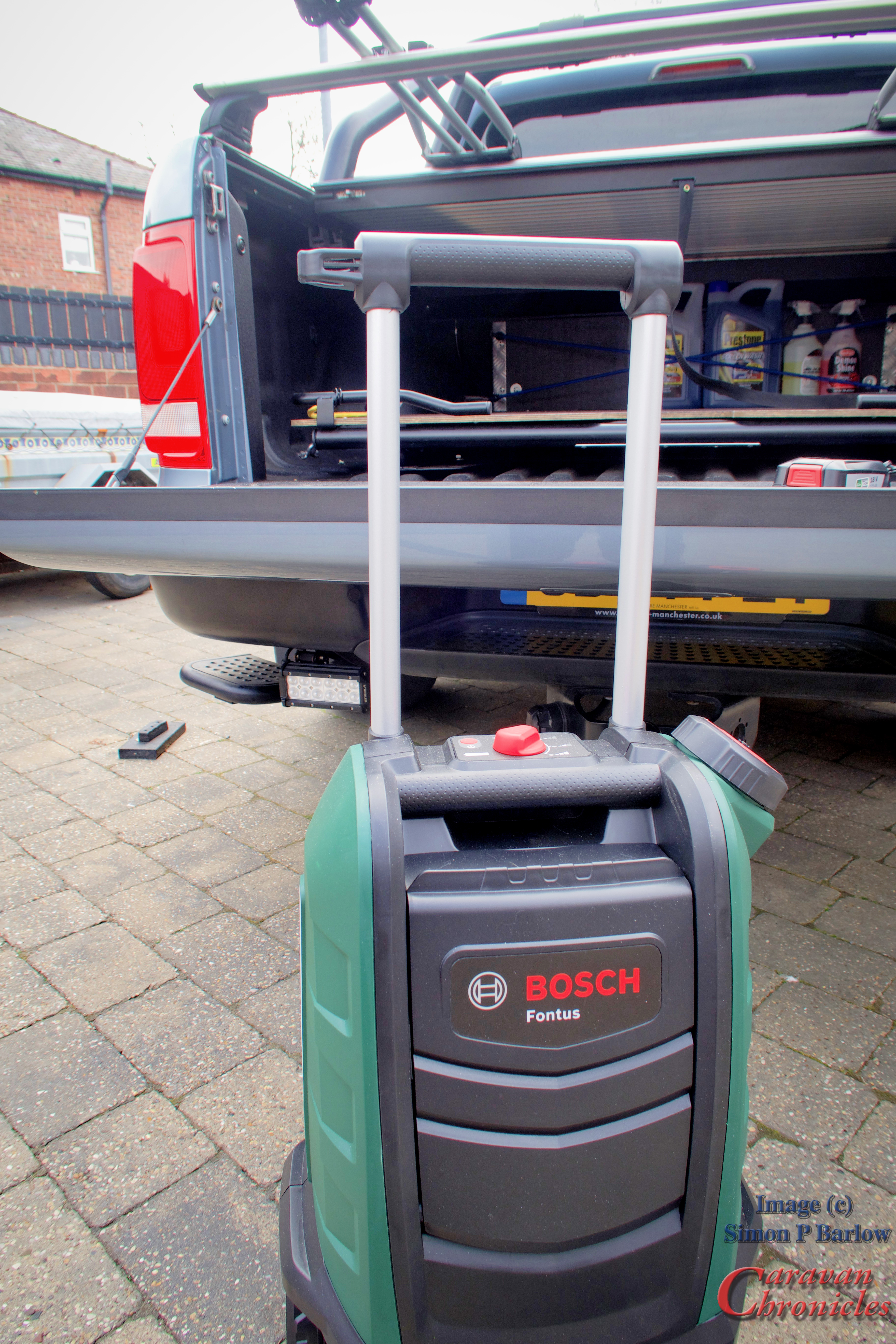
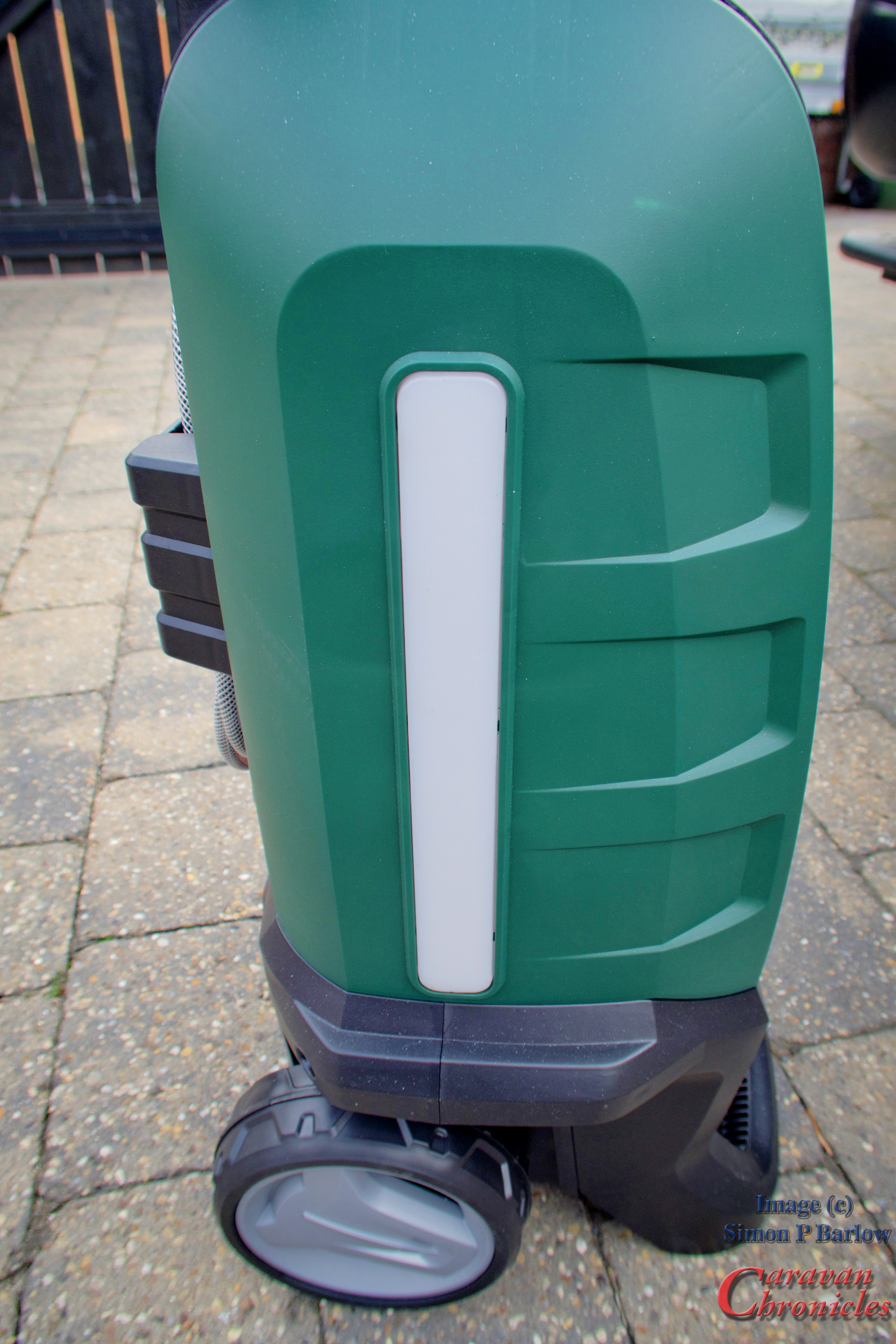
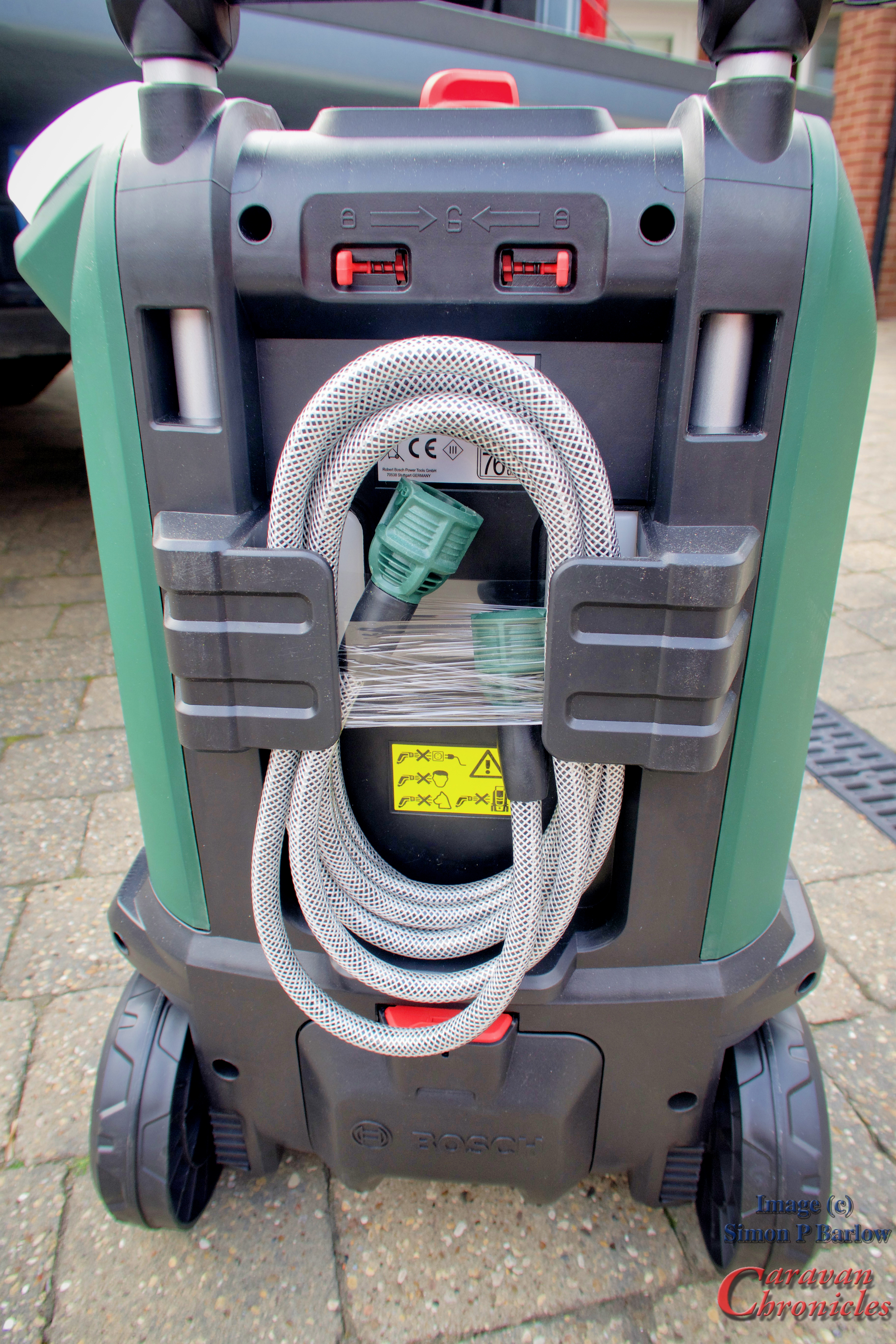
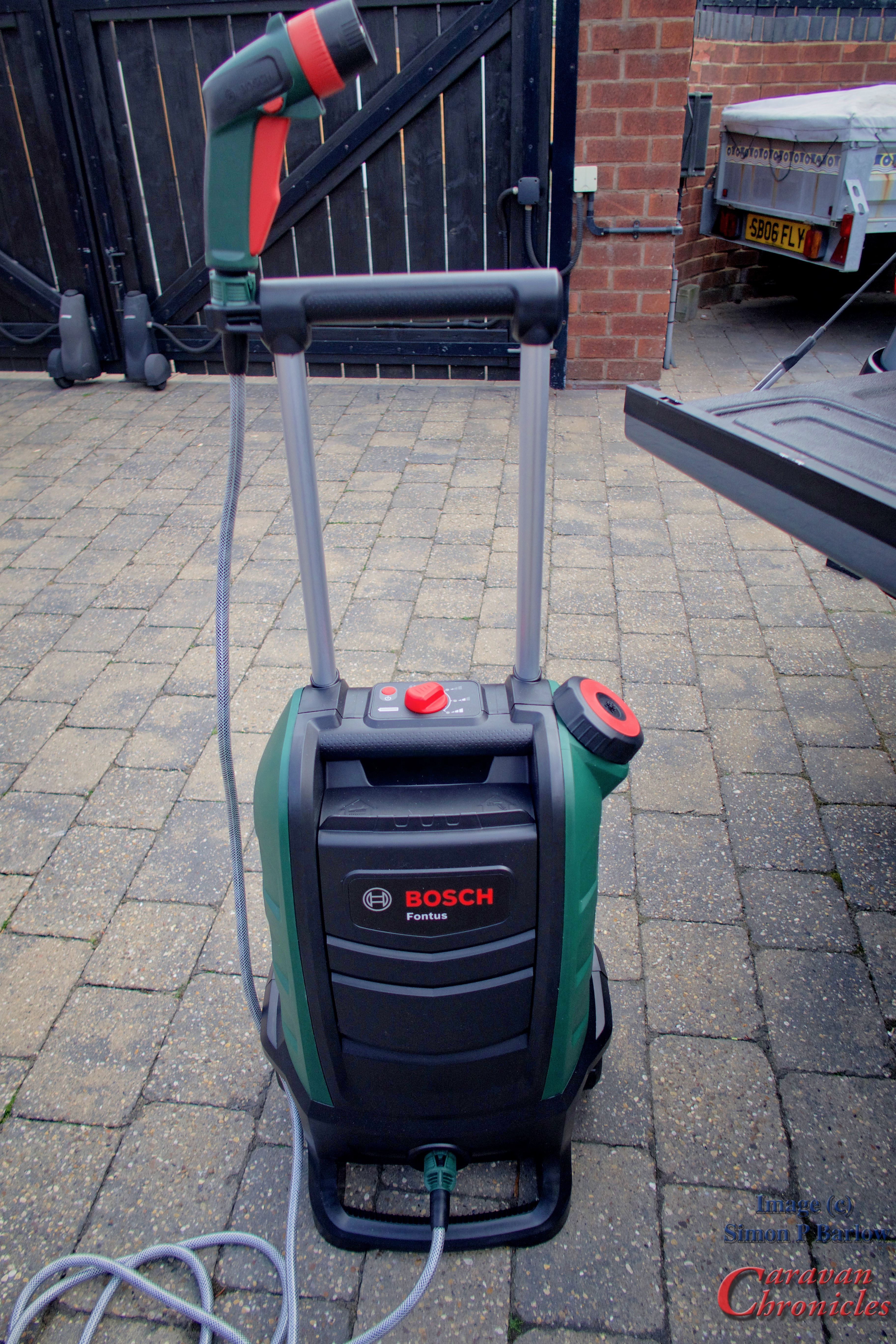
OK why “Fontus” and not “Rechargeable Battery Powered Portable Water Reservoir and Spray“? Fontus, I had to Google it – In ancient Roman religion, Fontus or Fons (plural Fontes, “Font” or “Source”) was a god of wells and springs. So that answers that question. Now you know why I don’t work in product marketing! The box arrived and I was surprised at the heft of the box. The actual unit itself weighs in at just under 10 Kgs…. and has a water reservoir capacity of 15 litres.
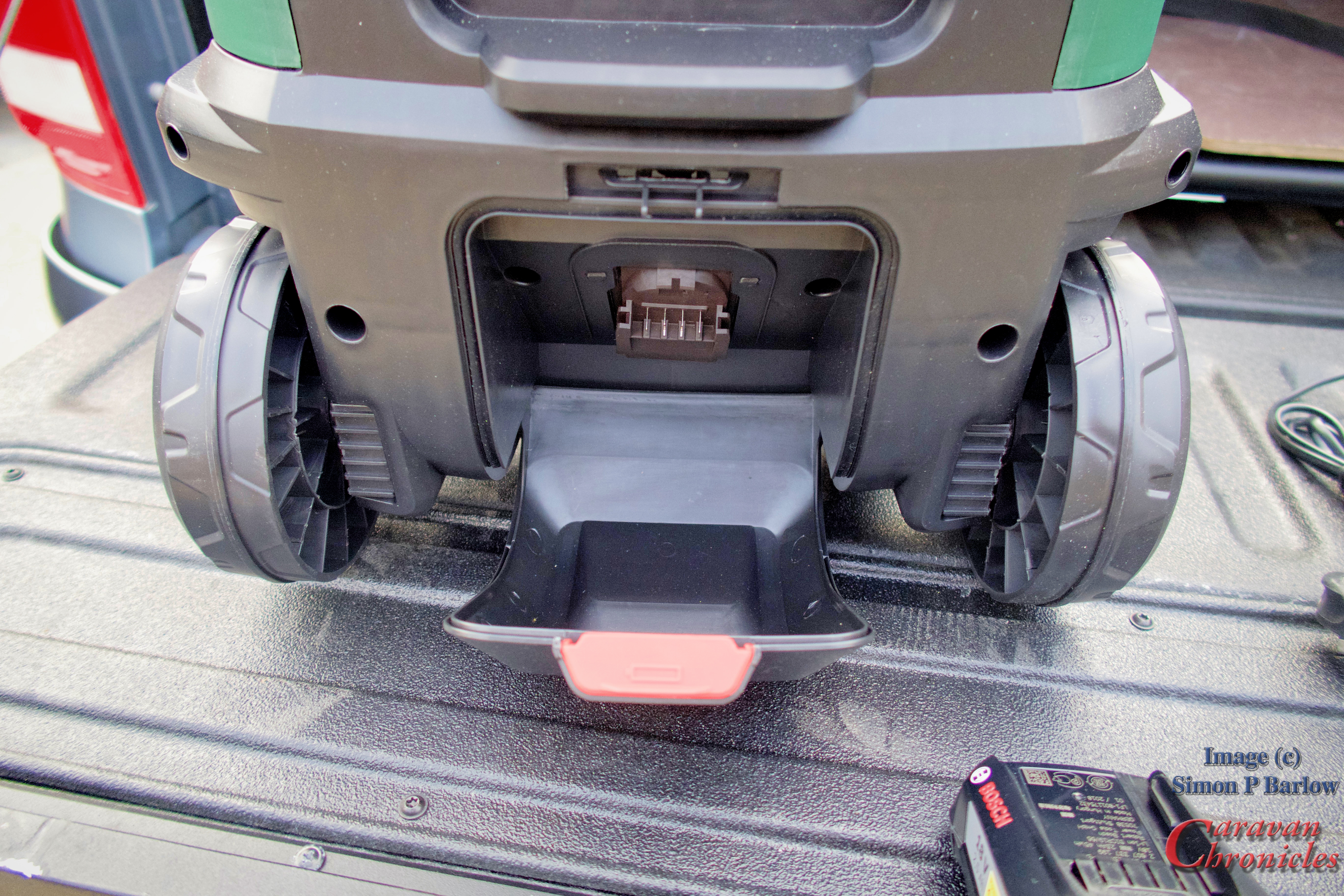
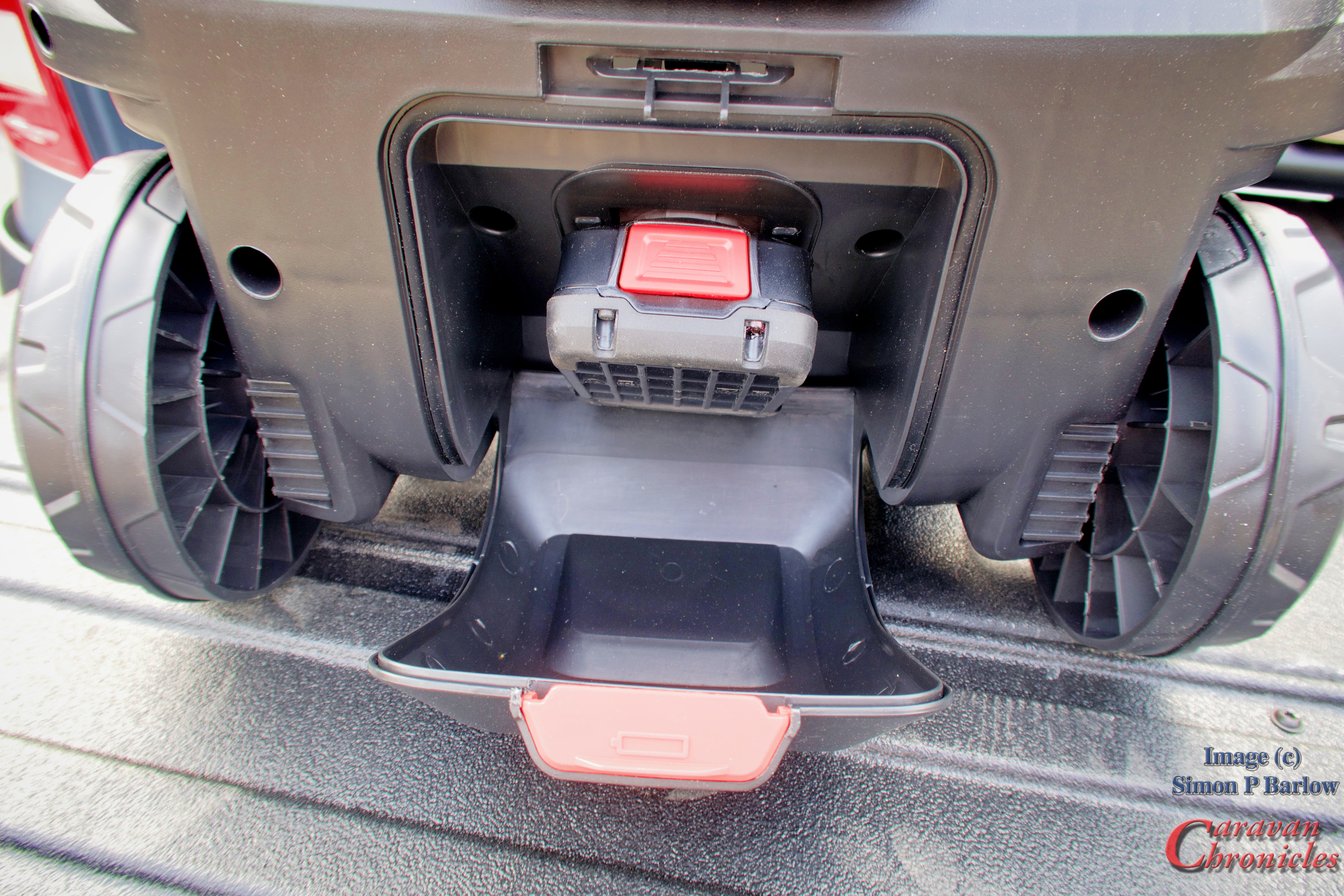
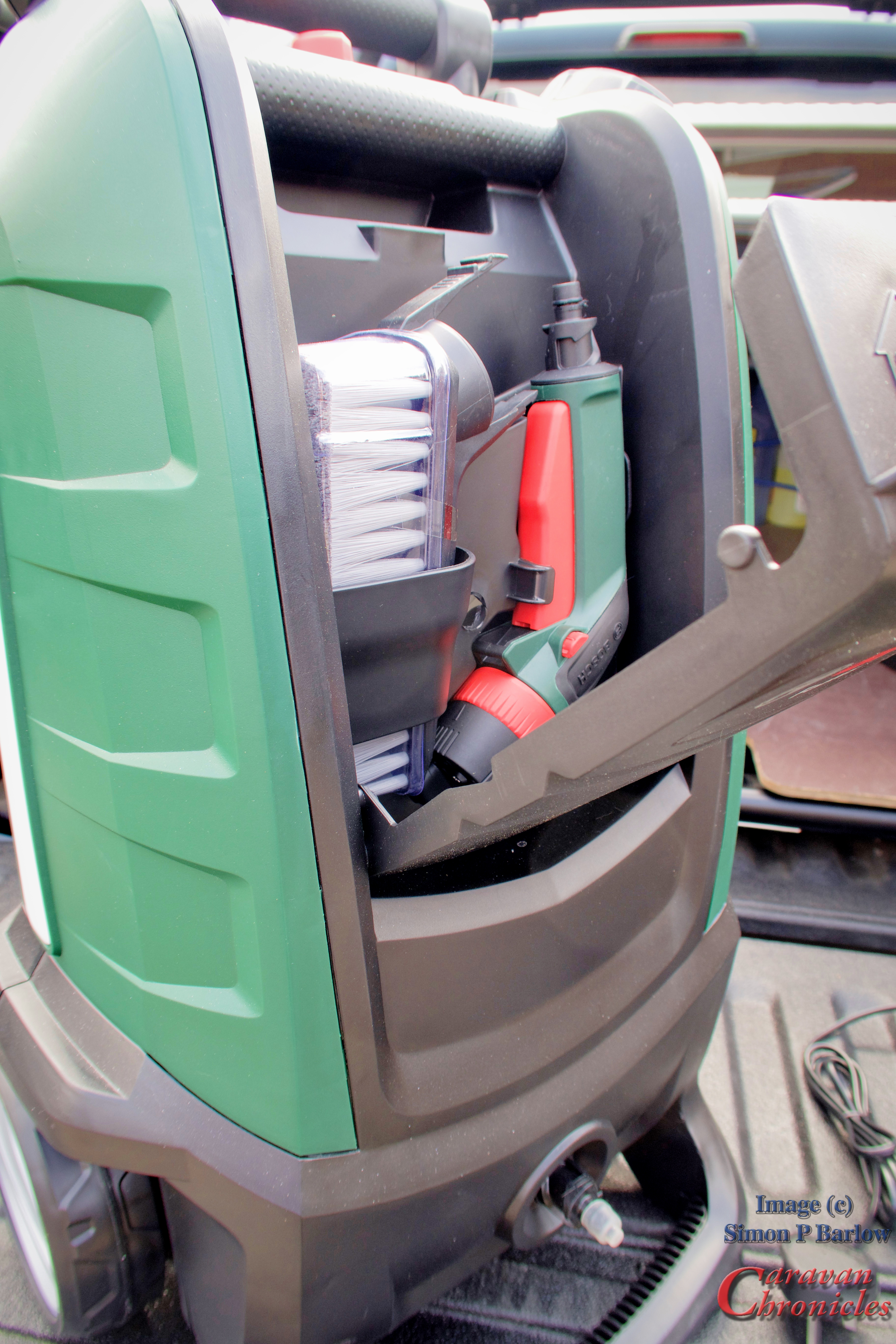
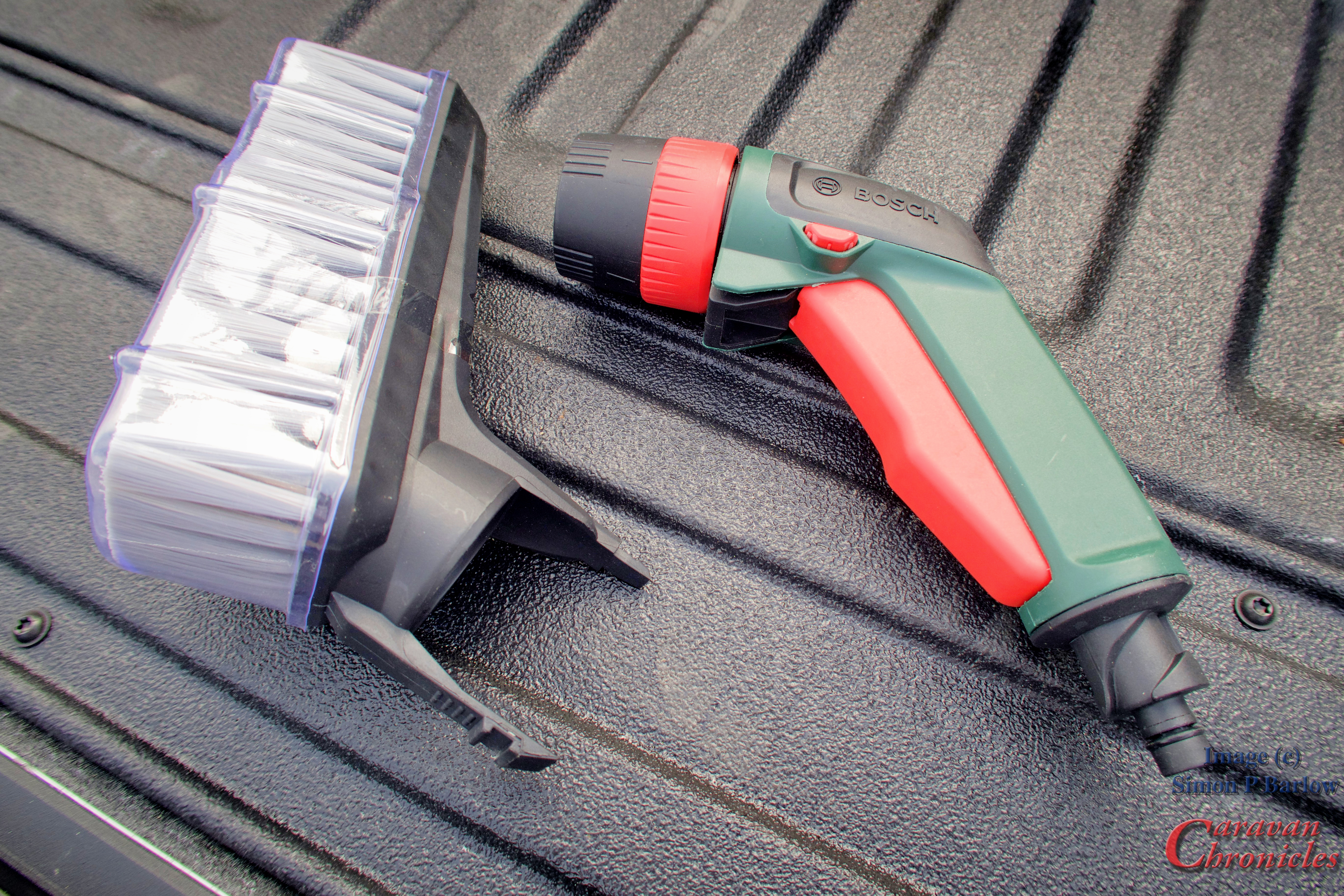
So what is it… well basically it’s a Rechargeable Battery Powered Portable Water Reservoir and Spray Unit. You fill it up with water, insert the rechargeable battery, connect the included hose and spray head, push the ON button and squeeze the trigger. Is it a jet wash? No, it runs at a max of around 1.5 MPa that’s 15 Bar or 217 PSI to you or me or if you are really old 14.8 Atmospheres. So it’s not a jet washer.
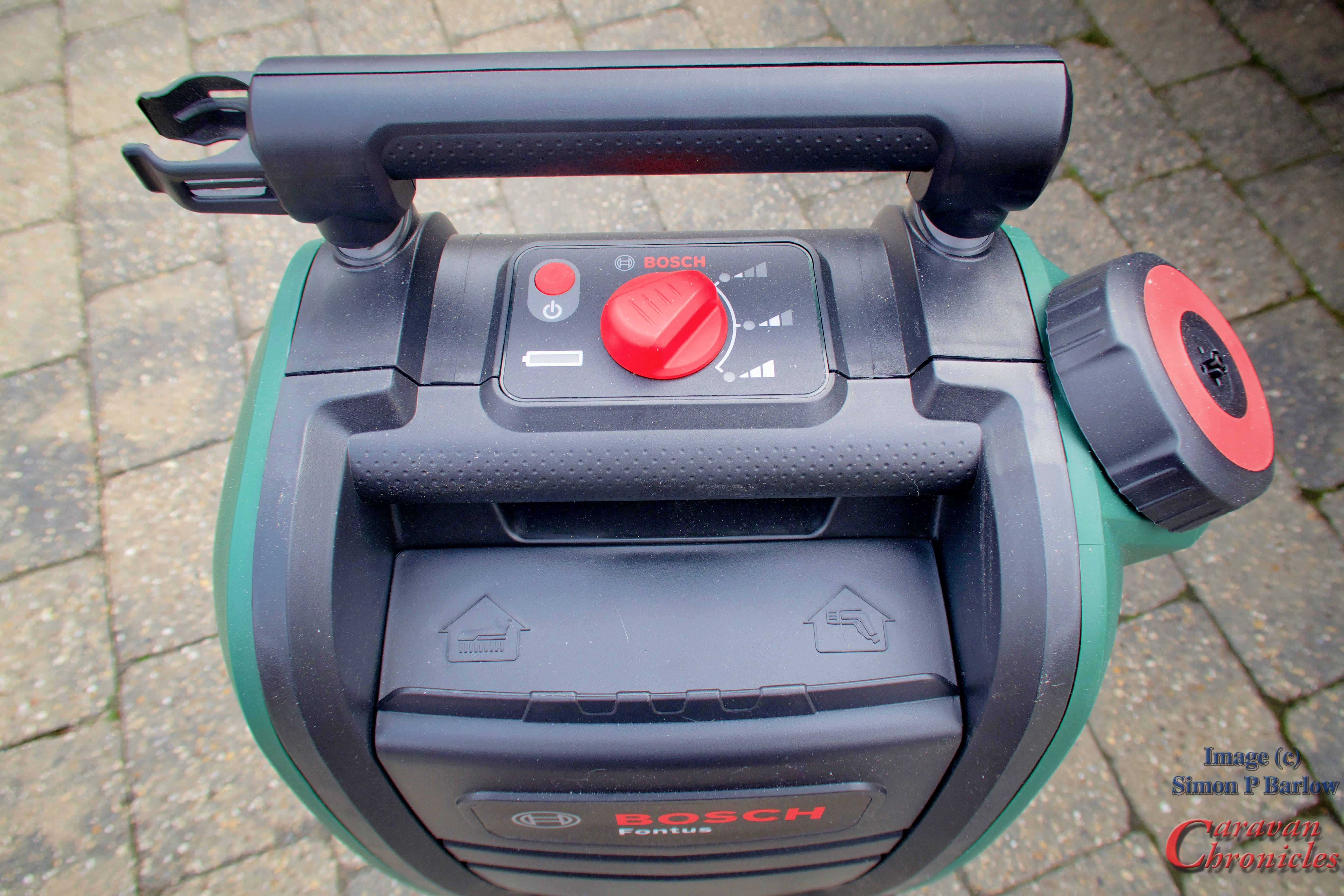
Now here is the thing that has me fascinated. On the top there is a three position power switch. While testing (read playing around) I could tell it changed the power… but also it seemed to change the amount of water without affecting the spray pattern or distance it should spray the jet of water I could do the same width ‘fan’ of water on each of the three power settings but with three volumes of water. (OK I know the physics behind it… no need to comment.)
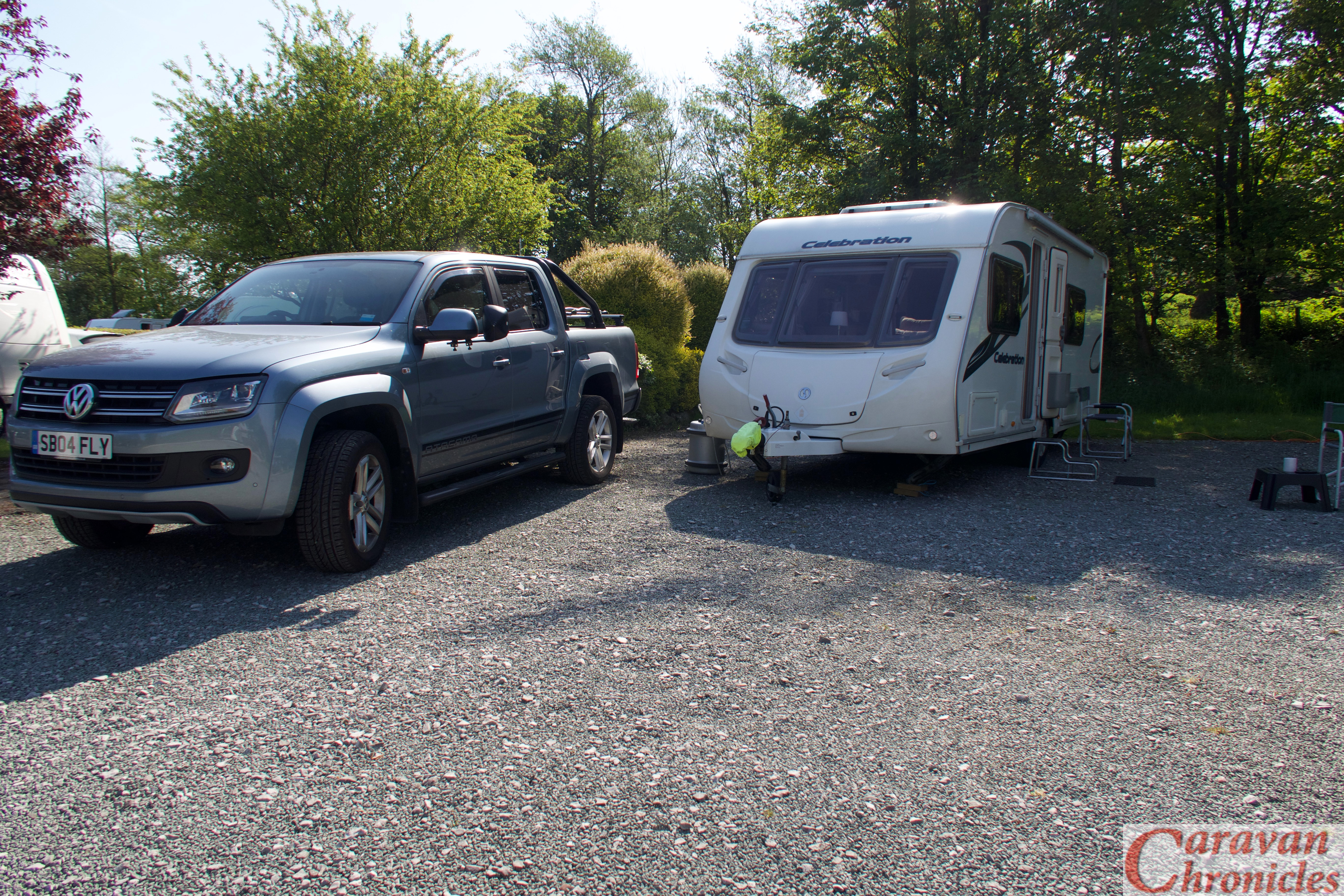
When washing the car when it comes to rinsing off I normally have my hosepipe rose set on ‘rain’ so its a constant rain shower and proceed to go round the whole vehicle rinsing off the shampoo (yes I shampoo my vehicles… get over it) Now with the Fontus I used the horizontal fan setting not he trigger and could literal have a line of water that I just moved down the body panel pushing the shampoo suds down as it went. I was amazed I could do the whole of the VW Amarok.. Which isn’t small… on less than 15 litres on the lowest power setting. That is some serious water saving there.
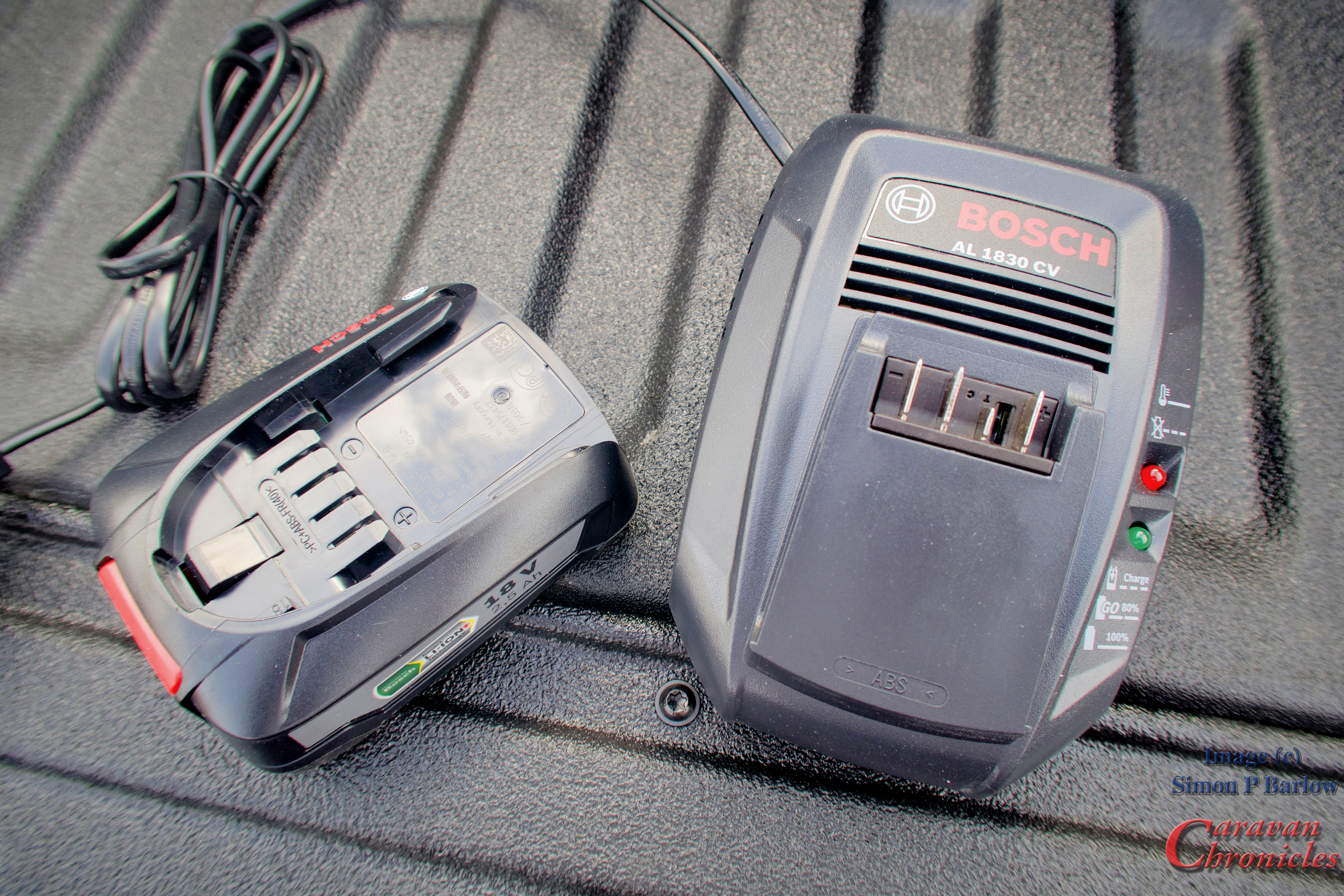
The battery duration is unknown at the moment. It comes complete with a 18 volt 2.5 Ah battery and charger, that are as far as I know the same Bosch fitting as used on many of their power tools. SO if you already have Bosch power tools it’s Billy Bonus time… another charger and battery for your tools and spare batteries for your Fontus. (Curse my early lifestyle choices for going with Makita and DeWalt.) I believe there are also 4.0Ah and 6.0Ah batteries available in the range.
Toy or Tool?
After first thinking what a great idea…. I had a look at the price… an eye watering mahhosive amount… list price. However as everyone knows “Google is you friend” a quick Google later and John Lewis & Partners have it down to £209* (*at the time of writing) Now that is not a small amount so the question is… expensive toy or tool? Well, After my initial “testing [read playing about again] I’d been jet washing in the front garden over Easter… around five hours worth of jet washing in fact and the front door and windows were to say the least showing the dried on signs of mud splattering. Now Sue is understanding, but waiting for the window cleaner to deal with it was not an excuse I was going to get away with! Not wanting to drag the hosepipe round to the front of the house again, I had a “Ha.. I have just the tool for that” moment and having already recharged the battery and topped off the water tank I wheeled the Bosch Fontus out of the garage and round to the front of the house. A quick light spray to wet each window and door, wipe down with a soapy sponge and rinse off with the Fontus. Done in ten minutes. It’s also completed several other little tasks around the home now too.
Would I take it with me on a caravan trip?…. If we were taking the bikes, yes. I have used a dog wash station in the past (I know I wasn’t supposed to) and as long as I don’t use a chemical on the bikes, just rely on pure water and the included brush I should be OK washing the bikes on the grass. I wouldn’t use the brush on a vehicle’s bodywork (but I’m a bit OCD about things like that) nor would I wash the vehicle or caravan for that matter, on a pitch.
A few Q and A’s…
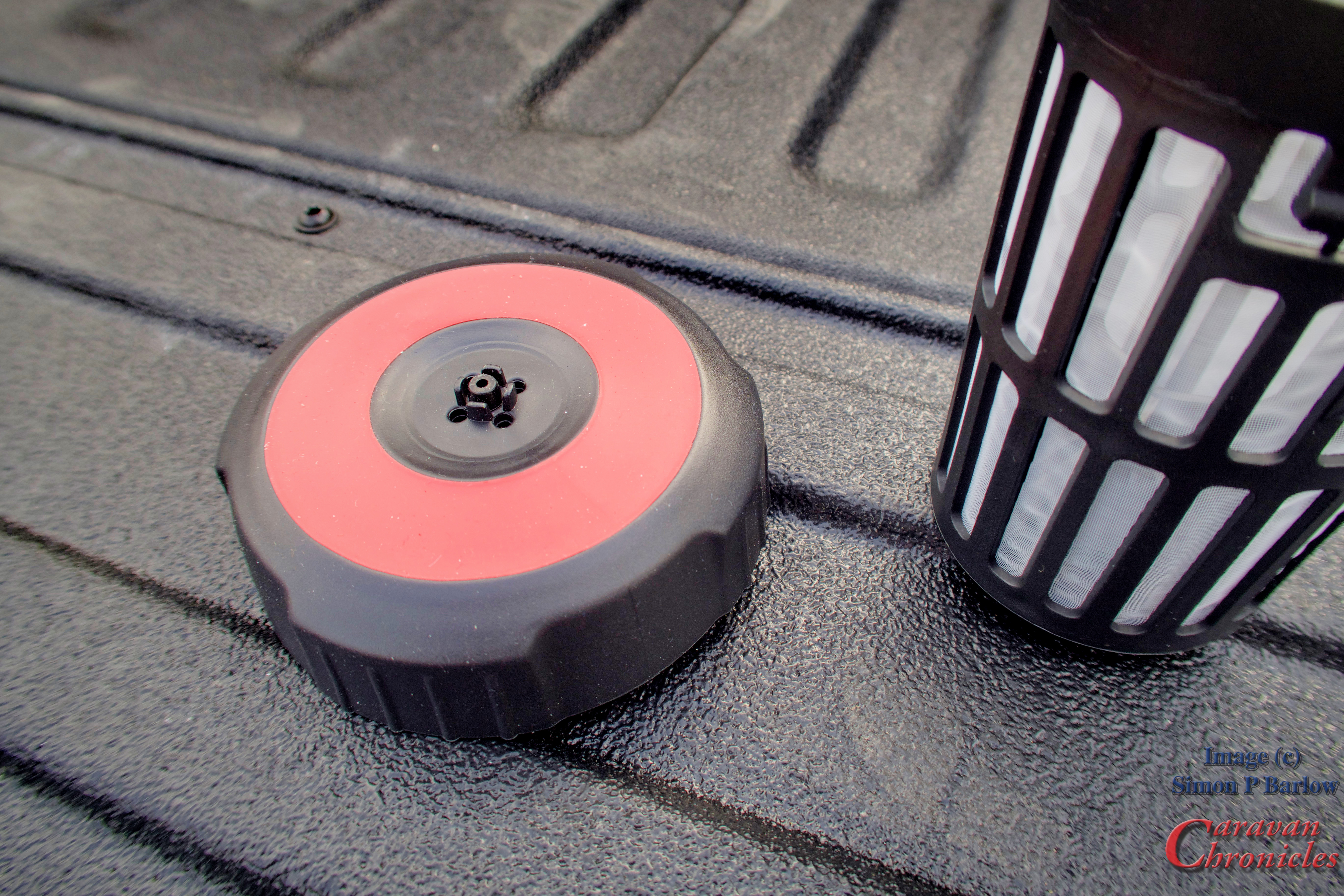
Can it be carried full of water? – Yep, I also tried it on its back, the filler cap seems to have an air admittance valve that stops water from leaking out. I wouldn’t do it for long periods though on it’s back… just the ten minute trip to the caravan storage yard. Upright shouldn’t be a problem I would have thought.
Can you spray anything else? – Nope… fresh water only.
Can you see how much water is in the tank?– Yes the tank has a site gauge in each side.
Can you store it full of water? – I did for few days, however it cautions you not to do so in the instructions.
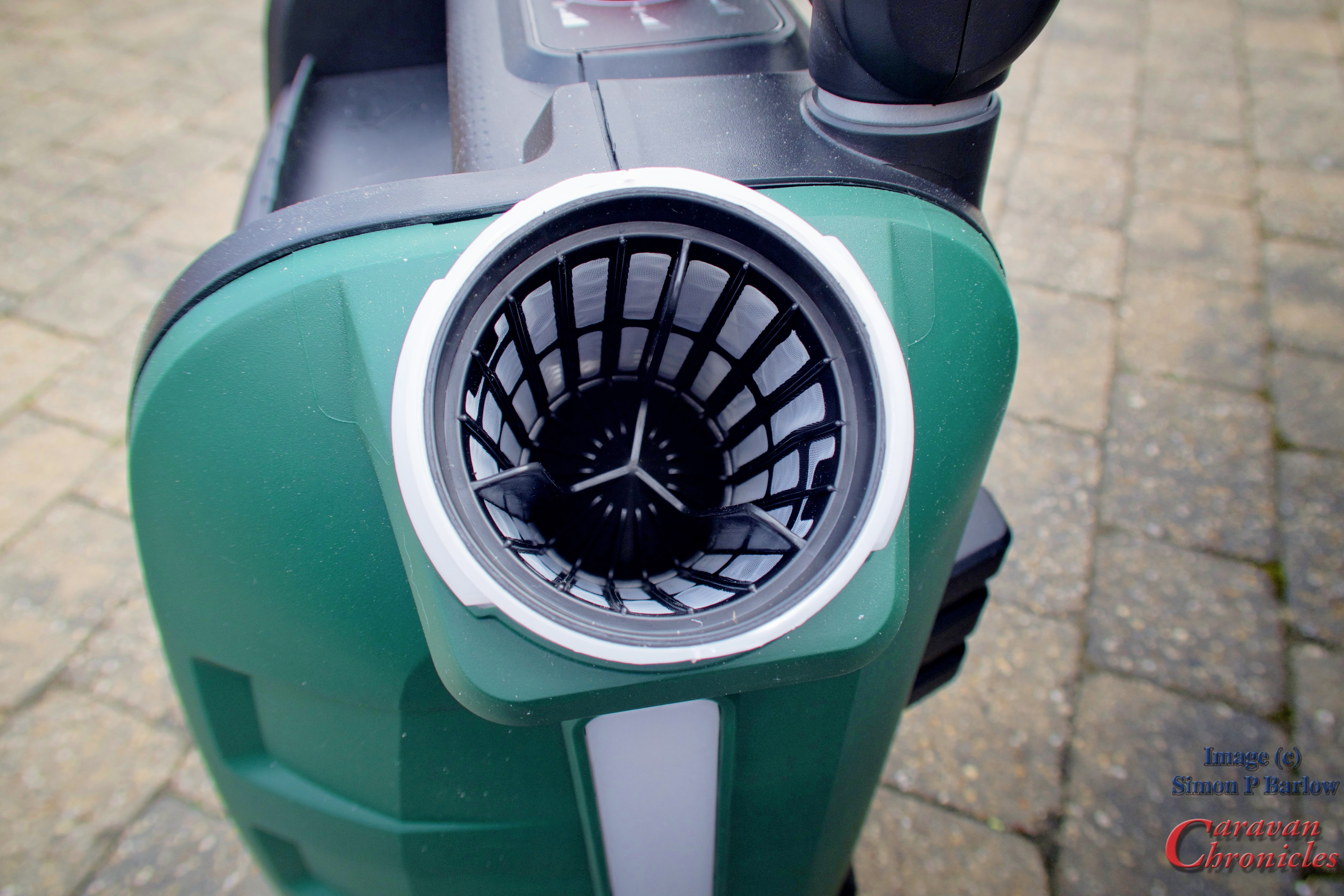
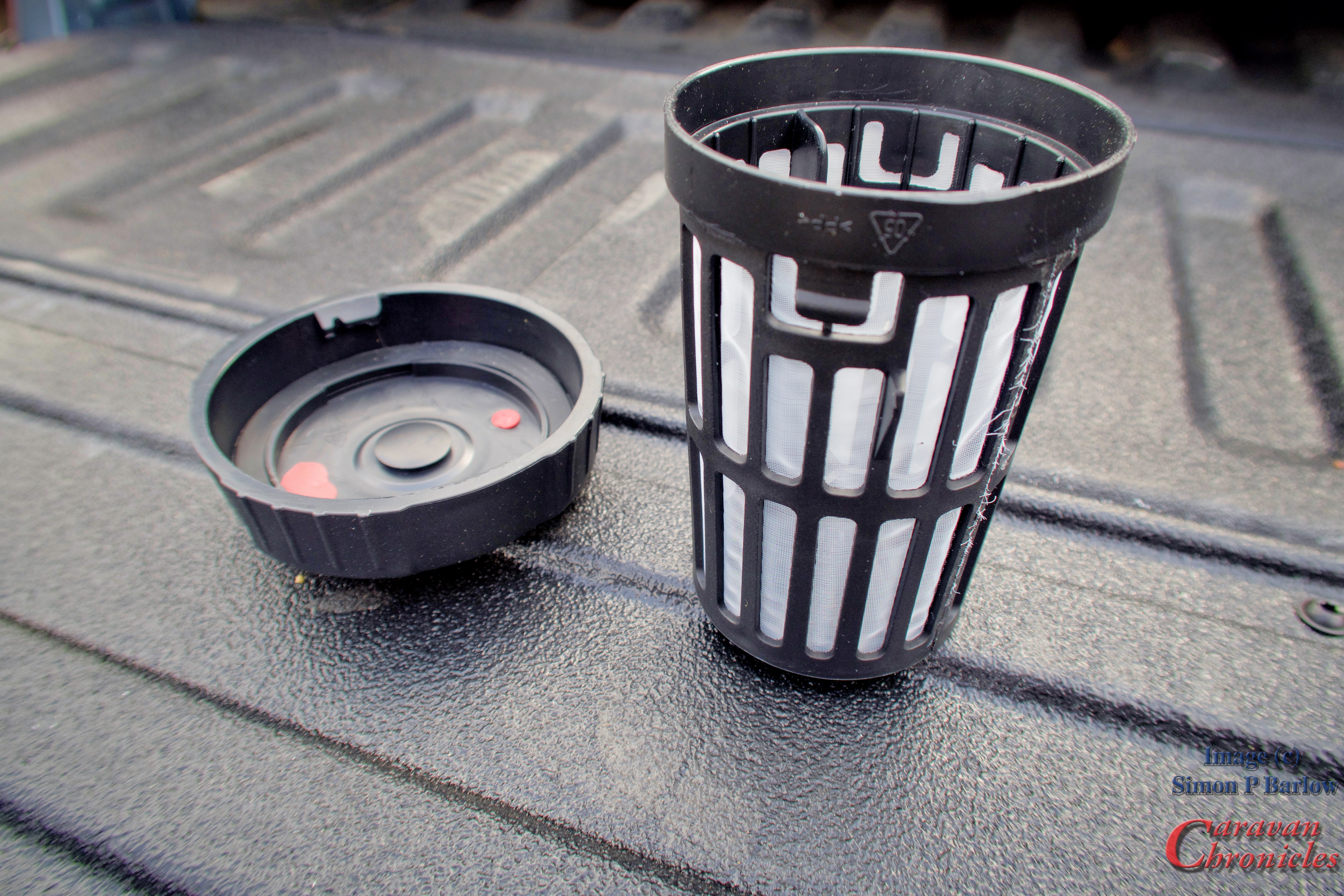
How big is the filler cap?– It’s about the same size as an Aquarol filler cap and has a removable mesh filter trap… I could get a Hoselock fitting on the end of my hosepipe to fit through the opening and wedge in the filter when filling it. It’s also easy to poor water in from a container.
How heavy is it full? – 9.8 Kgs empty and 24.8 Kg’s full… so about two bags of sugar heavier than your airline baggage allowance.
How long does the battery last? – well I certainly got through 30 litres of water (2 tanks) on the low power setting (which was all I needed for rinsing off) and looking at the battery indicator maybe I could have made inroads to a third tank. I don’t know if the battery indicator is liner or not.
How long does it take the battery to recharge? – From battery empty indicator to full with the supplied AL1830 CV charger 60 minutes… or about 1 cup of tea, two digestives and a quick catchup with your neighbour.
Is it easy to move? – When full it trundles around just like one of the wheeled over head locker type pieces of luggage. If you can drive one of those… you can handle this.
Will 15 litres be enough to rinse a caravan? – Yes I could do it with 15 litres. But it’s easy just to have a container with a bit more water.
What fittings connect the hose, can I use a garden hose? – The fittings are a twist lock type.. not seen them before but I did like the fit and function of them. They seem quite suitable for the task. Why would you want to use a garden hose… just wheel it to where you need it.
What else can it be used for? – Washing off salt water from wet suits, boat trailer, outboard engines, muddy dogs, muddy bikes, wellies, washing windows, washing the beach off anything…. making sure your BBQ is properly extinguished (as I write this I keep getting the smell of burning moorland wafting in through the open windows into the office).
Anything Else?
Only two things… do they make a 12 volt ‘in car’ charger for that battery? That would be really cool and…. nope I got nothing else. That will be one thing then.
Final thoughts…
If I already had a couple of Bosh power tools that used the same battery pattern and was thinking about an additional battery and charger… then the price makes it a good deal. An extra tool that gives you an extra battery and charger into your Bosch ensemble of kit.
The hose is not as pliable as I’d have personally liked, but then again looking at it it’s not going to get damaged easily.
It is a bit of a ‘luxury’ bit of kit… but then again once you start using it… I’ll stop there, Sue might be reading this.
Do I want one? Well I don’t really want to give this one back.
I seem to have had an increase over the last few weeks of emails from people involved in building, modifying or upgrading Overland Expedition type vehicles. I think some of my posts must have been quoted or referenced in related forums. A lot of questions are related to roughly the same group of topics so I thought I’d produce three drawings to help answer the bulk of the questions. If you read down the comments on some posts I have answered a lot of specifics that might help. I’ve merged a lot of the questions into a paraphrased ones…
Question 1
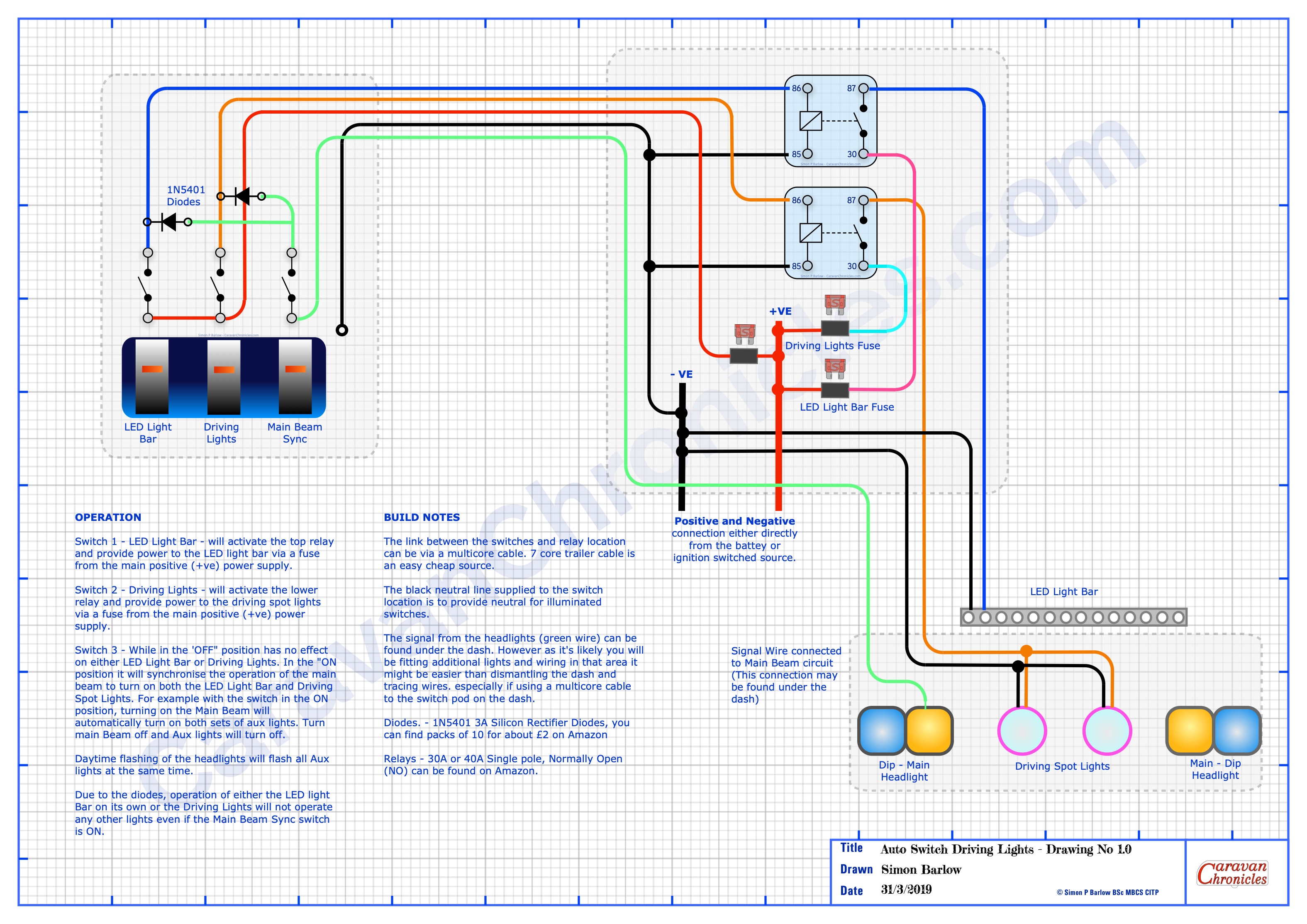
“How can I get my LED light bar and spotlights to come on when I use my main beam switch but I want to disable them when on the highway?”
The questions were from a number of 4 x 4 Off Road enthusiasts and Overland vehicle people. Simplest way I could come up with was using a couple of diodes (details on the drawing) Three switches… one for LED Light Bar, One for Driving Lights and one that allows you to sync the LED Light Bar and Driving Lights to the operation of the main beam in the vehicle. Flash the main beam and with the Sink Switch ON… all the lights will flash. Note… this may be illegal in some countries, so having the option to turn off the facility when on the roads ‘should’ keep you within the law…. don’t quote me on it!!!
Question 2
“Whats the best layout for connecting a solar controller / inverter / isolation switch to my battery bank?”
The best schematic I could come up with that is flexible for most situations. I’ve put a few notes on the drawing. The various components I’ve drawn generically…. all can be found at your preferred supplier.
Question 3
“What’s the basic layout of the vehicle fridge and leisure battery charing circuit?
This I think has come from a few on-line discussions relating to poor performance of the fridge and leisure battery charing in older 4 x 4 vehicles. I was receiving for a while a number of questions related to upgrading older installations. I also receive a number of emails asking how to add the facility of fridge and leisure battery charging to older vehicles and upgrade the 7 pin tow socket or old military lights socket.
You can download the PDF’s and are free to use for personal use. If you post them on other forums I’d appreciate a link back to this page and/or an acknowledgement.
I’d appreciate any feed back in the comments below.
Sometimes things you take for granted and have in your toolbox of fault-finding tricks are a dark art to others.
I was talking someone through a bit of fault-finding on their vehicle and asked if they had measured the current in the circuit. “No” came back the answer. I asked what type of fuse and rating it was and asked the person to just put their voltmeter across the fuse and tell me the voltage across the fuse. “Ah… that’s about 3.2 amps then” I said.
“How do you know that?”
Simple really – all fuses have a resistance and if you know that you can work out the current from the voltage drop. Even simpler really – there are tables for various fuses that have it all worked out for you. I have a selection collected over the years stuffed into the lid of my tool box, along with a lot of other junk paperwork!
I created a volt drop table based on PEC (Pacific Engineering Corporation) fuses that are supplied as OEM fuses in most Japanese, Korean and European vehicles however it is pretty accurate for almost all other makes of the same type of fuse. I printed mine out, laminated them and added them to the collection in the top of my toolbox.
It’s quite easy to use. Just set your multimeter to read DC mV and read the voltage displayed. Now select the fuse type, in this case an ATO fuse – the most common used in vehicles, caravans and motorhomes and from the chart look down the left column until you see the voltage measurement that matches the one on your multimeter… lets say 0.011 volts (11mV)
The fuse is a red 10 Amp fuse so follow the 0.011 volt line across until you get to the 10 Amp fuse column and read the current figure… in this case 1.3547 or 1.3 Amps. It’s as easy as that, no need to break the circuit to put your multimeter in as an Ammeter.
I have a couple of these cheap handy plug-in ammeter’s… although they do have limitations and only work up to 20 Amps.
Although the table is based on PEC ATO/ATC and MINI fuses (download info below) it is pretty close with most manufacturers fuses and as a general reference for fault-finding will be good enough to 0.1 amp.
If you need to know the actual current through a circuit, you need to use an ammeter and not rely on tables but for general work they are close enough.
These tables also come in handy if you are trying to find out why a battery is draining. Without turning anything on it is easy to run through a fusebox checking to see if any circuits have a current drain on them without having to constantly pull fuses and insert an ammeter, which sometimes can upset or reset the circuit you are working on.
One thing to remember with this test if you’re tracing a fault, is you are only measuring the volt drop across the fuse to determine current. You really need to know how much current you should be drawing. For example, If I was testing the 12 volt fridge circuit fuse and I only got a voltage drop across the fuse that calculates to 6 Amps then I’d know there was an issue somewhere along the circuit as I’d be expecting around 10 Amps or more.
A word from our Safety Officer…
Oscar would like to remind you that working on a live circuit has risks and never attempt to undertake volt drop measurements on mains circuits. Most cheap multimeters do not have the internal protection or fused test leads. Be safe. Be like Oscar.
You can down load the table in PDF format (4 pages) and either print them out or save them to your device from the following link:Fuse Voltage Drop Table
Unfortunately due to a lot of my drawings and text being used elsewhere without credit back to CaravanChronicles.com I’ve had to start putting watermarks on a lot of things. I hope this doesn’t make the table too difficult to read.
P.S. Someone told me that everything on the internet can be improved by cats and my “likes” would go through the roof!
After a quick four-day break at the Caravan & Motorhome Club’s site at Wirral Country Park (excellent by the way… already trying to work out when we can go back!!) and a bit of work getting in the way it was time to get going again not he catch can… really it should be called the “Air Oil Separator” Install.
Last time, I’d decided if IKB would have been shaking his head… then it wasn’t right. I decided to make a new bracket out of 1.8mm aluminium sheet and go into full on origami mode. (ps.. after the last post someone emailed me asking what IKB was…. Mr Brunel was not pleased).
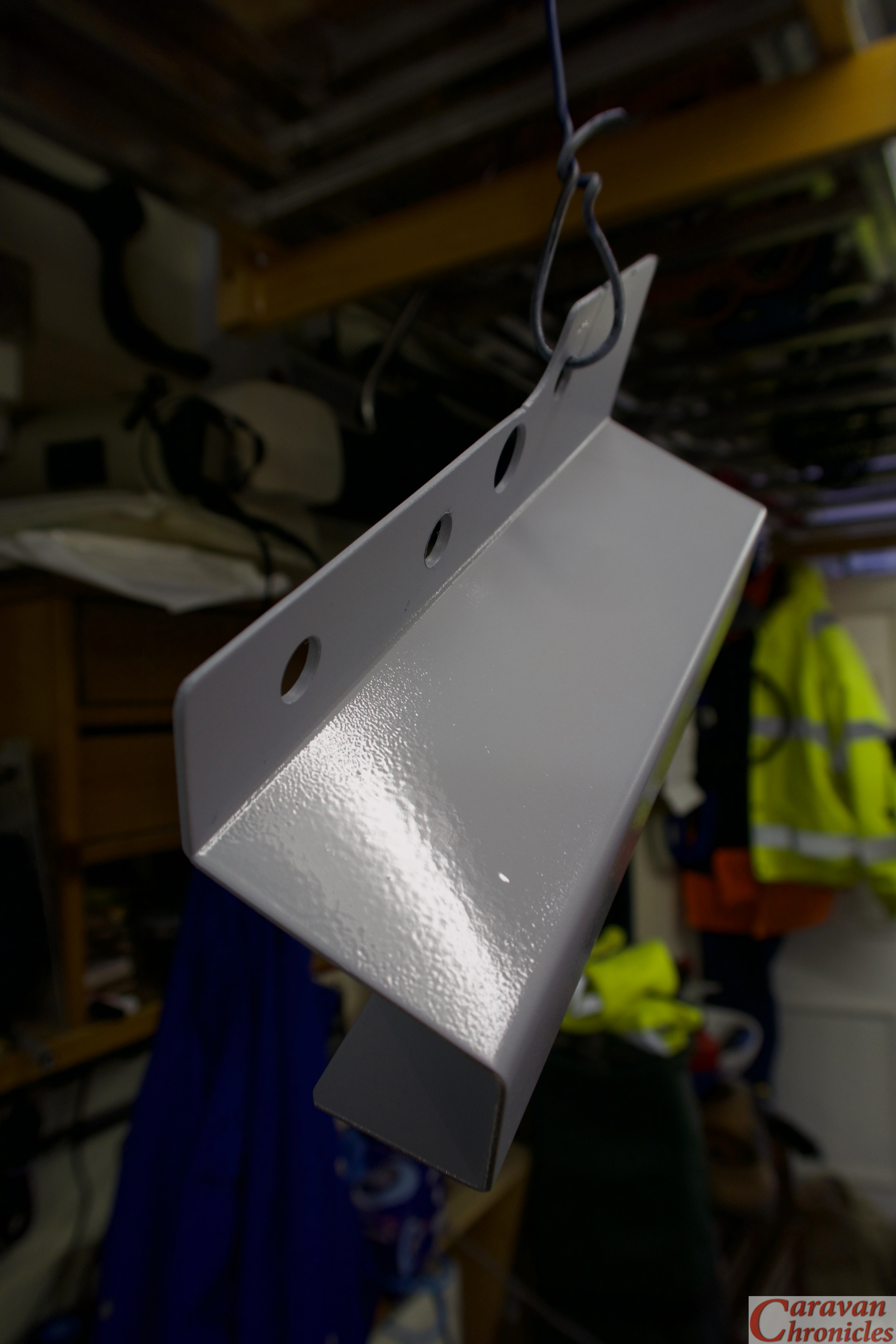
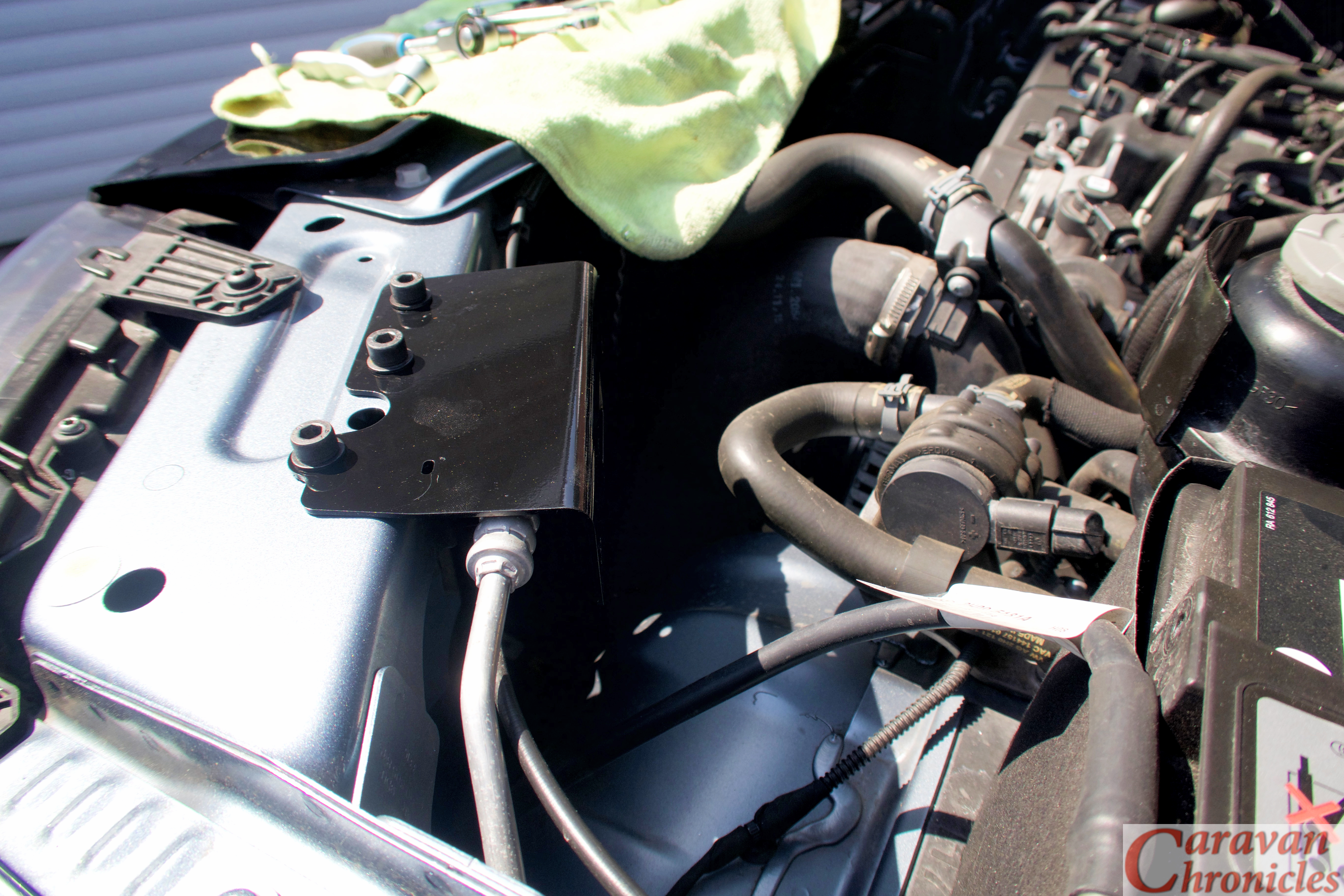
I wanted to make a bracket that passed under the air con pipe and bonnet cable release fitting so that it cleared everything and gave good access at the same time. As a test I did a trial bend if some 1mm thick steel I had just to get the shape…
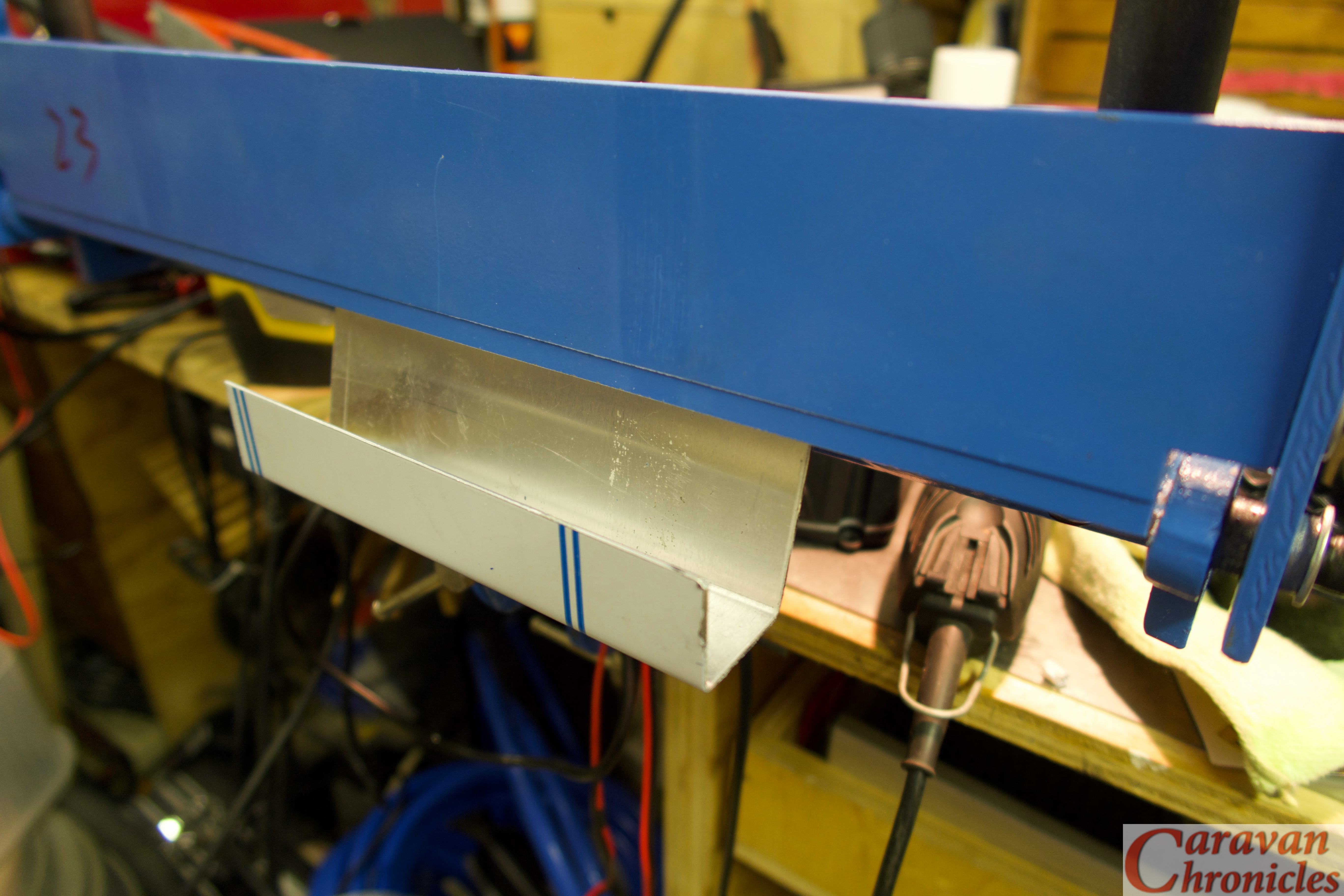
Once I’d got the angles and size sorted it was time to move on to the aluminium sheet. My press brake… well I call it a press brake, in reality its a cheap basic hand folding machine but it works very well as long as you know its limits and don’t get daft trying to fold big stuff. It was all about the angles…
The first two were easy and I could form the lip with two folds, the second was less than 90 degrees so I just about got away with enough clearance. However folding the return that would lip over the front cross brace which was also less than 90 degrees also meant that I’d have a problem fitting it in the folder.
However, a little lateral thinking and taking the blade off the folding machine, inserting my workpiece and re-installing the blade meant I could fold in the opposite direction (downward)… result!
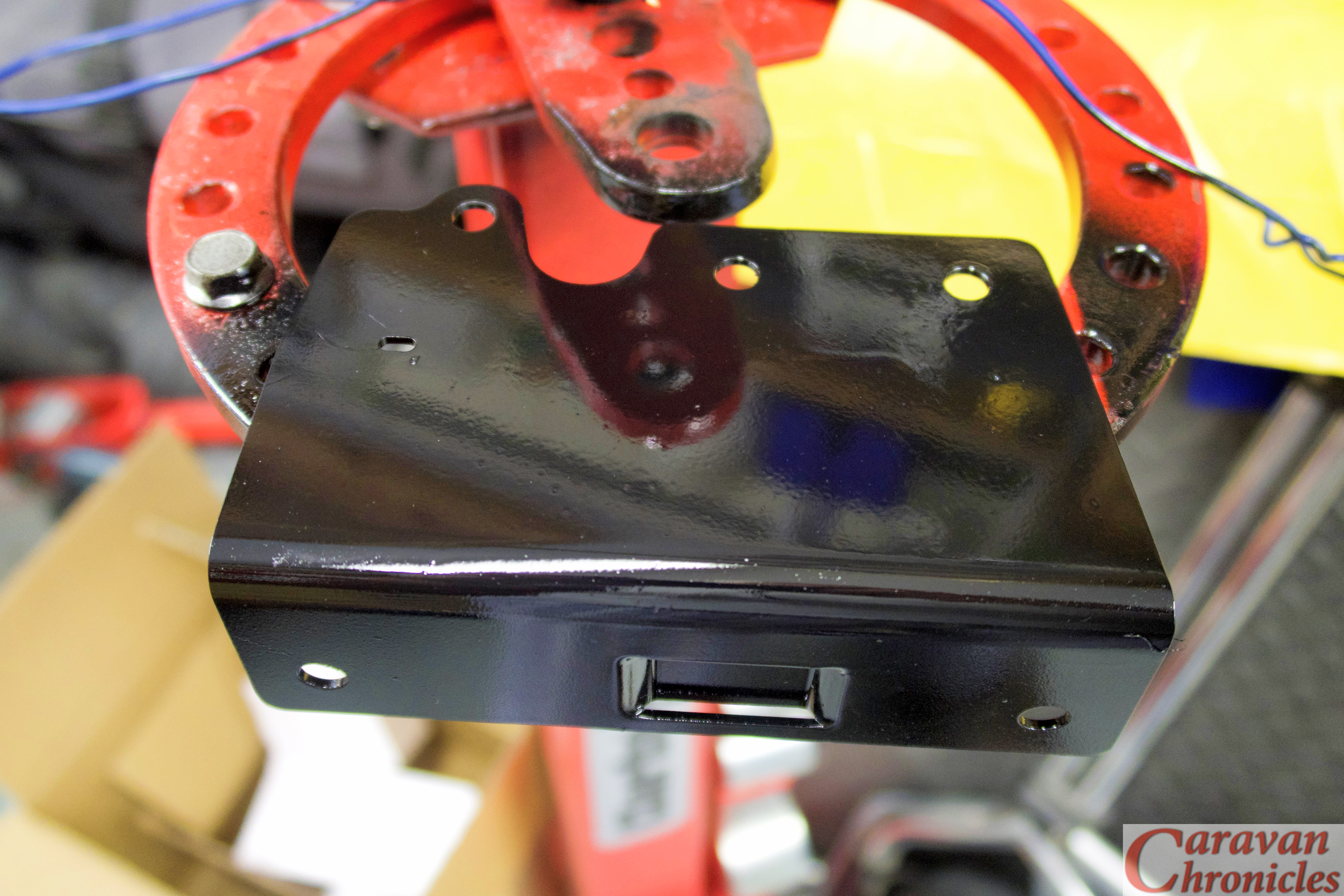
A quick trim and rounding off the edges gave me a rough folded bracket. A quick file of the edges and work-over with some fine emery removed all the tool marks… quickly followed up with a coat of etch prime to protect it.
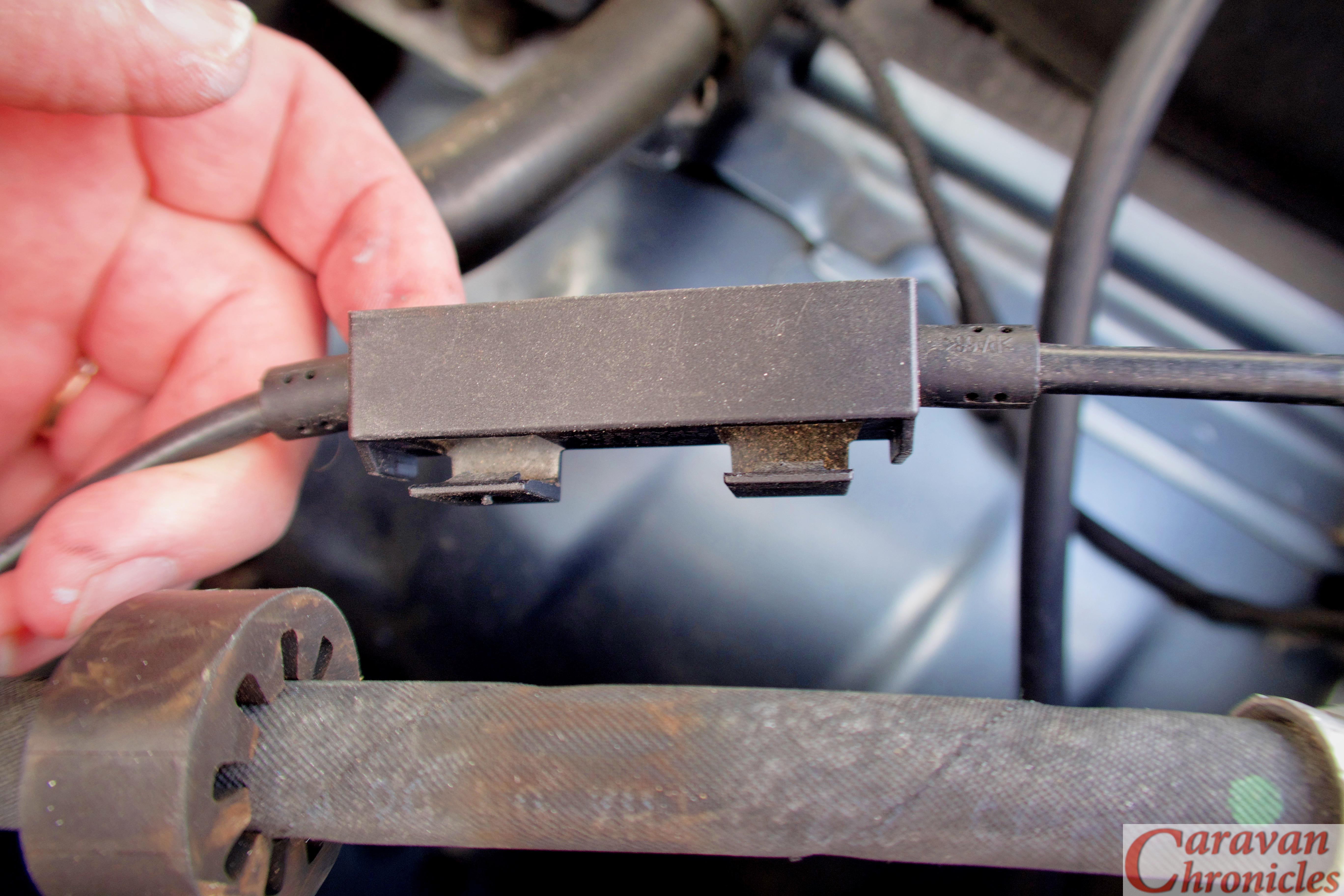
I now had to work out how to mount the plastic housing the bonnet release cables were located in. On the rear of the fitting were two plastic tabs that locked into two square holes punched into the vehicles cross member.
So a few minutes spent with a dremmel and a couple of suitable sized swiss files later…
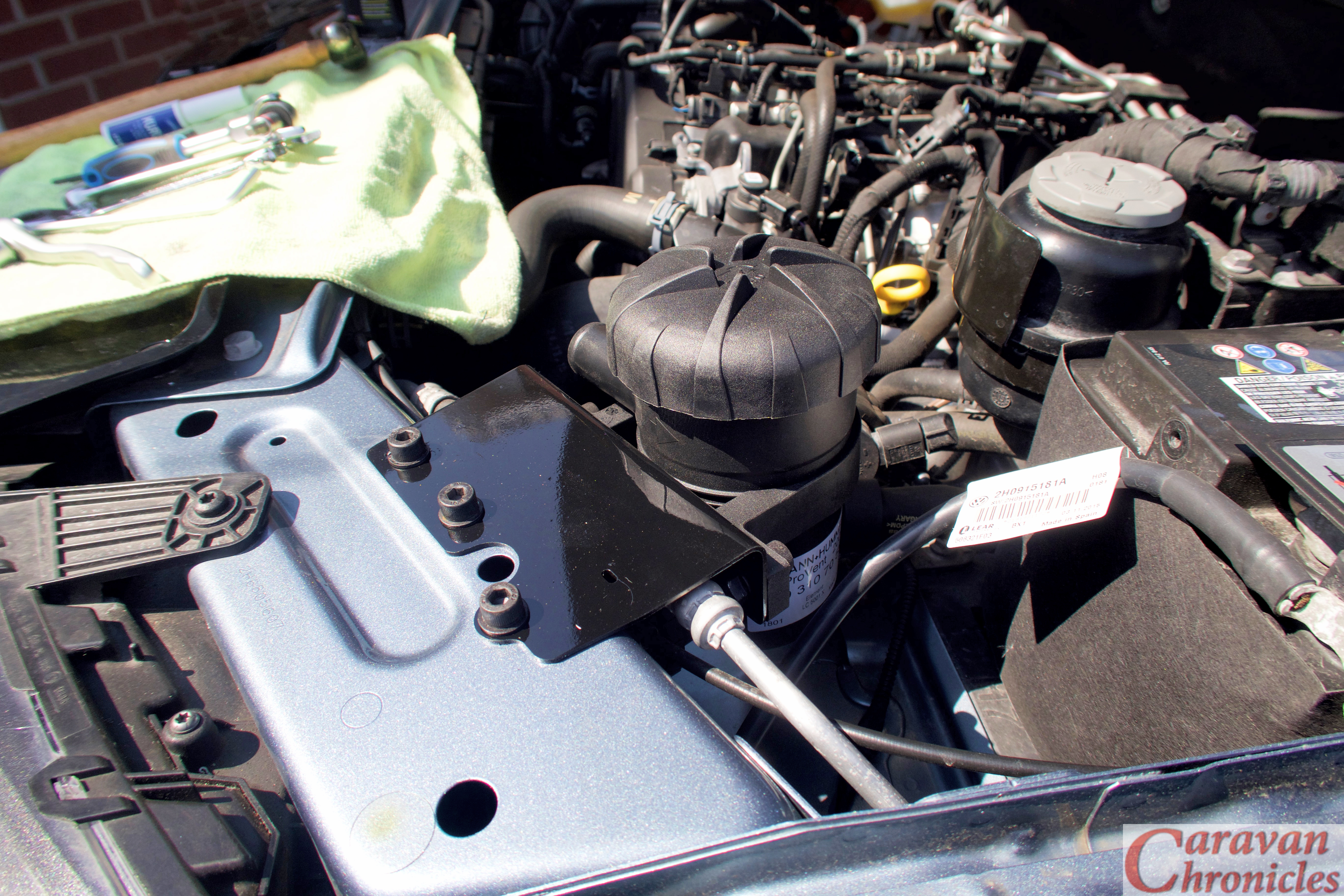
… and the piece was ready for a final rub over with scotch bright a second coat of etch primer and two coats of black.
The Installation…
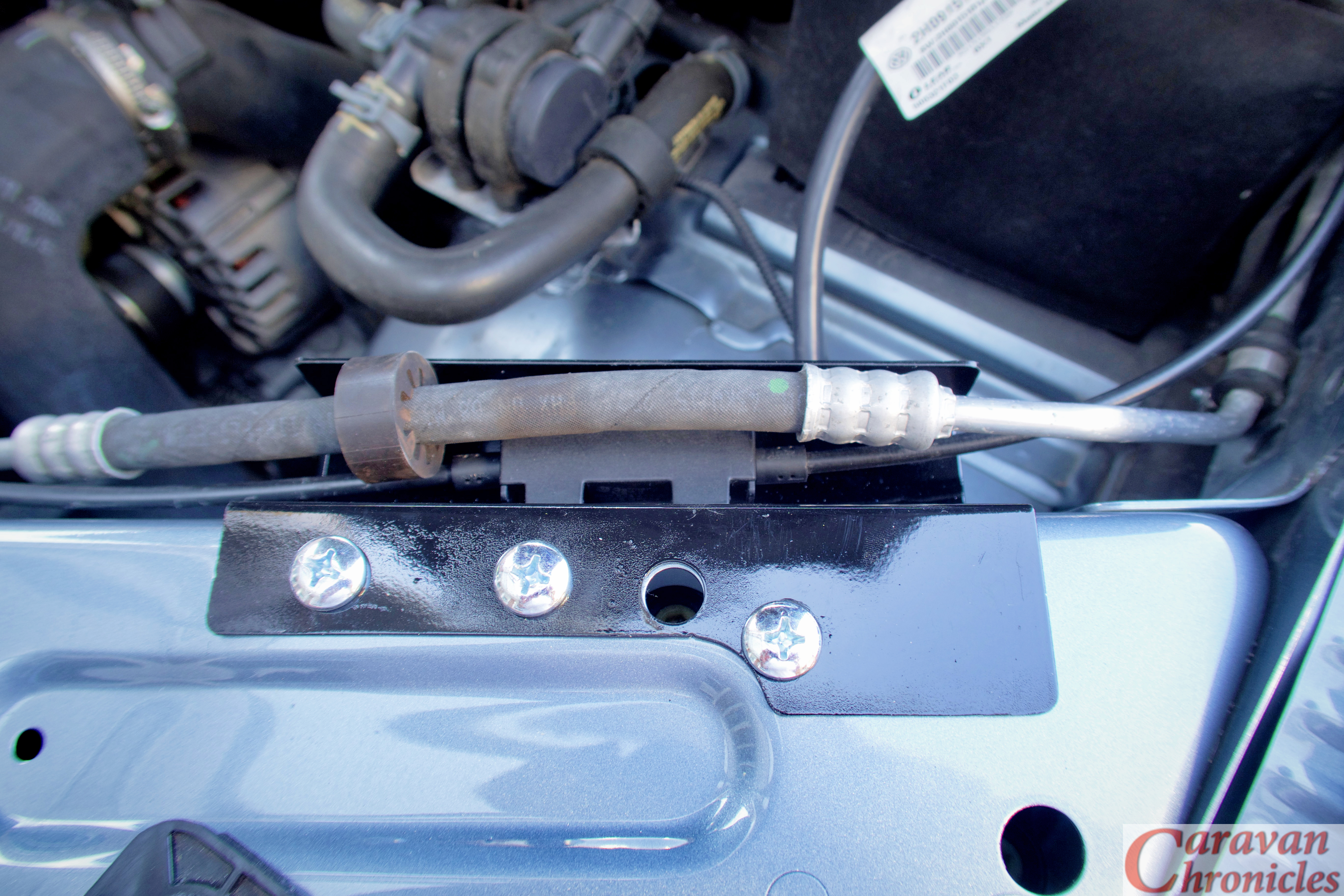
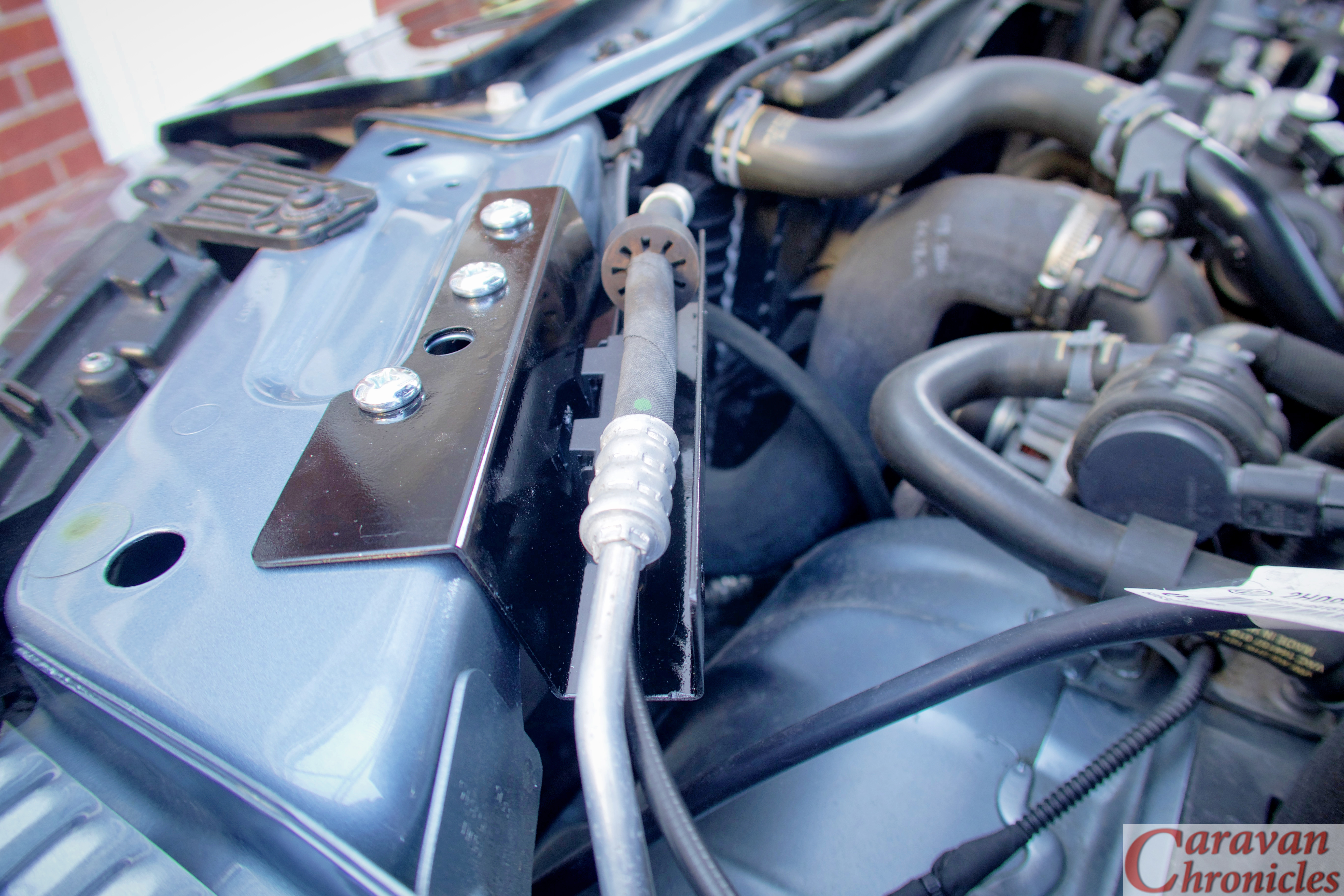
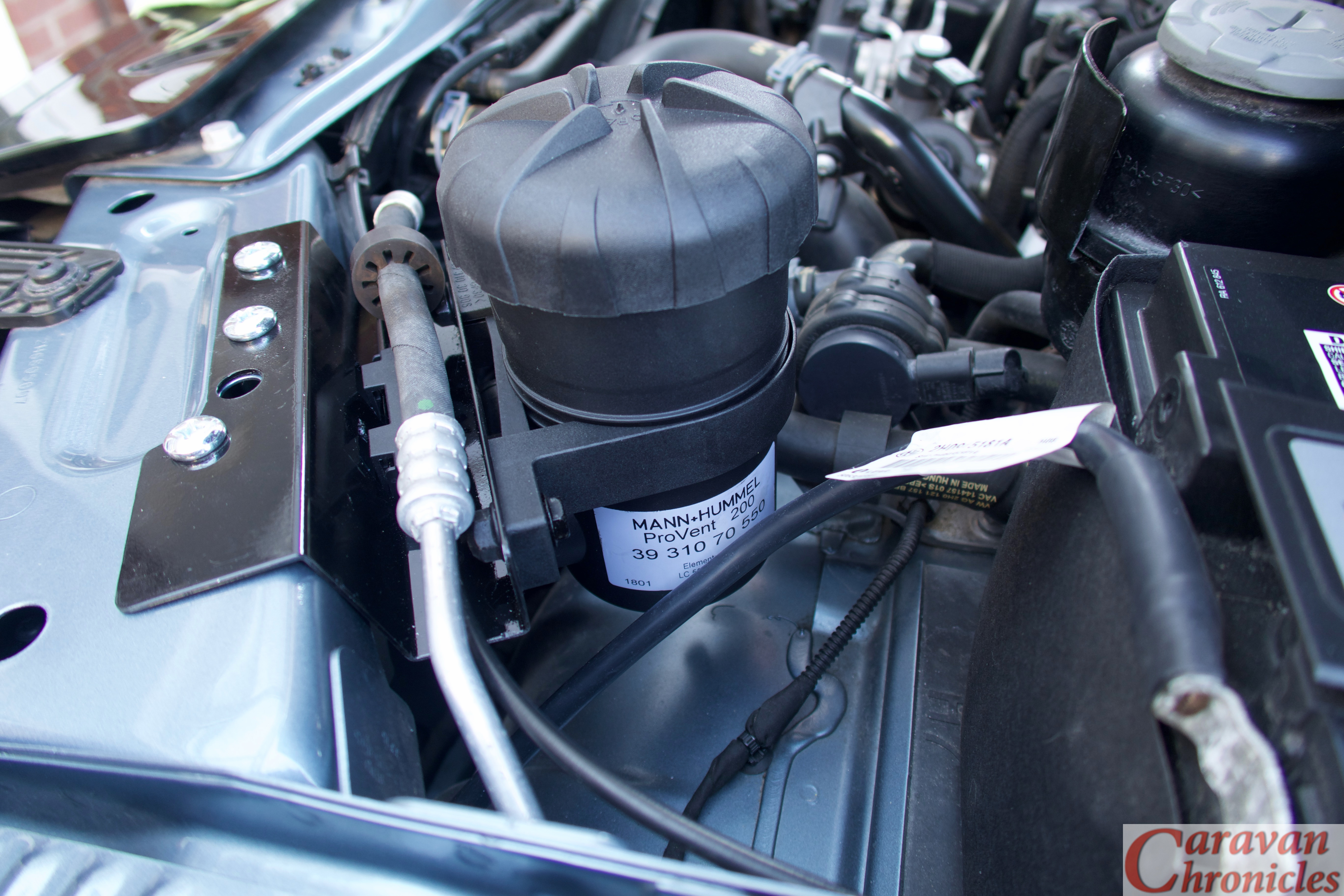
All went a bit easy actually… which is flipping’ unusual for me. I released the bonnet (or ‘hood’ for my American friends) cable fitting and simply clipped it back in to the two new holes I’d made.
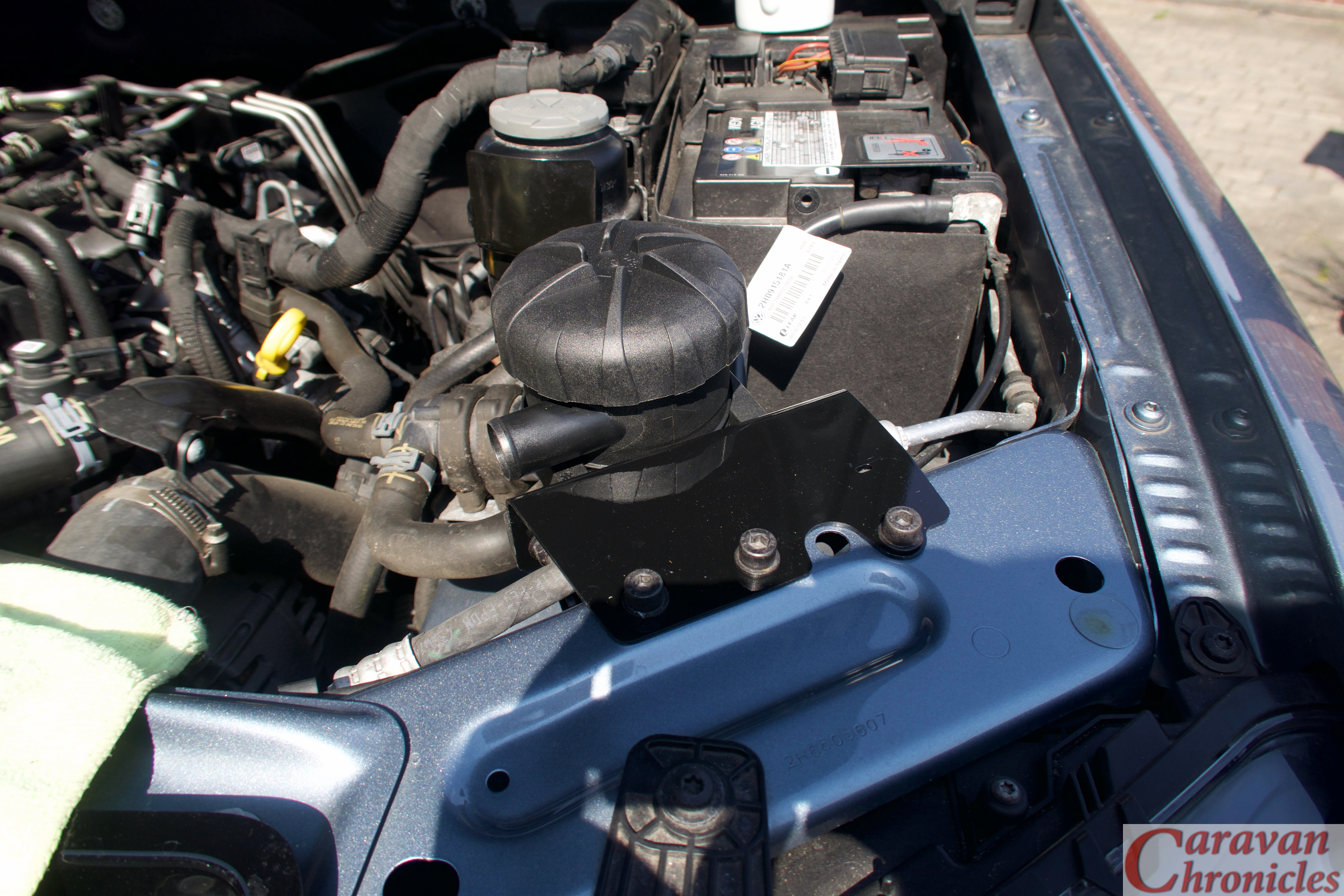
The Provent was installed next…
… again without any issues. Next was to sort out the plumbing.
I’d done a bit of research and asking around and the guys at ASH… AutoSiliconHose.comhad come highly recommended. So a road trip over the Pennines to Mirfield (just east of Brighouse in West Yorkshire) was scheduled.
I had a basic list of what I thought I’d need and the chap behind the counter hooked me up with everything… including the alloy couplers he cut to size while I waited. Great service from ASH and I can definitely recommend them.
Back home with my shopping, it was time to start on the plumbing.
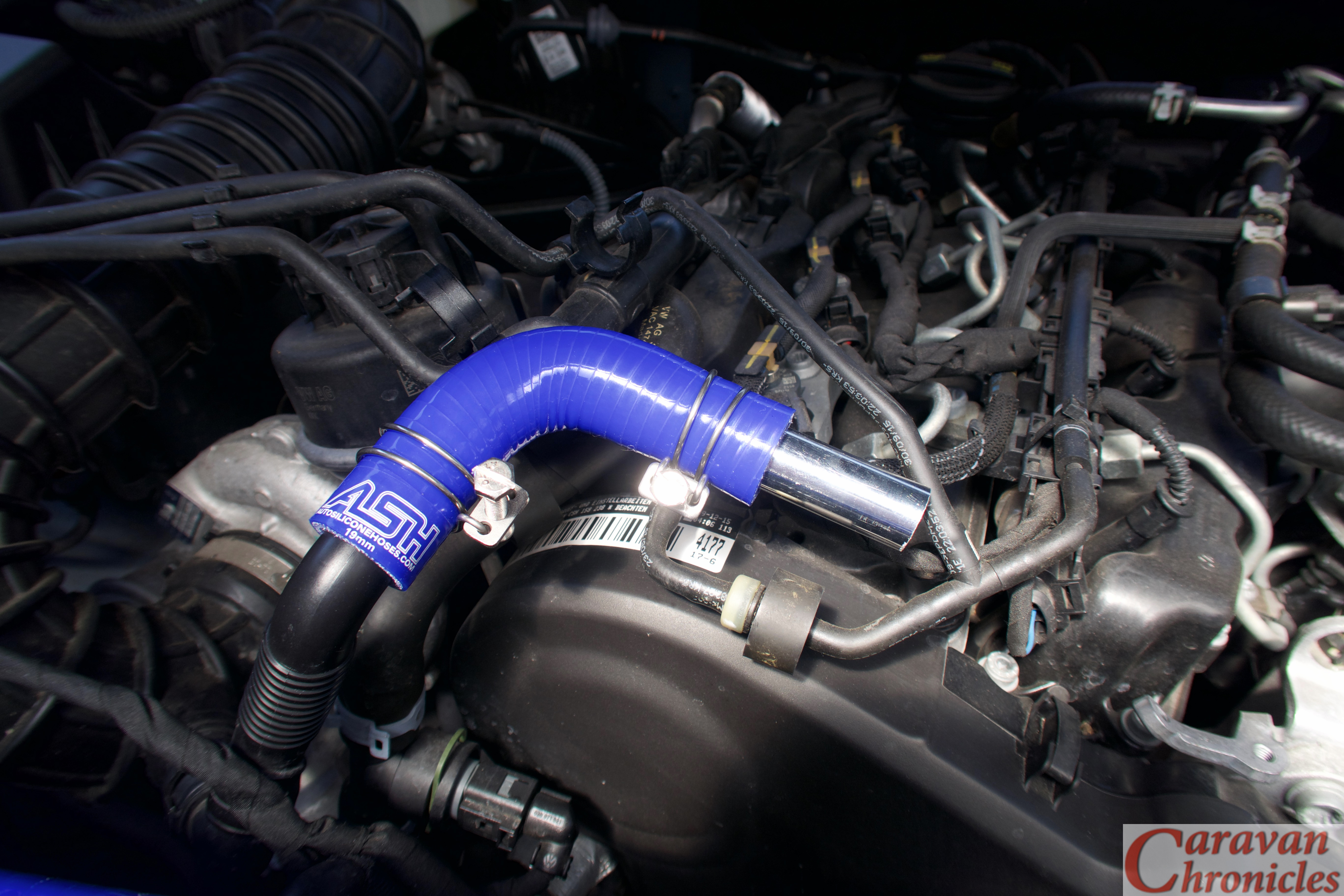
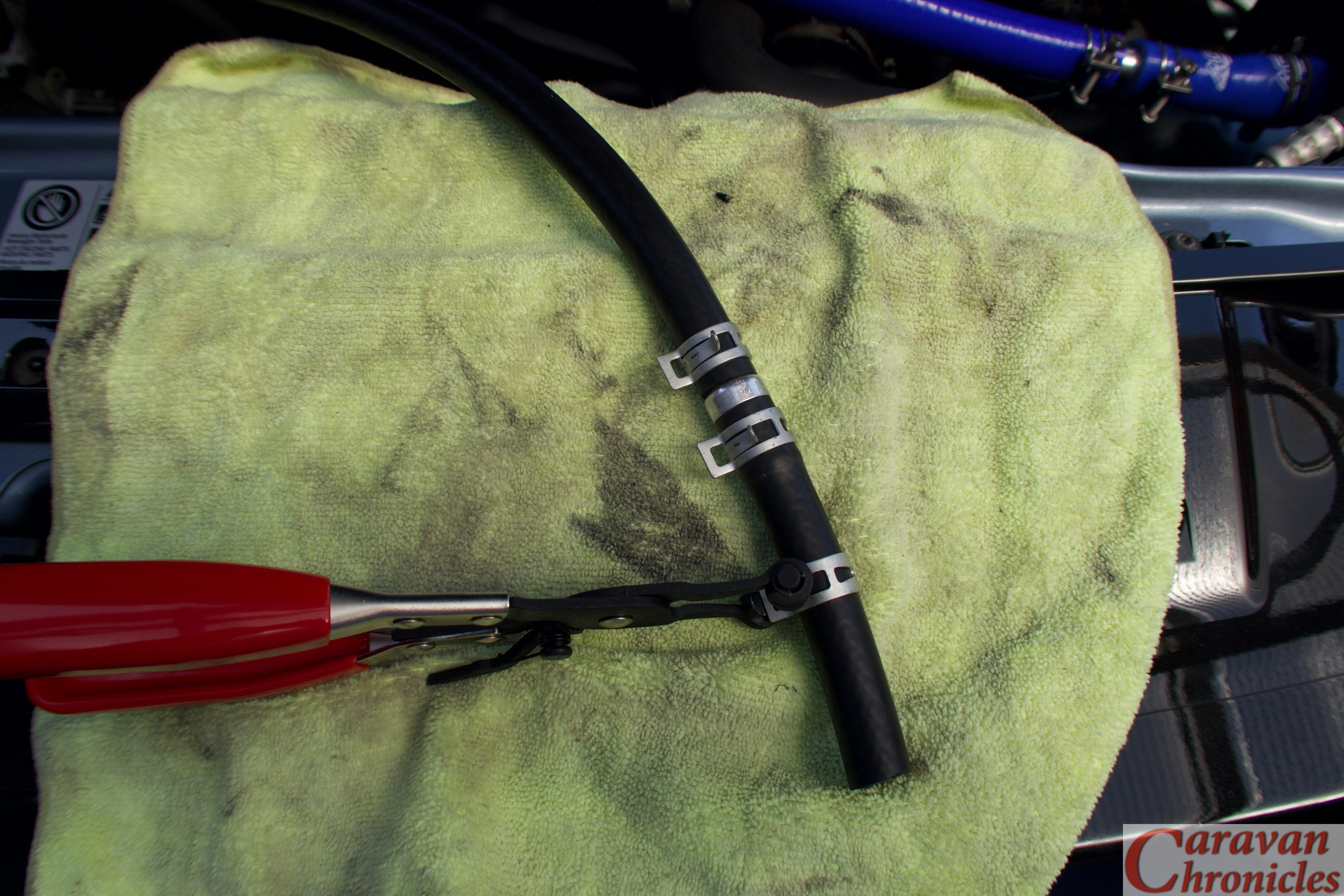
For securing pipes, I personally prefer spring clips… the type you install with special pillars, however the silicon hose OD was slightly too large for may normal stock of clamps so I had to opt for using the wire type. I’ll order some of the correct size and replace the wire clamps as soon as they arrive.
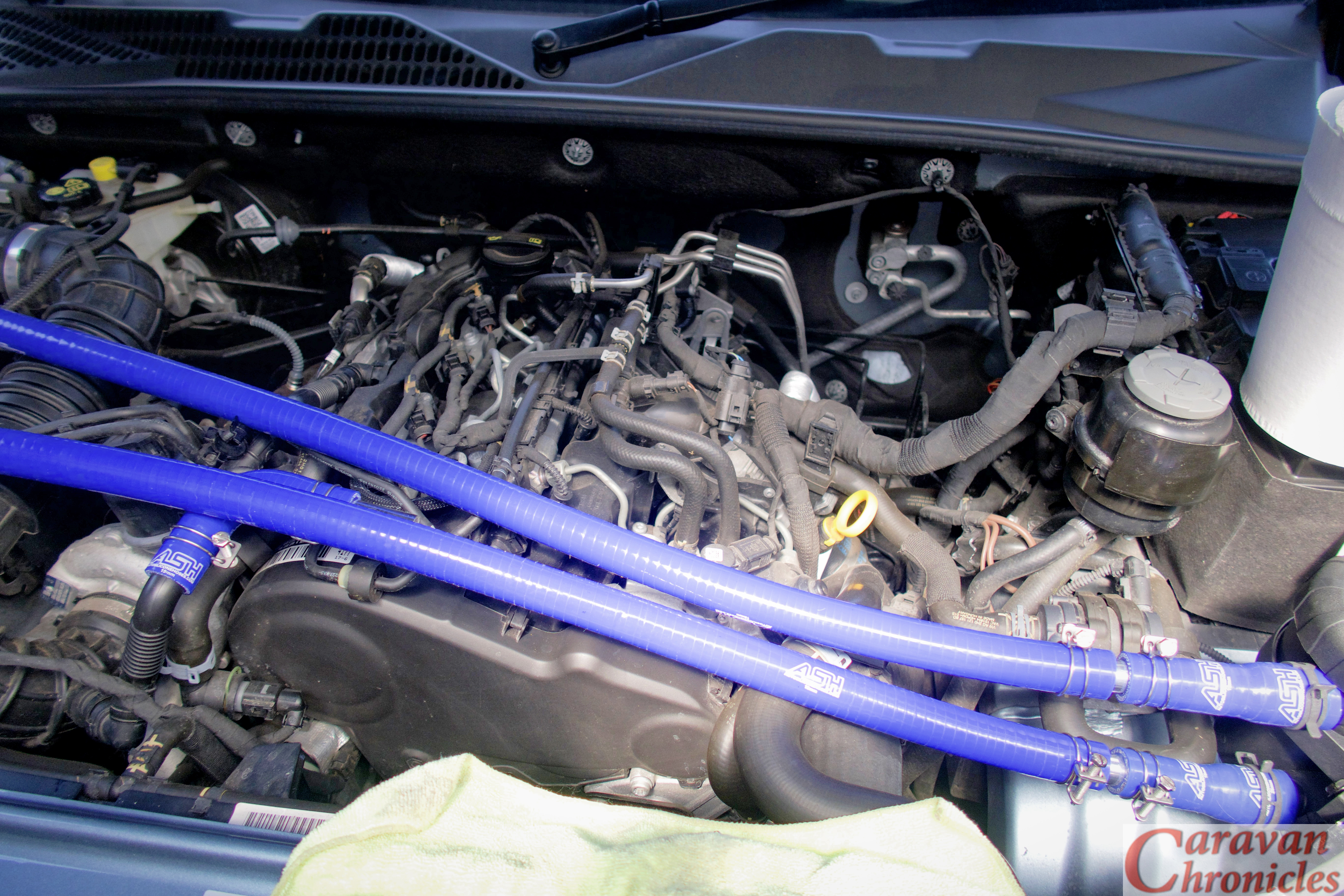
It was really simple now to just assemble the bits, cutting the silicon pipe to length as required. I used a pair of plastic conduit cutters to easily slice through the pipe.
Before I made the final connections to the crank case breather port or the turbo inlet port I blew the pipes clear using a high pressure air line.
All that was left to do was install the drain hose, one way valve and drain tap. I used normal 20mm oil line for the drain, inserting the one way valve about three inches below the outlet of the Provent catch can. The remainder of the hose was dropped down to chassis level and the drain tap added and secured with a couple of zip ties.
The Finale…
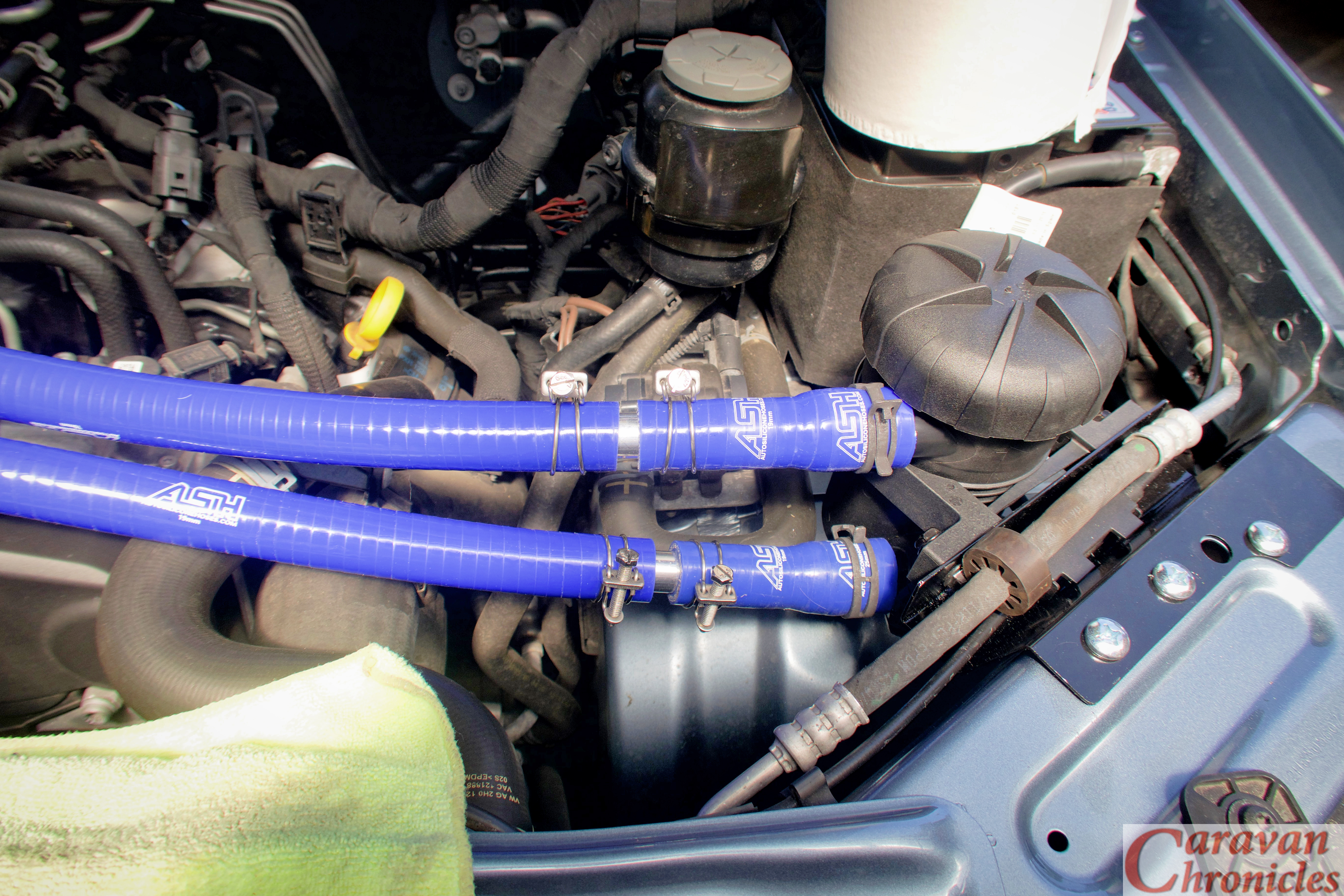
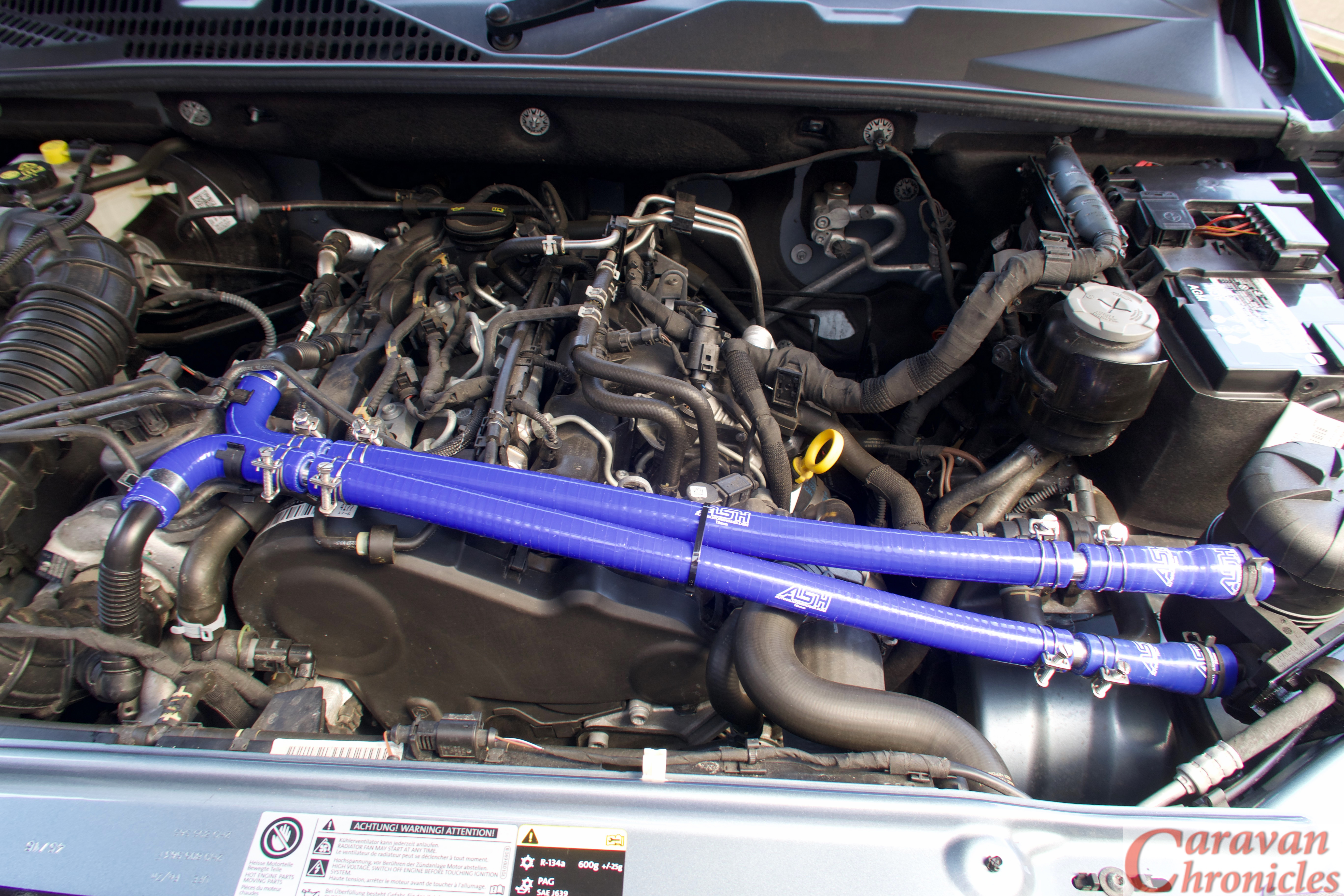
I secured the pipes in a couple of places with zip ties, now I know the route I can make a small stand-off bracket with two rubber lines “P” clips to mount on the engine to hold the pipes, although they are self-supporting because of the short length.
In the photographs above it looks like the piping is tight across the engine, I did do a pull and push test and there is plenty of movement at the 90 degree bends to allow the torque twist of the engine without pulling or pushing on the pipes at the catch can end.
The current mileage is 11,750 or there abouts, so I’ll check the drain and filter in 100 miles and each 100 miles after that so I can get an idea of how the setup is going. I’m not sure how long the filter is designed to last, but Ill put it on the schedule to replace ever main service. The other thing that is an unknown is how much oil I’ll get. I have been watching some YouTube videos made by Berrima Diesel in Australia (if you watch any of the Australian 4 x 4 or off-road channels you will recognise the name). I only found out about their catch can experience when one of the guys from one of the 4 x 4 adventure channels got in touch… even if you don’t think you need a catch can but drive a big diesel their videos are well worth watching.
Ok… I was saying I don’t know how much oil to expect… but it did surprise me that Berrima Diesels posted a video showing a new 4 x 4 with about 6000Km on the clock had produced about 300ml’s of oil using the same Provent catch can. It’s also worth taking look at what the have to say about the current oil specified in diesel engines.
The other thing I noticed was when I left the engine ticking over for about ten minutes. Bearing in mind I had just come back from West Yorkshire via the M62 and M60 and started the pipe install as soon as I got back so the engine was still hot, the difference in temperature between the short length of pipe exiting the crankcase vent and the inlet pipe of the turbo. The pipe exiting the crankcase vent port was almost at the temperature I could not keep my fingers on it, while the inlet pipe I’d connected too was still cool. I’ll have to get my thermomiterbob laser do-hicky out and get some readings… but anything that helps cool gasses going into the turbo has to be of benefit right?
That’s it for now, I know it’s not caravanning related that much… unless you want to get the best out of your diesel while towing. I promise the next one will be caravan related, honest!
As in part one I’d also like to give a shout out to Charles at HumbleMechanic.com for all the information and videos he produces about VW vehicles. Charles has been an absolute gold mine of information for all things VW and if you drive any of VW’s vehicles please be sure to drop in on his YouTube channel and take a look.
I’m installing a “Catch Can” can on our VW Amarok and this little posting is all about it, but first a bit of history on why I’m installing one.
If you look at modern high performance diesel engines one of the things that they do to reduce emissions is have a number of systems to reduce the harmful emissions. EGR or Exhaust Gas Re-circulation wich is feeding part of the engines exhaust back into the intake but probably the most widely known is the DPF… or Diesel Particulate Filter which captures fine soot particles from exiting the exhaust. The DPF needs to be cleaned regularly, through a process called regeneration. Either active, passive or forced, the accumulated soot is burnt off at high temperature (around 600°c) to leave only a residue of ash, effectively renewing or regenerating the filter, ready to take on more pollution from the engine. To regenerate, the vehicle electronics adjust the timing of the engine to increase the exhaust gas temperatures or commonly it can be achieved by passive regeneration usually on the motorway when exhaust gasses are generally hotter.
In city driving or short trips the regeneration my not take place fully, leading to blocking of the filter. This can lead to higher fuel consumption and a visit to the mechanic for cleaning or replacement.
Forced Regeneration
If the DPF become blocked you will get an engine warning light and/or a DPF warning light to let you know that a regeneration or cleaning is required. If the vehicle continues to be driven and the engine load is not enough for the automatic process to be initiated you will get a second stage DPF warning. When your vehicle displays second stage DPF warning lights it will usually go in to ‘limp mode’ and should be taken to the dealer to ascertain the extent of the problem.
A forced regeneration involves the garage using a computer program to run the car, initiating a regeneration of the DPF. This will also usually require changing the engine oil & oil filter.
Why does my Diesel Particulate Filter (DPF) block
Problems arise around town with stop start driving where the regeneration process might not complete or the engine never get hot enough for a long period. A warning light will illuminate or a message indicating the DPF is full displays on the dash. If you continue to drive in the same manner, the soot build up will increase until other warning lights illuminate and the vehicle will go into ‘limp’ mode, where driving speed is restricted.
Crankcase Ventilation
In all piston engines a certain amount of ‘blow by’ happens, this is some of the hot gasses treated in the cylinder combustion leaking past the piston rings.. or ‘blowing by’ and entering the crank case in the sump area. This pressure needs to be released and twenty years ago the engine oil filler cap used to have e vent in it. However in modern emission controlled vehicles this is not acceptable and the excess pressure is vented into the air intake of the engine where it passes through the engine cycle and exits through the exhaust. These hot gasses passing through the sump on their way out pickup fine mist of oil from the sump which is carried through to the intake of the engine and this creates three problems. The first is a sticky residue build up on the intake valves that hardens with temperature – especially on direct injected engines. Secondly the intake pathway gets coated in oil from the engine. If you have a turbo charged engine with an intercooler, this can become an issue as it reduces the heat exchanging effects of the intercooler. Thirdly, when the oil is burnt in the engine it creates a heavy soot that increases the build up in the DPF.
When towing, you generally use more power for accelerating and maintaining speed which is great in one respect for the DPF. The downside though is the piston blow by is more and therefore the crank case pressure is increased.. picking up more of that fine oil mist from the sump.
Now the diesel engine tuning guys and the 4 x 4 guys in Australia have known about this for a number of years and they have a solution to the problem.
Cleaning up the crank cases gasses – “Catch Can’ or Air Oil Separator?
There is a difference. a ‘Catch Can’ is usually just that. A can that the gasses are fed into with an outlet that is fed back into the turbo inlet. Some do have some form of baffle but a lot don’t. More expensive ones may have a gauze wad inside for the oil droplets to form on. A lot don’t have a drain, you have to remove the bottom of the can to empty it. If you look on auction sites you can find nice looking anodised aluminium ones for £20 or £30 but for that sort of money all you are really paying for is the nice looking anodised aluminium. Not for an efficient effective unit.
On the other hand, a true Air Oil separator will have multiple traps in the form of differing size materials making up membranes for droplets to form on. A number of them are designed to swirl the gasses around first before exiting through the centre after passing through the filter membranes.
I wanted to get as much oil out of the gasses before they enter the engine inlet. So I opted for an Air Oil separator with replaceable membrane filter rather than a cheap ‘catch can’. Seems like a simple device really, but there are a few more things to take into consideration…
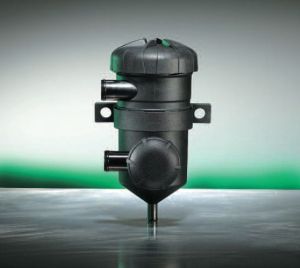
I’ve opted to use the Mann-Hummel ProVent 200 on our VW Amarok. It’s been used all over the world with hundreds of installations on Toyota’s, VW’s, Mitsubishi’s, Land Rover’s and not just on 4 x 4’s.
My hope is that I’ll reduce the emissions through the engine while prolonging the life of the DPF, keeping the inlet clean and oil free and importantly preventing that soot and carbon buildup in the inlet ports and valves while maintaining the efficiency of the intercooler.
Getting Started
I did look at the kits available for the VW Amarok and all were sourced in Australia. However I could buy all the individual components in the UK a lot cheaper than importing a kit. Bit’s ordered, the first decision was where to locate the unit…
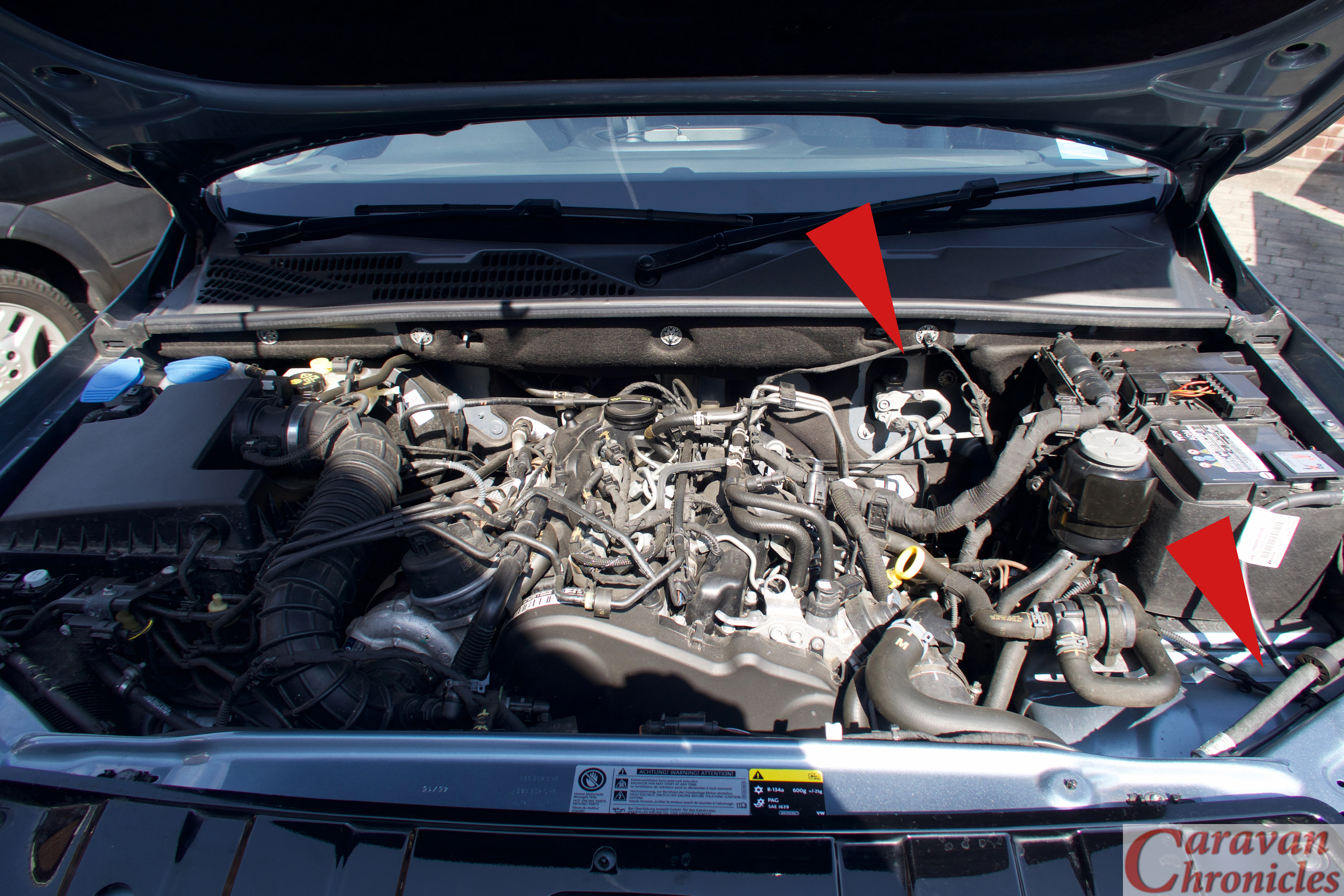
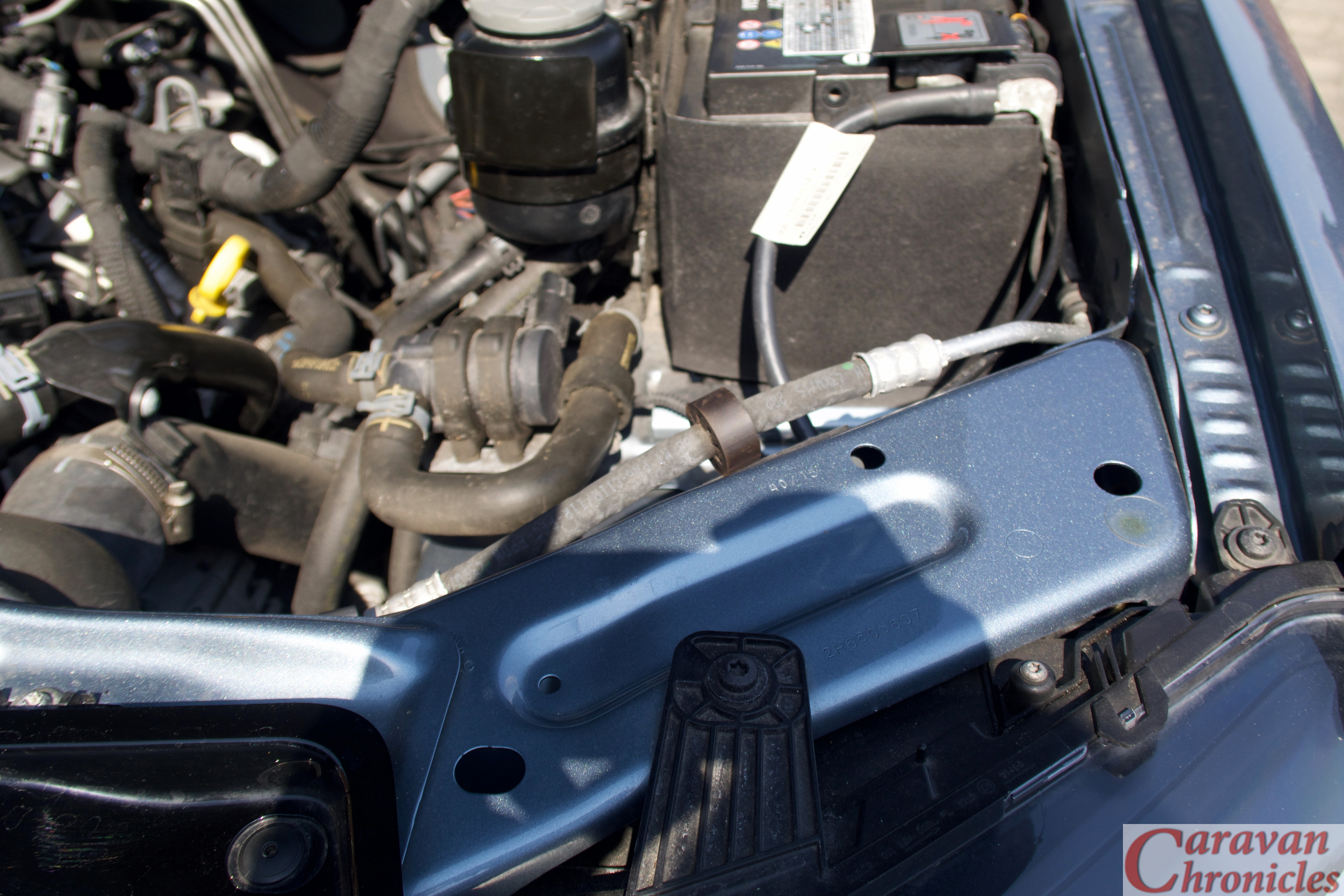
In the Amarok’s engine bay there is only two real places viable for the location of the ProVent. The first is on the back wall next to the engine ECU which seems to be the place of choice for most of the kits I’d found, and the second is in the front right hand corner in front of the battery.
Installing it on the rear firewall next to the ECU would mean partially covering up the Air Con gassing ports and I just knew that would be asking for trouble in the future…
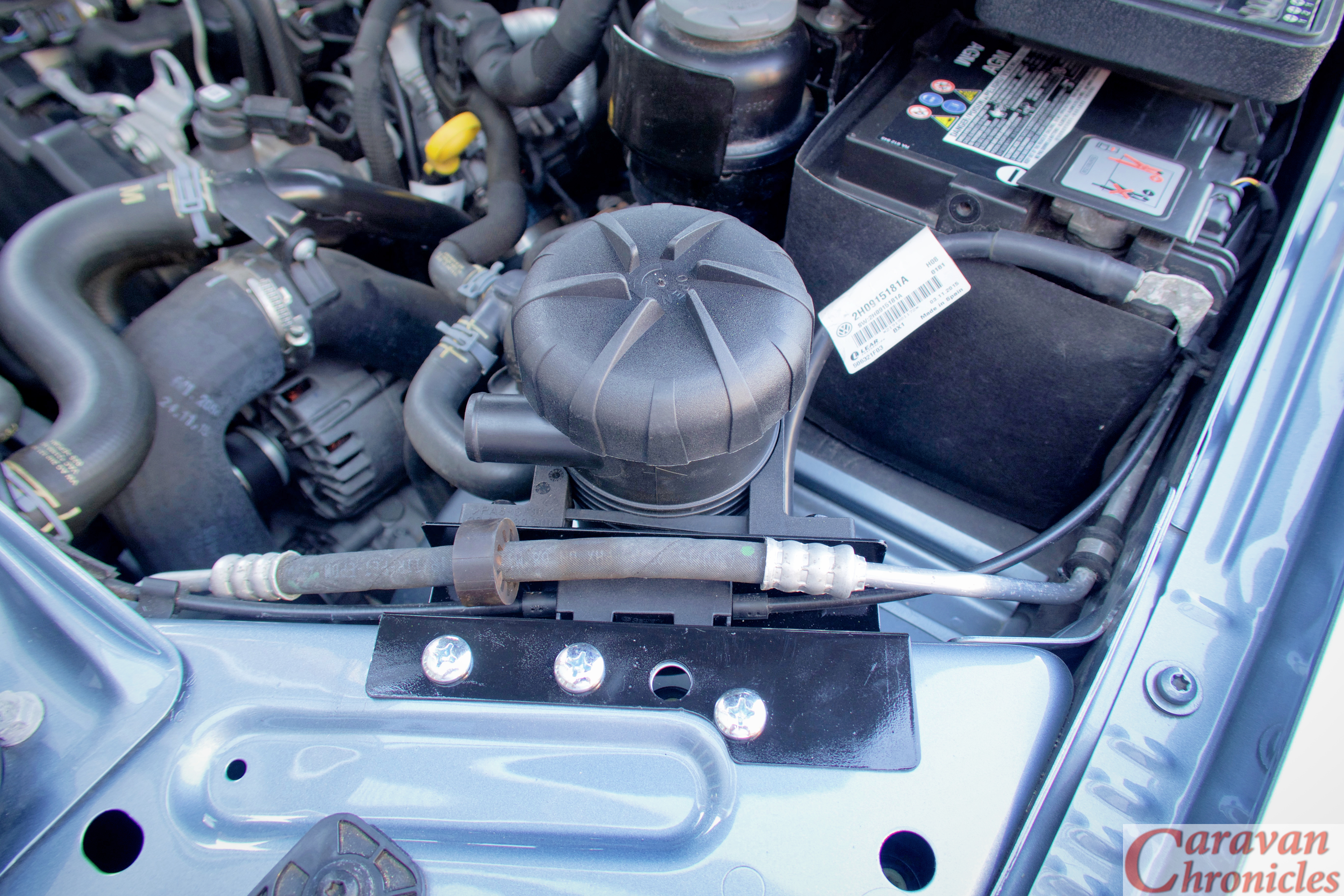
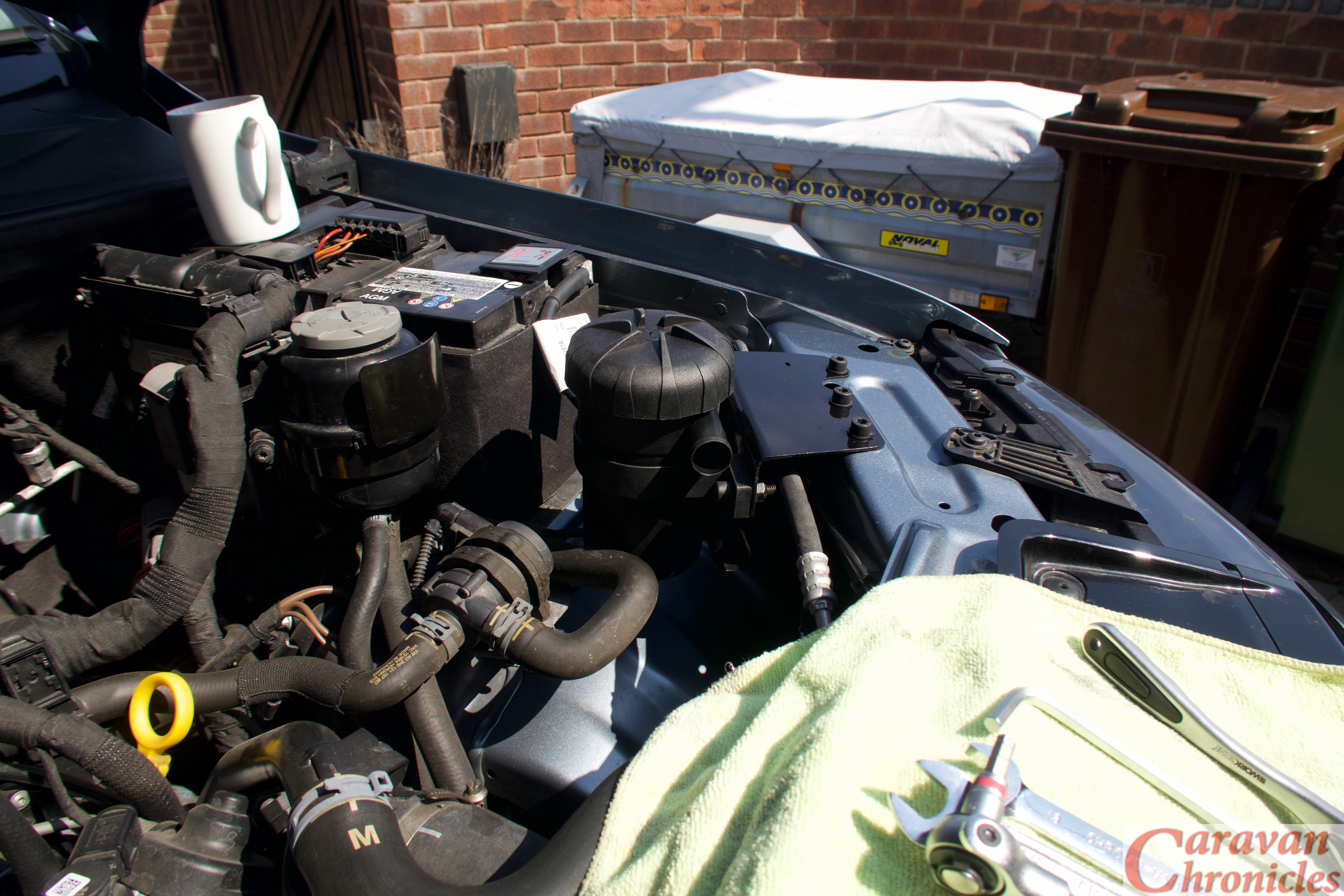
So the location that in my mind seemed the most logical would be to mount it in front of the battery, manufacturing a suitable bracket to hang it off the front top cross-piece where there seemed plenty of room and easy access.
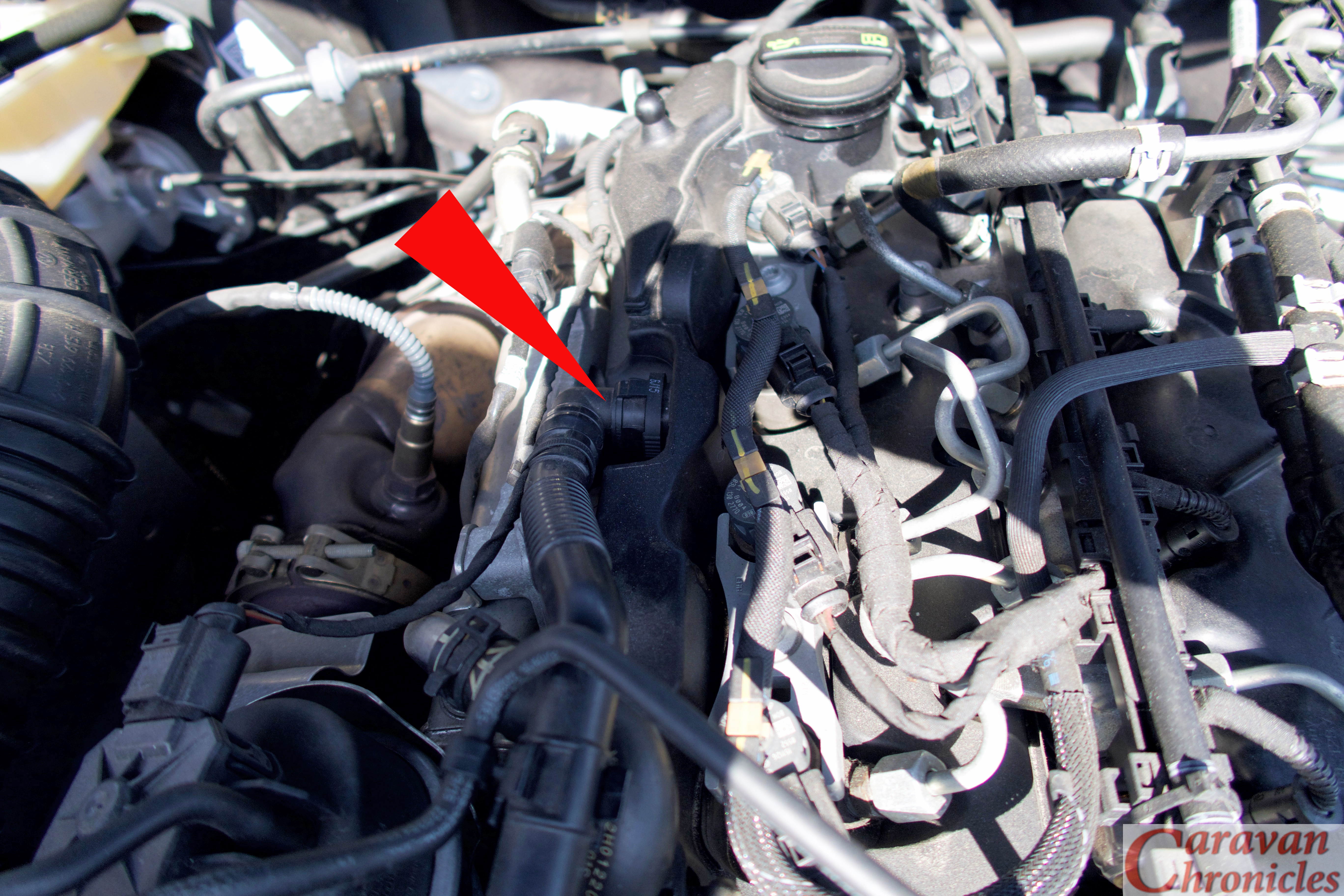
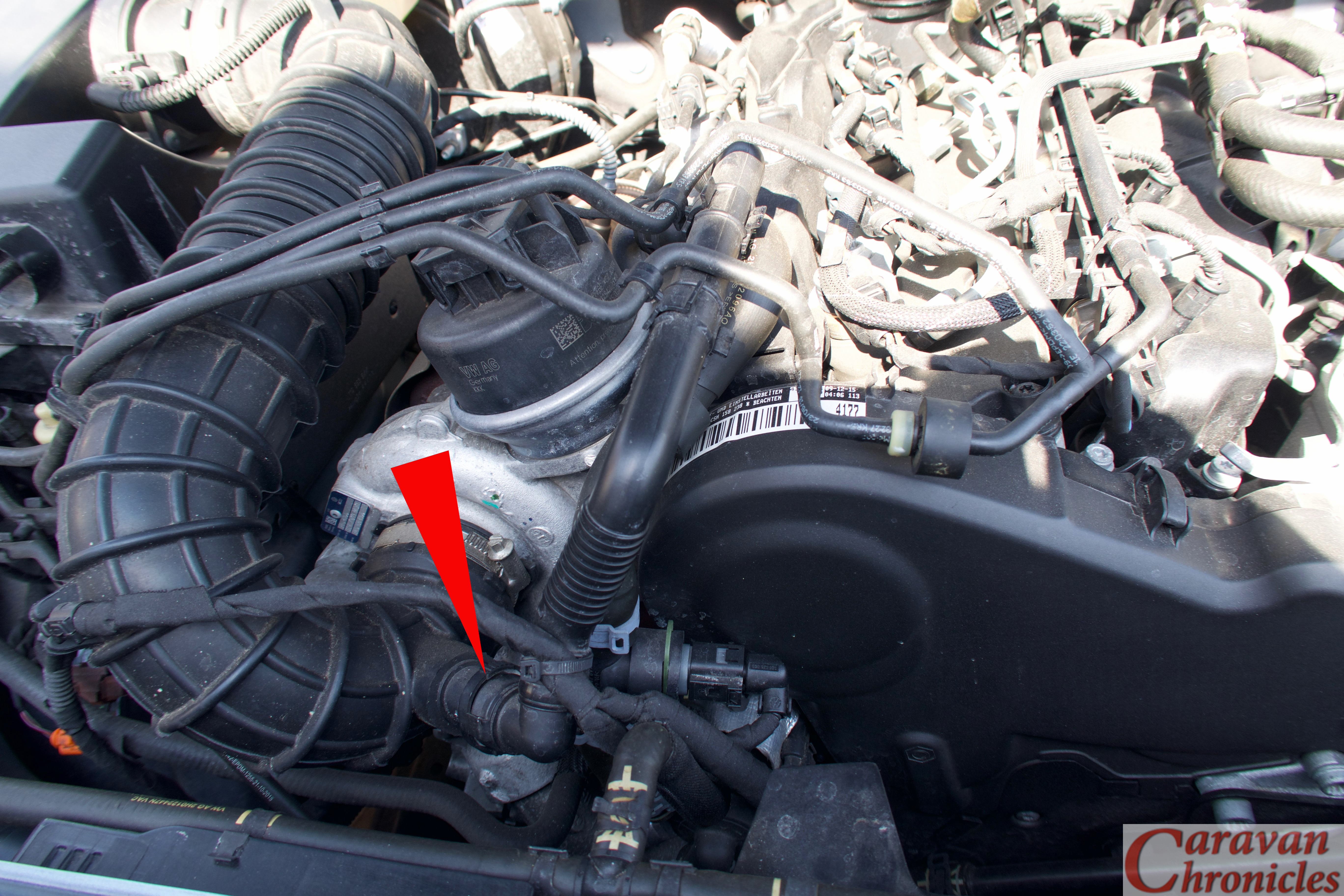
This would also allow the two pipes… one from the crank case pressure release port (left below) and the return to one of the turbo inlet ports (right below) could take a short route from the ProVent across the front of the engine and would give me a couple of suitable points to mount supports for the pipes.
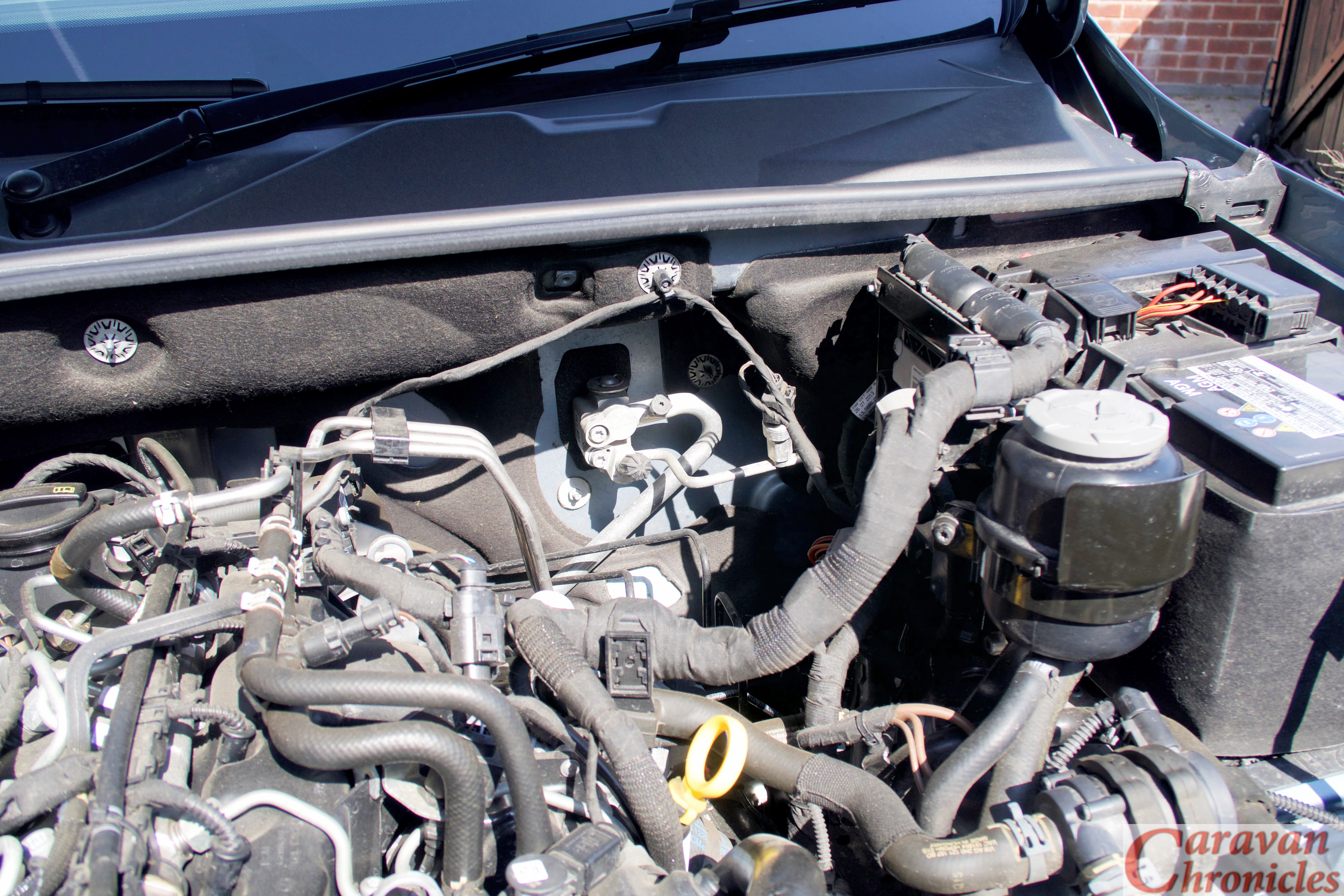
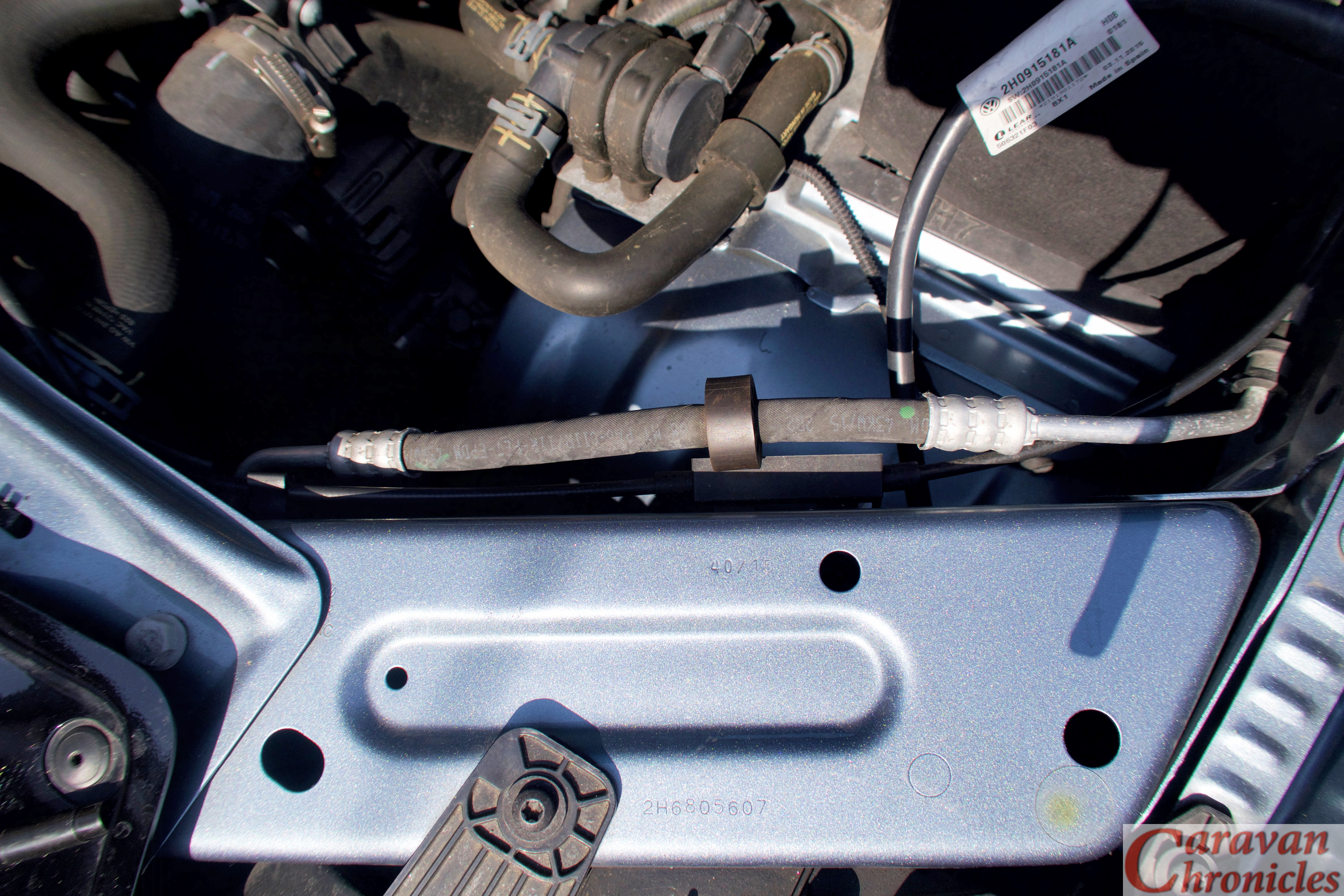
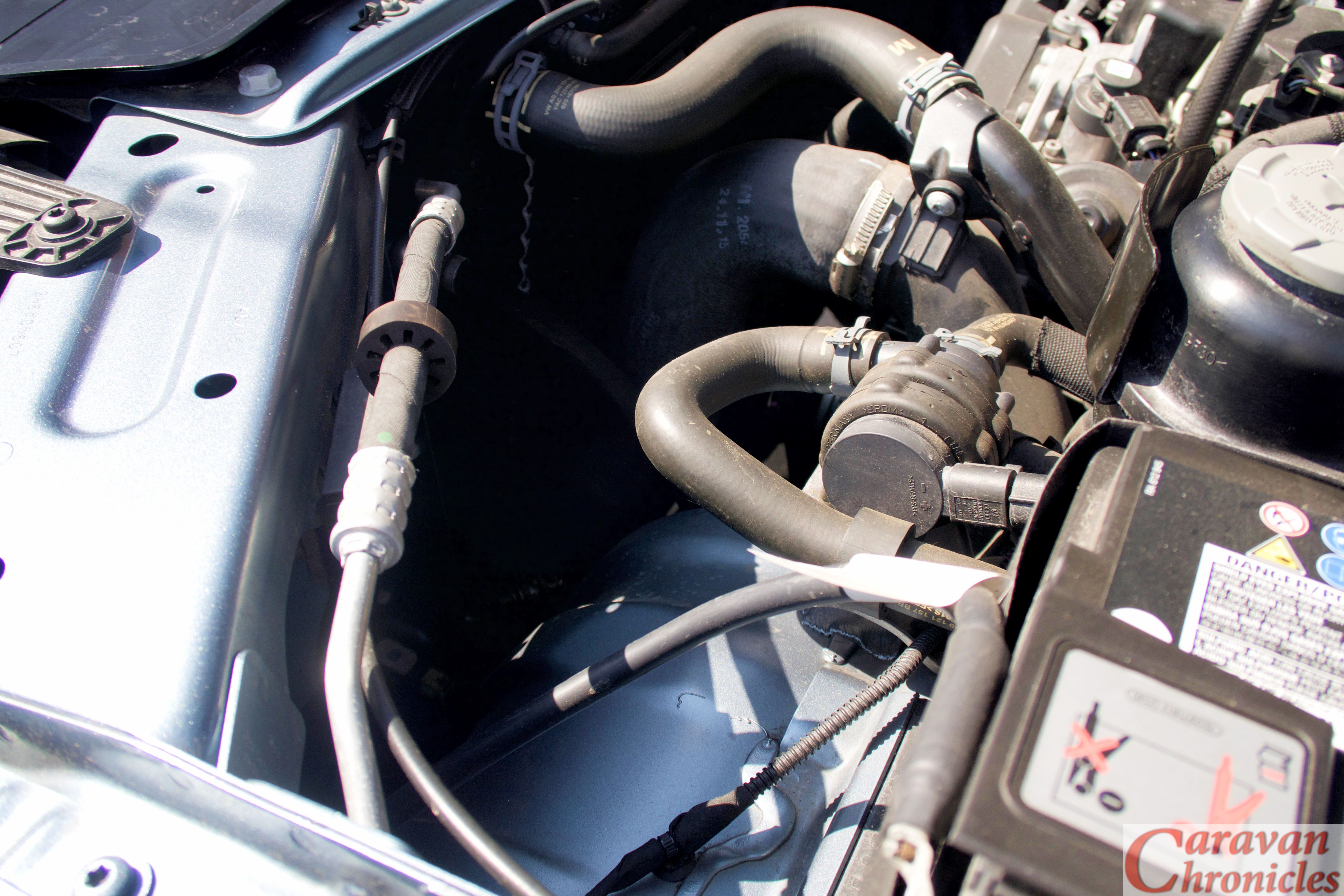
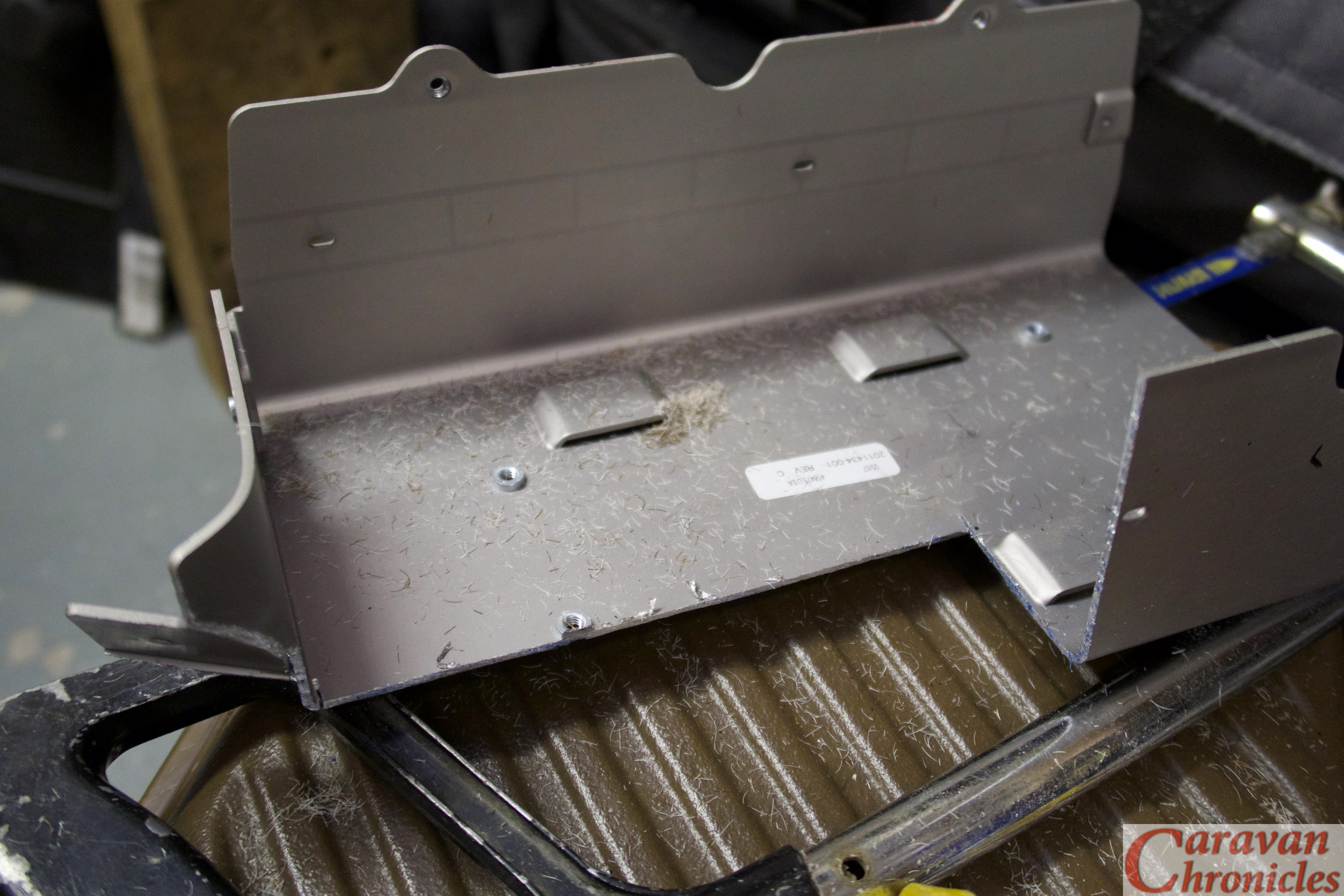
I needed to manufacture a bracket that mounted to the top cross rail and went over the air-con hose and bonnet release cable just below it. As luck would have it in my scrap metal bin I had the chassis from on old bit of electrical kit that was made out of aluminium and looked like it would do the job.
Cutting a section off, filing down the edges and drilling mounting holes didn’t take too long and that was followed up by a coat of etch primer and a couple of coats of high temperature gloss black (I only used that as I had a spare can from a previous job!)
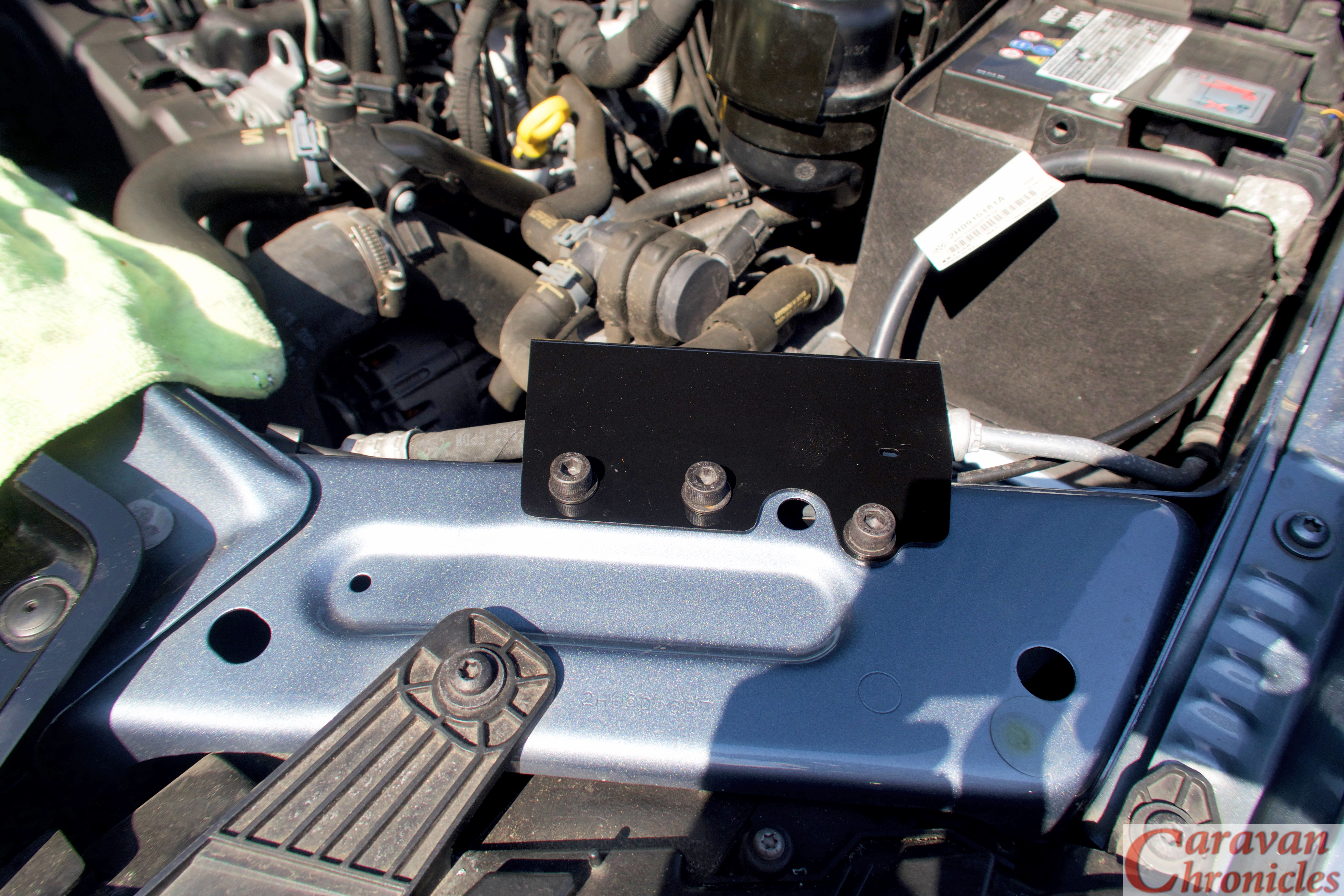
Fitting was fairly easy…. and no, they will not be the final bolts!
Marking and drilling three holes, followed by a couple of coats of metal protector to stop the edges of the holes rusting soon had the bracket in place. If you are wondering why the shape… well it came like that when I cut it off the scrap chassis, but quite by chance it allowed access to the hole which is access to the headlight adjuster screw.
Mounting the ProVent was now simple enough…
It was at this point I stopped. I didn’t like the way it covered the air-con pipe. There was little chance of it rubbing, the pipe already had a big rubber ring on it to stop chafing against the front cross beam or the bonnet release cable. I also now could not get to the bonnet release cable. The mount covered the point where there was a lubrication and connection block for it. It just wasn’t good engineering design. IKB would be shaking his head and wafting his cigar around in dissatisfaction..
Back to the bat cave. Time for a rethink and to hone my skills in sheet metal origami.
I would like to thank Charles at HumbleMechanic.com for all the information and videos he produces about VW vehicles. Charles has been an absolute gold mine of information for all things VW and if you drive any of VW’s vehicles please be sure to drop in on his YouTube channel and take a look.
A few weeks ago Andy Harris (yes that Andy… him off the TV) and of Road Pro fame called me to tell me about a new gadget that Dutch caravanners were getting all excited about. Now not one to turn down the chance to test a gadget or two, when Andy asked if I’d like one of the units to test I of course said in true reserved fashion said “Well I suppose I can take a look at it”. Who wouldn’t pass the chance to check out the latest piece of tech gadgetry being made by those clever Dutch people at e-Trailer. A few days later a large brown box arrived.
On a recent trip to the C & M Club’s site at Blackshaw Moore I took the opportunity to not only put my feet up for a couple of days with Sue but install and play around… er… seriously test… one of the units..
Opening up the box I found five smaller boxes, containing the main unit and four of the modules.
Ok, so what is e-Trailer? The simple explanation is there is a black box that sends all kinds of information about your caravan to an app on your phone. It works with both Android and iPhones and there are various ‘modules’ you can add-on to get additional info.
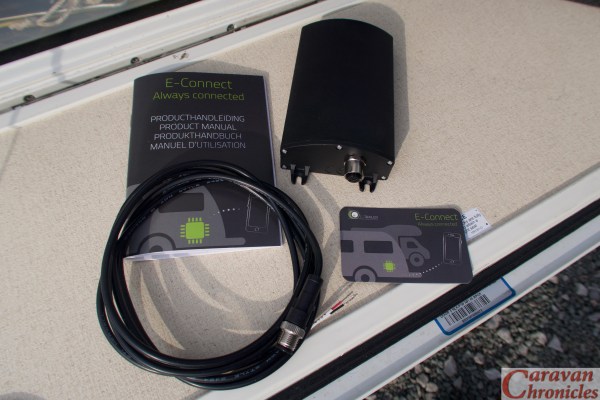
The actual unit is about 120mm long by 80mm wide and 40mm high with a good quality power connector at one end.
In the box is the main unit, 1.5 metre long power lead, instruction manual and a card with a QR Code on it.
You get a QR code with each of the modules, and set of instructions, don’t lose the cars with the QR codes on them! (more about these later)
Installing the unit is serious easy. You just hook up the power lead to a 12 volt supply. I opted to connected to a switched supply sort came on whenever the caravan master switch was on. This would mean it would be active when towing.
Once you have powered up the main unit, go to the website e-trailer.nl/app and follow the link for your phone. In the case of my iPhone it took me to the App Store were I could download the app. Once downloaded launch the app and follow the on-screen instructions to register. I was a bit surprised it asked for my postcode and house number, but I guess this is how they register the unit to you for warranty etc.
Once you have created your account in the app and logged in… well remember that card with the QR code on it, simply scan the code and it pairs the app with the unit you have just installed.
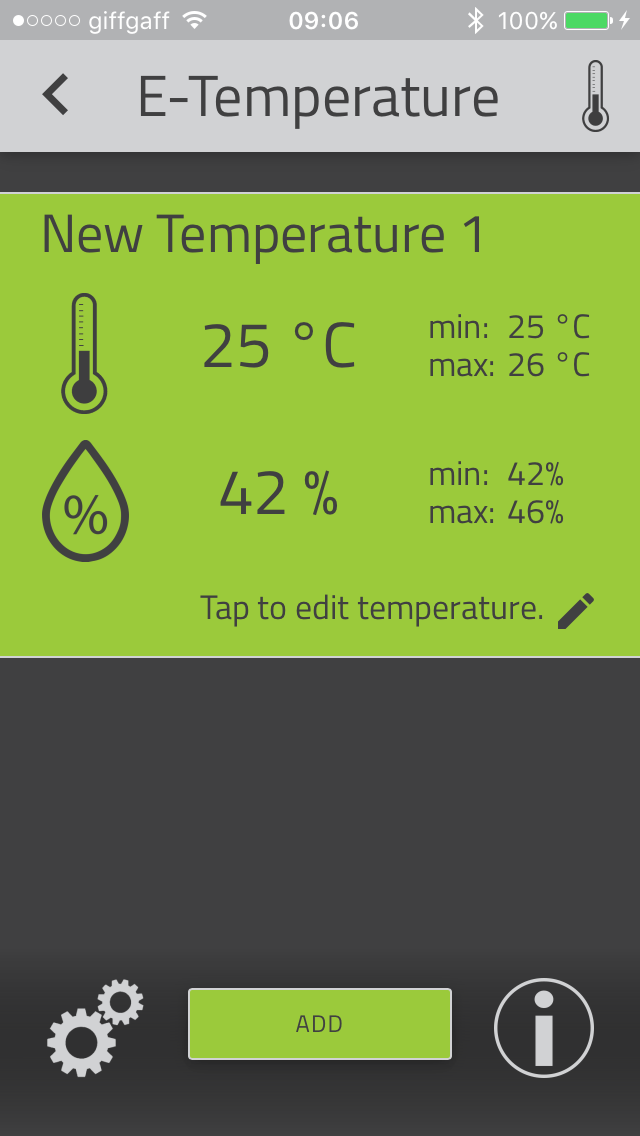
You are done! It’s that easy. Now to add the modules. The first one I added was the temperature module. You get a small puck shaped device and following the on-screen prompt, scanned the QR code.
Done… a quick scan and now I have the temperature reading. For each module you can set lower and upper limits and the type of alarm… visual notification, vibrate, sound. From reading the instructions you could put this sensor in the fridge so when you are driving along you can keep an eye on the fridge temperature to make sure your wine or beer is perfectly chilled when you arrive. From what I understand you can add additional temperature sensors so you can check what the temperature is in the caravan at the same time.
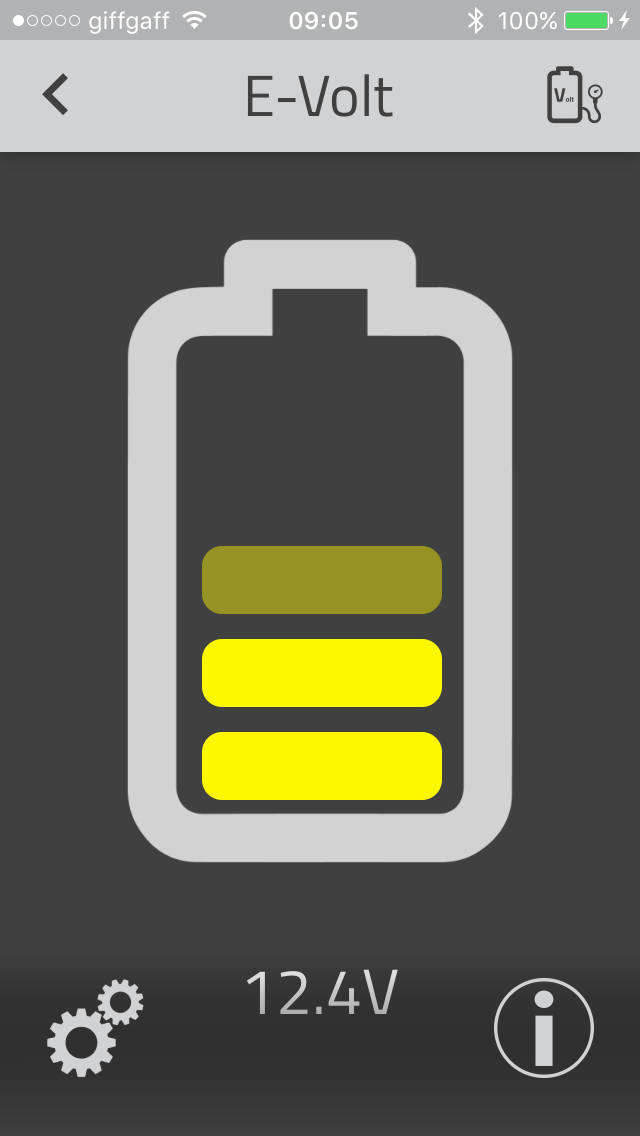
Next was the voltage sensor so you can keep an eye on the battery voltage. Again it was a quick scan of the QR code and I could see instantly what the battery voltage is and its relative state of charge. (I have yet to check how accurate this is).
Again, it is easy to set the limits, just tap the two cogs in the bottom left corner….
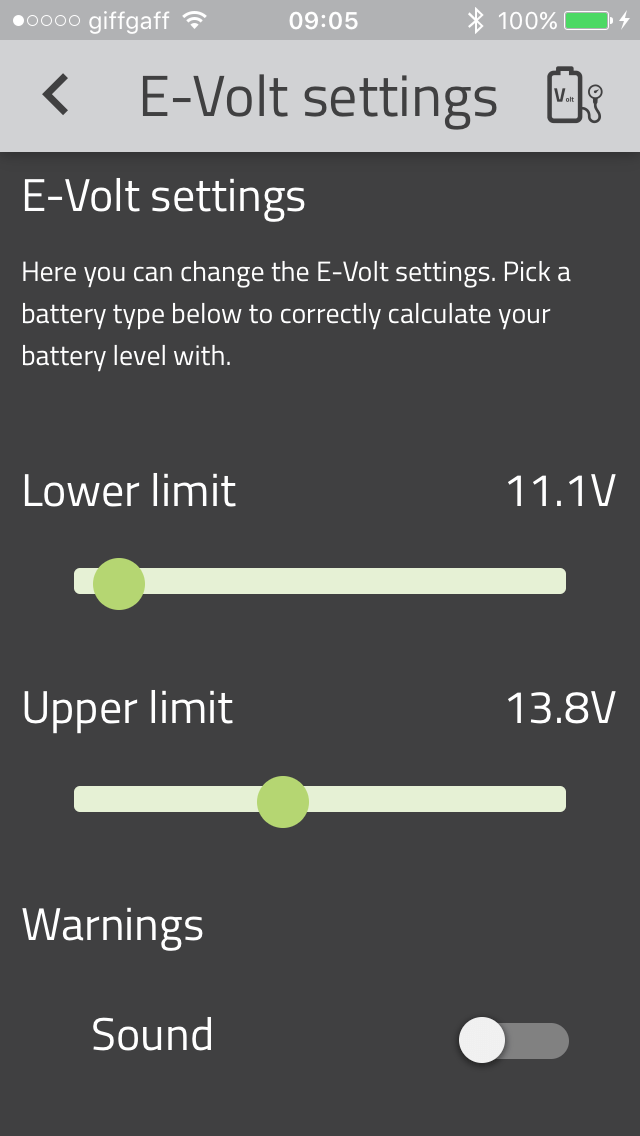
… And you can adjust the upper and lower alarm voltages. This is really useful as you can correctly set it for flooded call, AGM or lithium batteries.
Want to know if you have left your roof light open or TV aerial up… or even if your fridge door is open? There’s a module for that… The E Switch.
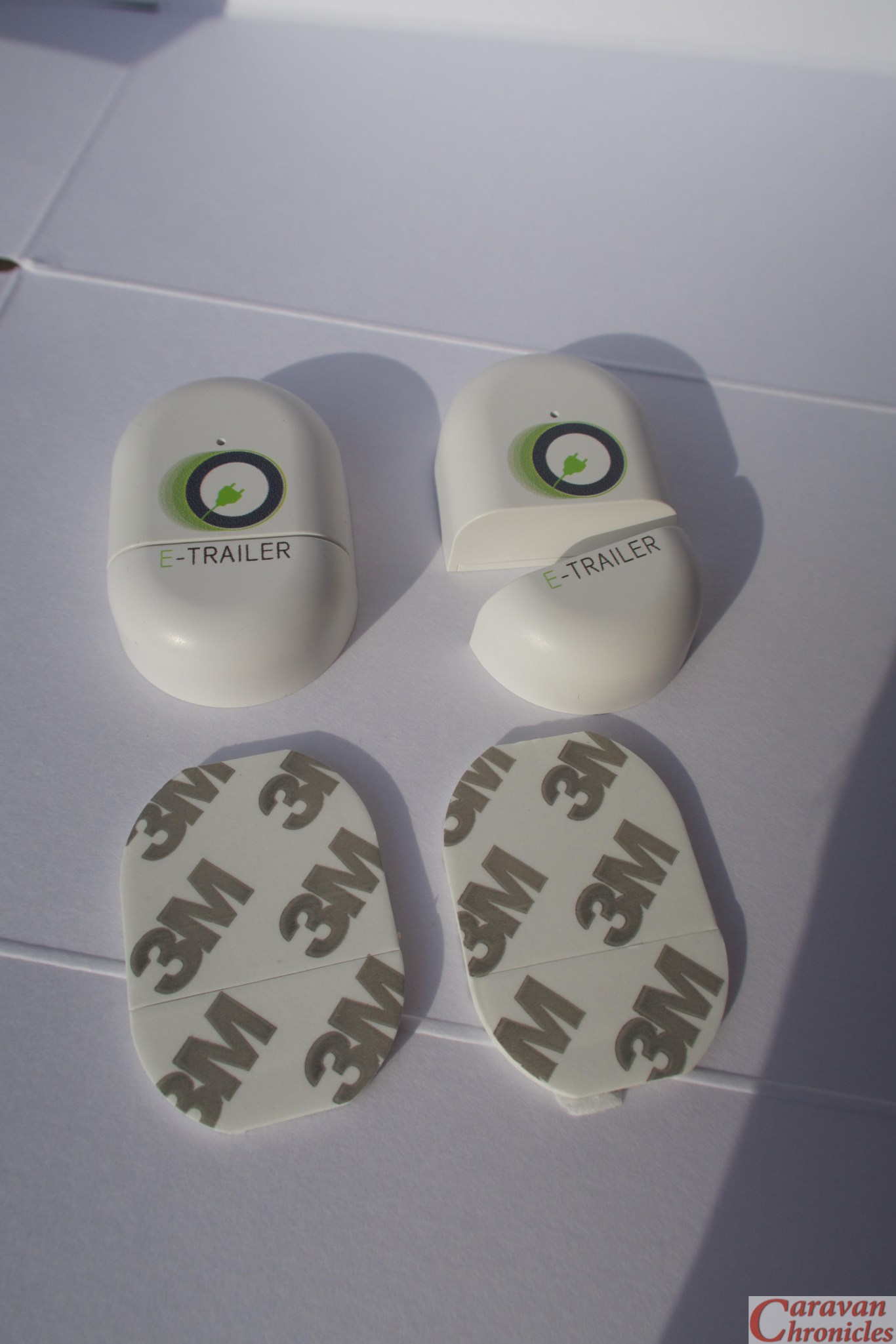
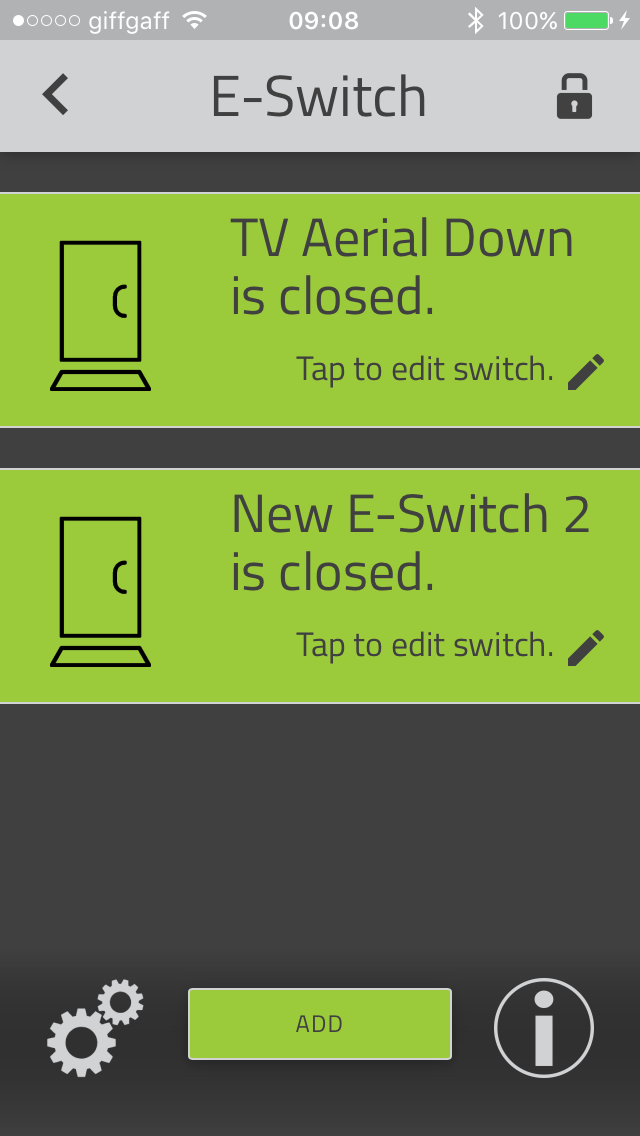
In the E-switch module you get two magnetic contact switches that come with 3M pads so you can stick them almost anywhere. Again adding them is a simple scan of the QR code and follow the instructions on-screen. I edited the text for the first switch so I know it is the TV Aerial.
If one of the switches is open, on the home screen you see that the padlock is orange, close the switch and the padlock closes and the icon turns green.
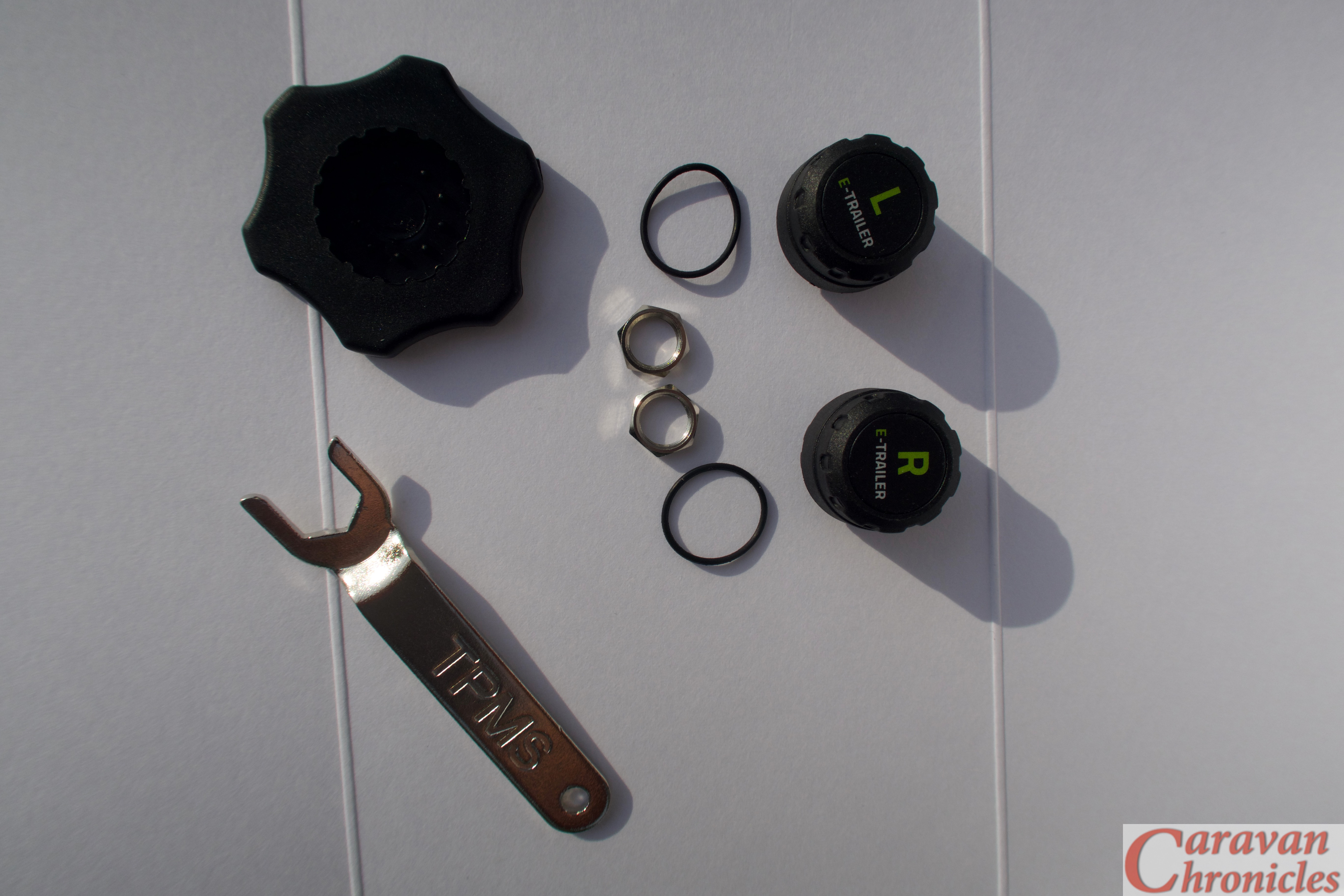
So what else can it do? Well I also have the tyre pressure monitor module. You get two pressure sensors to attach to the tyre valve stems. The sensors are the type that you can change the battery, which I much prefer, as opposed to the sealed type. I’ve not installed the TPMS module yet as I’m still testing out other TPMS systems on the Amarok and caravan but no doubt it will be an easy install… by just scanning the QR code!
The last little trick that is has is it is an extreme accurate caravan levelling aid. Again a quick scan of the QR code gets this up and running and follow the on-screen instructions to determine your level point and it becomes easy to level next time you pitch.
OK so what did I think about it?
Well it was super easy to install. It was also super easy to add each module. I like the fact that when you hit up to set off you can check the battery voltage and see if it is charging. You can make sure what ever you have attached the magnetic contacts to you can see if they are in the correct position (i.e. closed, lowered etc.) and you can check the fridge or caravan temperature and tyre pressure.
While driving you can keep an eye on things like your caravan’s tyres, battery charge and fridge temperature. when you arrive on site, reversing into your pitch you can easily see if the caravan needs levelling side to side using ramps or blocks and when you un-hitch you can adjust the jockey wheel to get perfect levelling front to back.
“We have a problem Huston…..”
Now I do have a problem with it. Come what may I cannot get it to vibrate, notify me or play a sound when anything goes out of the parameters (switch open, battery voltage low etc. I made sure I had the latest version of the app, I have double checked all the settings within my iPhone but I cannot get a single ‘vurrrrrr’ or ‘ding’ out of it. Admittedly my iPhone is now 2 versions behind the times but if the app installed I’d have expected it to work ok. I’ll continue to work on this one.
Finally…
I think the idea and technology is great behind the product and I really do like it and can see lots of additional applications could be added on in the future.
Why though is it an after market accessory? When you can be paying the best part of £30k for a top end caravan should not this sort of information system be standard? When I hitch up and set off, I’d love to be able to check the battery voltage (and charging current) check the fridge was working, tyre pressures, doors and hatches closed… and it is not beyond the engineering skills of man to be able to have a bulb out detection system for the road lights even…. all fed directly to your phone.
If a manufacturer decided to install such a unit the price point would drop dramatically.. and that’s one of my other niggles. The technology and ease of installation is great, however there is a bit of an ‘ouch’ in the wallet as currently the comfort pack is priced around £380. That’s a lot of nights on site. You can build up the unit by just buying the individual modules though.
Do I want one… “Yes”…. would I buy one…. I’ll just go and have a word with Sue.
I guess this really is the update to an update (Getting All Charged Up – Update…). We have been living with the Sterling Wildside unit now for about 6 months and a LOT of people have been emailing me asking how we are getting on with it and is it worth it?
Well I have done quite a bit of testing with my leisure battery in various states of discharge. With it at about 50% I have recorded a charging current of 15.9 Amps which is far greater than I could manage before and due to the fact that the Wildside unit uses the correct charging profile for my battery I’m not concerned that I will be reducing or damaging my leisure batteries life expectancy.
Earlier this month I had an email from David Dent who had successfully installed a Wildside unit in his Bailey Unicorn 3 Cadiz and he seemed pleased with the results so far. Although installing it in a Bailey was a bit more of a challenge. I’m looking forward to checking back with David to see how he is getting on with his unit.
A couple of other people have also emailed me reporting that after installing a Wildside unit that it had solved their problem of having enough stored energy to operate their motor movers. I still wonder if people who have been experiencing problems with their motor movers caused by supposedly bad batteries and have had to replace them is possibly down to the fact their battery was never really receiving a correct or full charge before causing its early demise.
New Tool…
One of the things I want to get to add to my ‘tool box’ in the near future is one of the computerised digital battery testers. At the moment I’m basing a lot of my work on the voltage of the battery and chemistry type. I’d like to be able to improve on this.
Watch This Space…
The other thing I’d also like to be able to do is get a voltage and charge current reading for the leisure battery while we are actually driving. I have been looking at a few – mainly American options for bluetooth remote voltage and current sensors that you can connect up to with your phone. There are a couple of devices that offer a separate display to fit in your vehicle.
However, there is a rather exciting unit that will shortly be coming on the market in this area that might be a bit of a game changer. If you want to know what it is well go and see Andy Harris or one of the guys on the Road Pro stand at the NEC in a couple of weeks time as they, along with the manufacturer will be launching and demonstrating a new product that might just be bringing caravan technology bang up-to-date. I hope to be bringing you a bit more about this soon and maybe an install too!
Final Thoughts….
Is the Wildside unit worth it? Before I answer this let me just say I am not being paid by anyone for any endorsements of this unit. I was supplied one of the first (pre production?) units as a test and to provide feedback to Sterling Power on how easy it was to install and it’s performance in the real world, which I did. As a result a couple of things were ‘tweaked’ hence mine had to be returned, reprogrammed and reinstalled.
Well I’d say if you have a Euro 6 or even a 5 engine and you want to make sure your battery is looked after then yes. If you want to upgrade to a more advanced battery chemistry, again yes. If I had to return mine would I go out and buy one? Yes I would.
Is there anything I’d like to see changed? Well if they ever did a Wildside 2.0 I’d like to be able to move the caravan’s own charging system so it was routed through the Wildside unit when on mains hook up to take advantage of the Wildside’s smart charging facility and to allow you to move to more advanced battery chemistry. I guess also adding a solar panel input with built-in MPPT would be a big hit too.
In The Future…
I’m starting to wonder if the way we charge and power caravans needs to take a leap forward. I have had an idea that you could basically split an inverter. One half in the vehicle and the other in the caravan. Imagine a small unit that takes the 12 volt DC from the vehicle and inverts it to 48 volts AC. You then have a lead that connects this across to the caravan and there it is converted back into 12 volts DC.
So whats the difference… all you are doing is what’s already happening? Well using a 2.5 mm cable rated for 25 amps at 48 volts gives you 1200 watts of power. To transfer that much power at 12 volts you would need 100 Amps. Keeping it at 48 volts will mean the system is still in the ELV range for safety. (Use 4mm cable and this could be 1680 watts of power which would be equivalent to 140 Amps at 12 volts)
Being able to transfer that sort of energy would allow you to forget LPG cylinders and put 1000 Ah of lithium cells in the caravan with a 240 volt inverter and power everything. Just a thought that I’m throwing out there.
OK… so that title was a bit dramatic! However here’s the thing… I don’t think everything is peachy with Euro 6 engines and charging leisure batteries.
If you are a regular reader, you know I have recently installed one of Sterling Power’s Wildside units (and so far I’m super happy with it!) but I did get an email from someone who had read all my postings about it and asked me if it might cure his problem. Here’s the gist of his email….
Note: I have edited this down a bit…. and withheld the name of the person and vehicle.
“I have recently changed my car to a new 2017 xxxxxxxxxxxx and after several trips with it, on arriving home there is never enough charge in the motor mover to manoeuvre our caravan up our drive (which is on an incline) and park the caravan round the back of the garage. I have to plug the caravan in overnight before I can use the mover.
This only seems to have started happening since we changed to the xxxxxxxxxx. I had the caravan’s battery tested at two garages and they said it is OK and it is only 2 years old. The local caravan service man said he could not find anything wrong with the motor mover.
As we are on mains at the caravan sites we visit for a few days the caravan battery should be fully charged.
Can you help?”
This did have me stumped for a bit. Battery tested OK, no issues with the mover, so what was going on?
While doing some of the prep work for writing about my installation of the Wildside unit, I had spent a few days prodding about our VW Amarok with a multimeter and making a few notes about voltages etc. One thing that I did cotton on to was the cyclic way the vehicles ECU seemed to turn off the alternator…. well I should really say put the alternator into “idle” mode. Now with the caravan attached (pre Wildside unit install) I did notice that at the start it seemed to take longer for the vehicle’s alternator to go into idle mode but also it seemed to stay in idle for a lot longer and I was in the process of trying to work out why as initially I’d have thought it would have been less as it was running the fridge and charging the leisure battery.
A picture is worth… you know the rest. Here’s one of my excellent drawings!
Right, here we go… The drawing shows a caravan plugged into a tow vehicle that has the engine-turned off. Pin 9 is live as it should be, and the habitation relay in the caravan is effectively off allowing the caravan’s leisure battery to connect and power the caravan’s internal 12 volt systems. As the vehicle engine is off, there is no power on Pin 10 the fridge circuit, as this is controlled by the vehicle’s ECU.
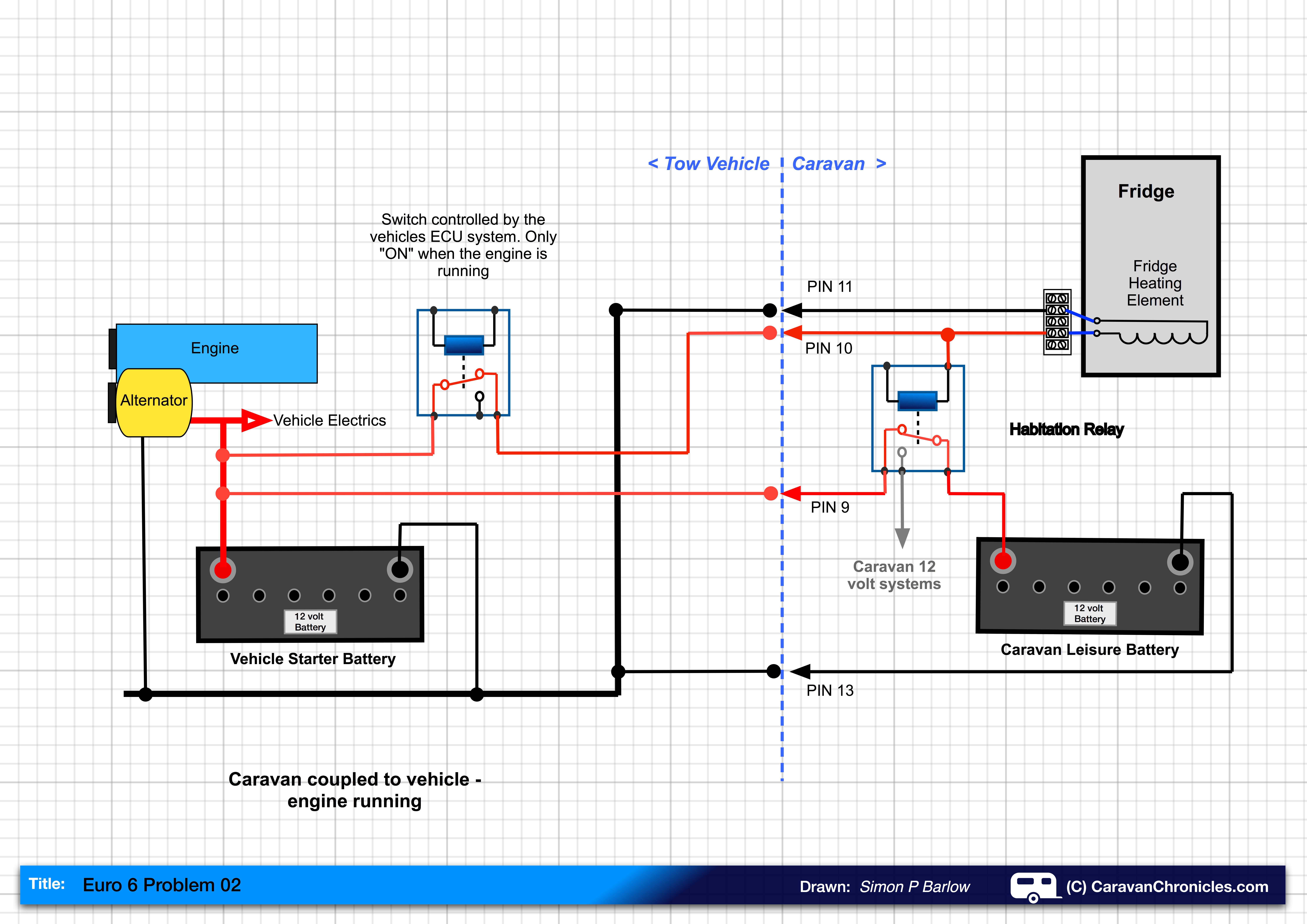
Really this could be any vehicle with any engine. Now let’s have a look at what happens with the engine running…
Pin 10 is live, turned on by the vehicles ECU and this powers the caravans fridge. It also operates the caravan’s habitation relay which now disconnects the leisure battery from the caravan’s 12 volt systems and connects it to Pin 9 so that the vehicle can start to charge it.
Again, this could be any vehicle with any engine. This is how our Land Rover Freelander works with our caravan. All straight forward.
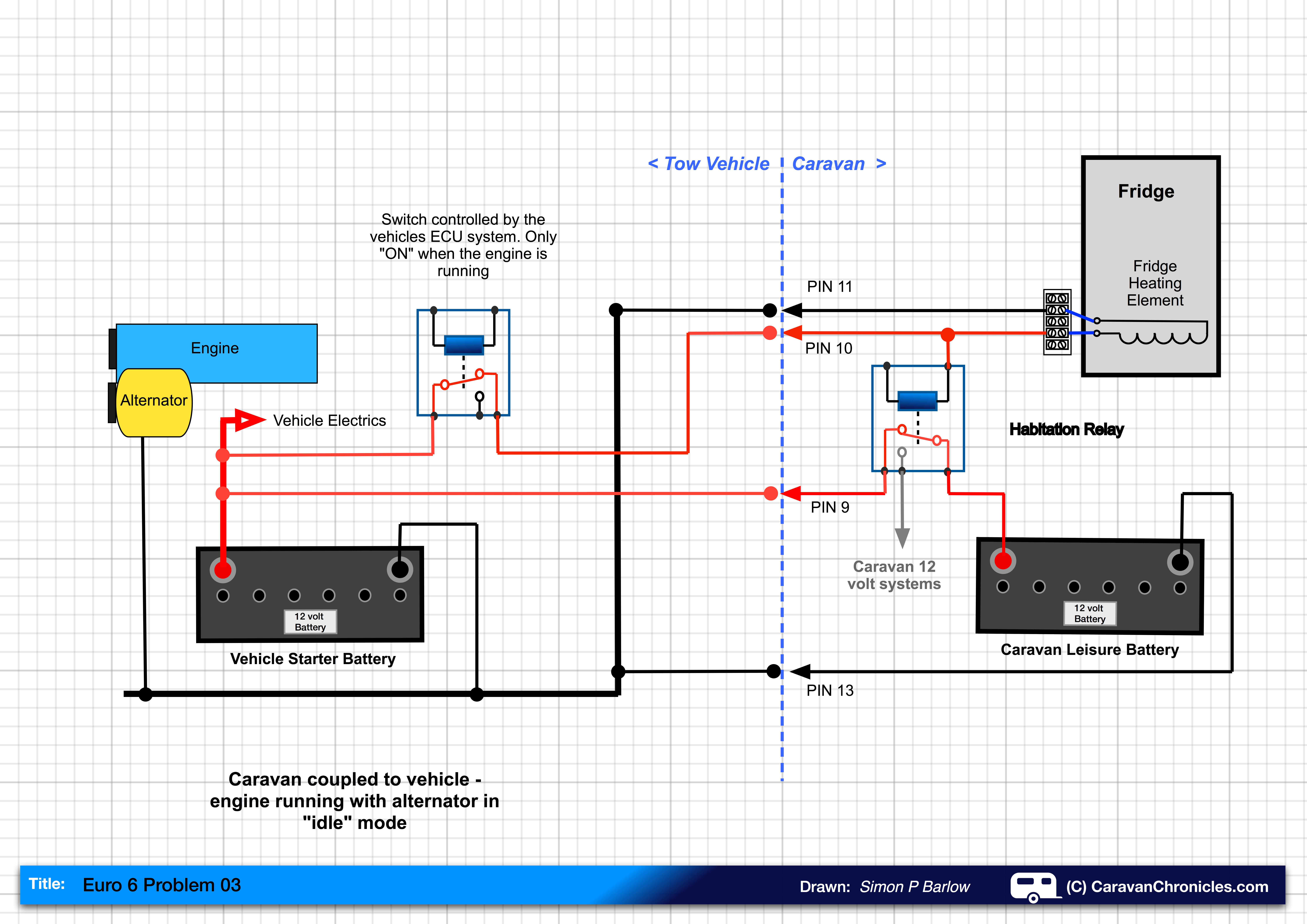
Now lets look at what happens when the Euro 6 engine puts the alternator into “idle” (or Eco mode etc.)
This is where it starts to get interesting. I have taken a few liberties here and made a few assumptions. I have shown the vehicle’s alternator disconnected. In practice the ECU doesn’t disconnect the alternator, it will reduce the field voltage and hence the output, not really disconnecting it but reducing the output to a negligible amount.
The ECU will also monitor the vehicle’s battery voltage and continue to allow the vehicles general electrical system to drain the battery to somewhere around 75% charge (this may be a bit of an arbitrary figure) The ECU will then turn on (or up) the alternators output to recharge the vehicle’s battery to about 80%. Why 80% well it needs the remaining 20% ‘free capacity’ so that when you brake, the excess energy of engine braking (regen) can be dissipated into the vehicle battery. Remember that on a Euro 6 engine the alternator is capable of generating round about 2Kw.
Now at this point it dawned on me that something could be happening here, but the idea was a bit ridiculous…. guys with far more agile grey cells than mine must have worked this out and I dismissed the idea. I must have missed a trick somewhere.
I did a bit more checking. I was using two 17Ah sealed lead acid batteries as my “leisure” battery simply because it was quicker to charge or discharge them than a 120Ah battery. For a fridge load I was using 3 x 50 watt light bulbs and it was all jury rigged to a 13 pin plug so I could just plug it in to either the Freelander or the Amarok to make comparisons. I was using a trusty old AVO 8 meter, a couple of digital multimeters and a clamp meter to measure current so really the whole set up was super sketchy for anything that I could write about. I thought that I must have been missing something somewhere and I actually kind of put it to the back of my mind. I just got on with installing the Wildside unit and writing it up.
“DING” You have mail……
I received an email from Charles Sterling with some very interesting information. During testing he had come across exactly the same issue I was pondering over but had put off further testing. I guess by now you have worked it out. Quite simply you can get current flow in the opposite direction… from caravan leisure battery to vehicle battery. In testing Charles had measured a current of around 6 Amps.
It dawned on me that maybe during my initial testing with my jury rigged set up I hadn’t missed something and the readings I had seen were correct. Both Charles and I quite separately had (in my case ‘stumbled’) on a potential issue with Euro 6 engines and caravans.
Back to the original email earlier. It now made sense. The sender of the email was setting off from their campsite to travel home with a fully charged battery (being on EHU while they were on site) and during the course of the drive home, the vehicles ECU was actually reducing the fully charged leisure battery down to 80% charge as it actually thought that the ‘vehicle’ battery was at 100% charge. Hence when he arrived home, the caravan’s leisure battery didn’t have enough charge to run the motor mover long enough to put the caravan away.
So what does this mean in practice?
Well effectively (give or take a bit of loss due to cabling) the caravan’s leisure battery will only get charged to about 80%. You can now think of the vehicle battery and caravan leisure battery as being one battery bank because that is how the vehicle sees it. If the leisure battery is fully charged its voltage will be higher than the vehicle battery so the vehicle will turn off (or down) the alternator so that the vehicles electrical system can drain it to about 75% ready for accepting the excess energy from regen braking. The caravan’s fridge helps the vehicle by draining the battery bank that bit quicker.
This also answers another question. While I was testing, sometimes I’d plug-in my jury rigged setup and if my two little 17Ah batteries were fully charged I’d get a low current drain indicated on my clamp meter. I’d dismissed this to a certain extent, but now I realise that as my two 17Ah batteries were fully charged and the vehicle battery would be at about 80% charge, there would be enough of a voltage difference for a short while, that the two 17Ah batteries would try to equalise with the vehicle battery by recharging it slightly..
Whats the answer?
Well thankfully I solved my problem when I installed the Wildside unit a few weeks ago.
Finally…
If you have had any electrical issues with a Euro 6 engine and towing please drop a comment below. I’ll try to help.
As an aside, I am trying to arrange attending a tow bar installers electrical course with a couple of the OEM electrical equipment manufacturers and one of the approved bodies so I can hopefully increase my knowledge base and widen the number of vehicles I can cover. It’s a bit up-in-the-air at the moment as it would appear its going to cost a small fortune! (Sponsorship deals gratefully received!)












 The actual unit is about 120mm long by 80mm wide and 40mm high with a good quality power connector at one end.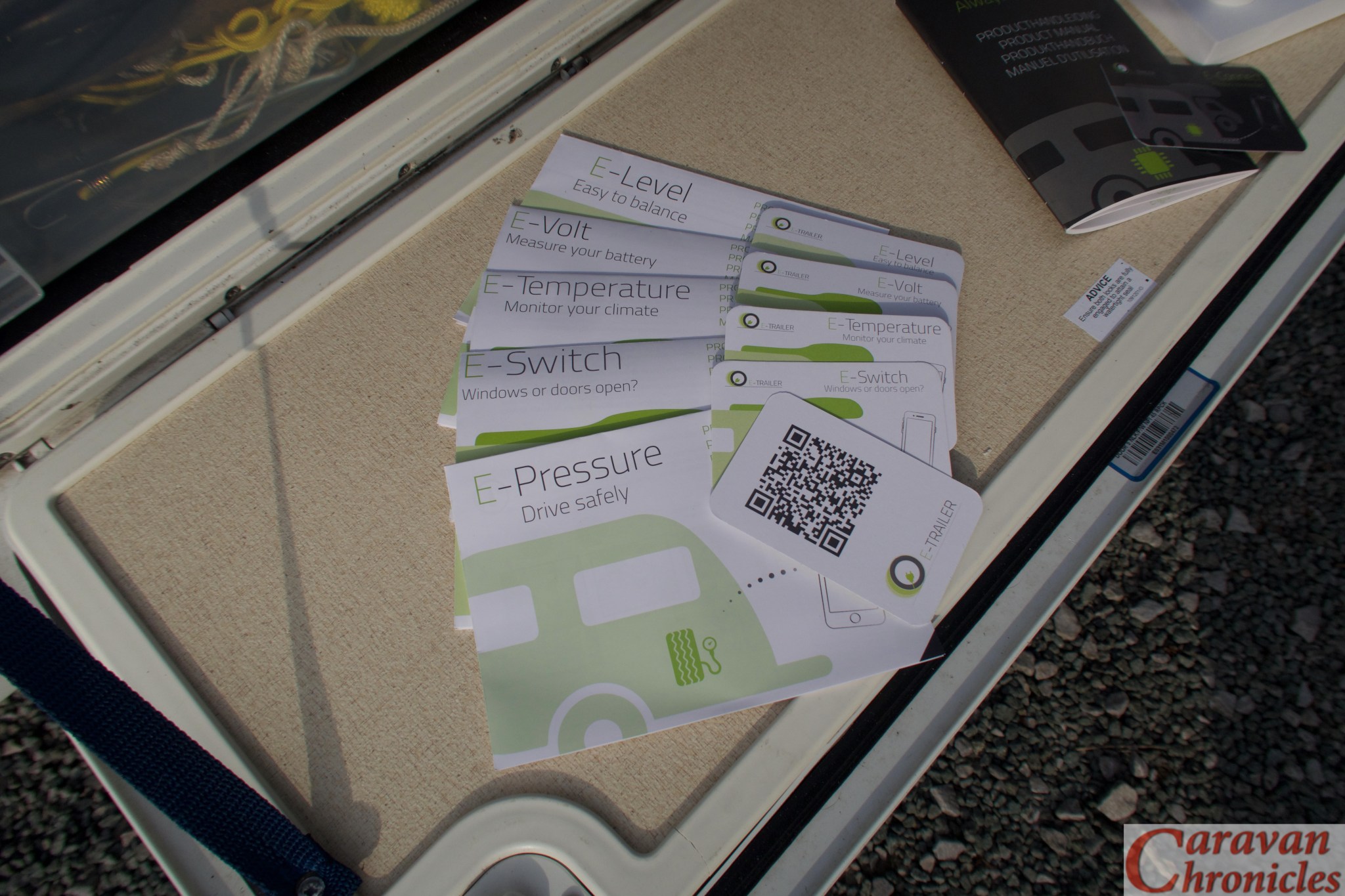





 Well I have done quite a bit of testing with my leisure battery in various states of discharge. With it at about 50% I have recorded a charging current of 15.9 Amps which is far greater than I could manage before and due to the fact that the Wildside unit uses the correct charging profile for my battery I’m not concerned that I will be reducing or damaging my leisure batteries life expectancy.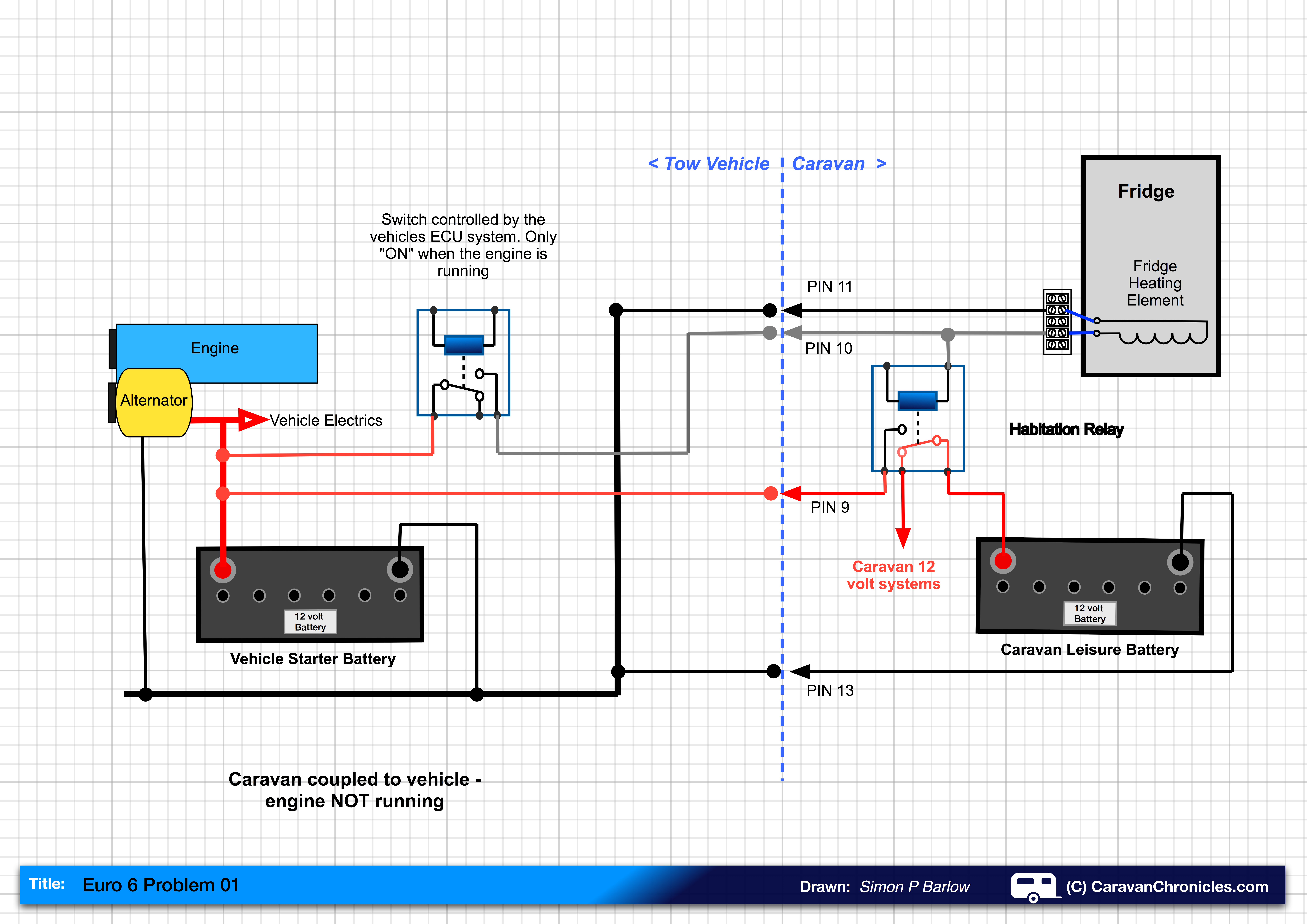
 Caravan Chronicles