Do you get dazzled by the reflection of you vehicles fog lights on the front of your caravan at night?
Someone emailed me about this problem. As he had a 4 x 4 and the fog lights were higher than some cars, when he turned the fog lights on, the front of the caravan was lit up bright red and a distraction. He asked me if I could come up with a simple way of turning the vehicle fog lights off, but leaving the caravan fog lights on…. but making sure it complied with the law.
A while ago a chap emailed me asking if I could come up with a way of wiring Daylight Running Lights on a caravan without having to change any wiring in the tow vehicle or making a new connection via the 13 pin plug. He also wanted them to work correctly, i.e when the vehicle lights were turned on, the DRL’s turned off automatically. His idea was to install a 300mm strip of super bright white LED’s up each front corner of his caravan to make the caravan more visible.
Was it possible to come up with a wiring solution?
It’s been a while since my last post, however it’s not been quiet in the Caravan Chronicles office. We have booked our next jaunt out and seeing as it’s our 30th Wedding Anniversary we decided to go back to The Old Oaks for a few days as we thoroughly enjoyed our last visit there… and it is one of the best sites in the UK! Continue reading →
Fully serviced pitches are becoming increasingly popular. With the facilities in caravans including showers that can actually be used as showers rather than just to hang wet clothes the only downside was the water supply and disposal.
The supply side is catered for quite easily and there are a number of commercially available kits on the market to adapt your caravan’s internal water system to either a direct feed via a pressure regulator or a controlled feed to top up your Aquarol. It’s easy to understand why commercial kits are available, all they have to do is connect from a tap to your caravan’s water system via a length – or multiple lengths of hose and 99% of the time this can be achieved.
However, a system for the drainage is a little different. The problem is water has an annoying habit of only wanting to flow down hill. Before deciding on how I was going to tackle the drainage for our caravan when on sites, I looked what other people were doing. Nearly all were using a length of the standard grey ribbed flexible hose to connect the Y piece to the drain. This seemed OK if the hose length was one or two metres, but after watching one fellow caravanner keep wrestling with what seemed like a 300 foot length of springy pipe which most of it was just coiled round and round on the ground and every time they did the washing up he had to come out and lift sections of it to drain…. that was the way I didn’t want to go. I would have thought cleaning it afterwards would be a bit of a chore as well.
I wanted to go with a rigid pipe and still have the ability to adjust the length without resorting to short lengths of pipe and adaptors. On a trip to the local Screwfix Direct store I checked out the plumbing section. I wanted to use cheap standard pipe and parts where possible. The choice of sink drainage pipe seemed the way to go. There are three colours generally available, Grey Black and White. The Grey and Black have UV stabilisers so that years of being clipped to the outside of houses doesn’t degrade them. The white however is designed only for interior use, but it did offer an advantage. White is easier to see on dimly lit caravan sites and for the amount of time it would be outside I don’t think the UV element will be a factor.
There are two diameters of pipe available and one slides neatly inside another. So using the smaller diameter ‘upstream’ I could effectively have a variable length of pipe. A few elbows and angles should allow me to easily adapt for most conditions.
They say a picture is worth a thousand words….
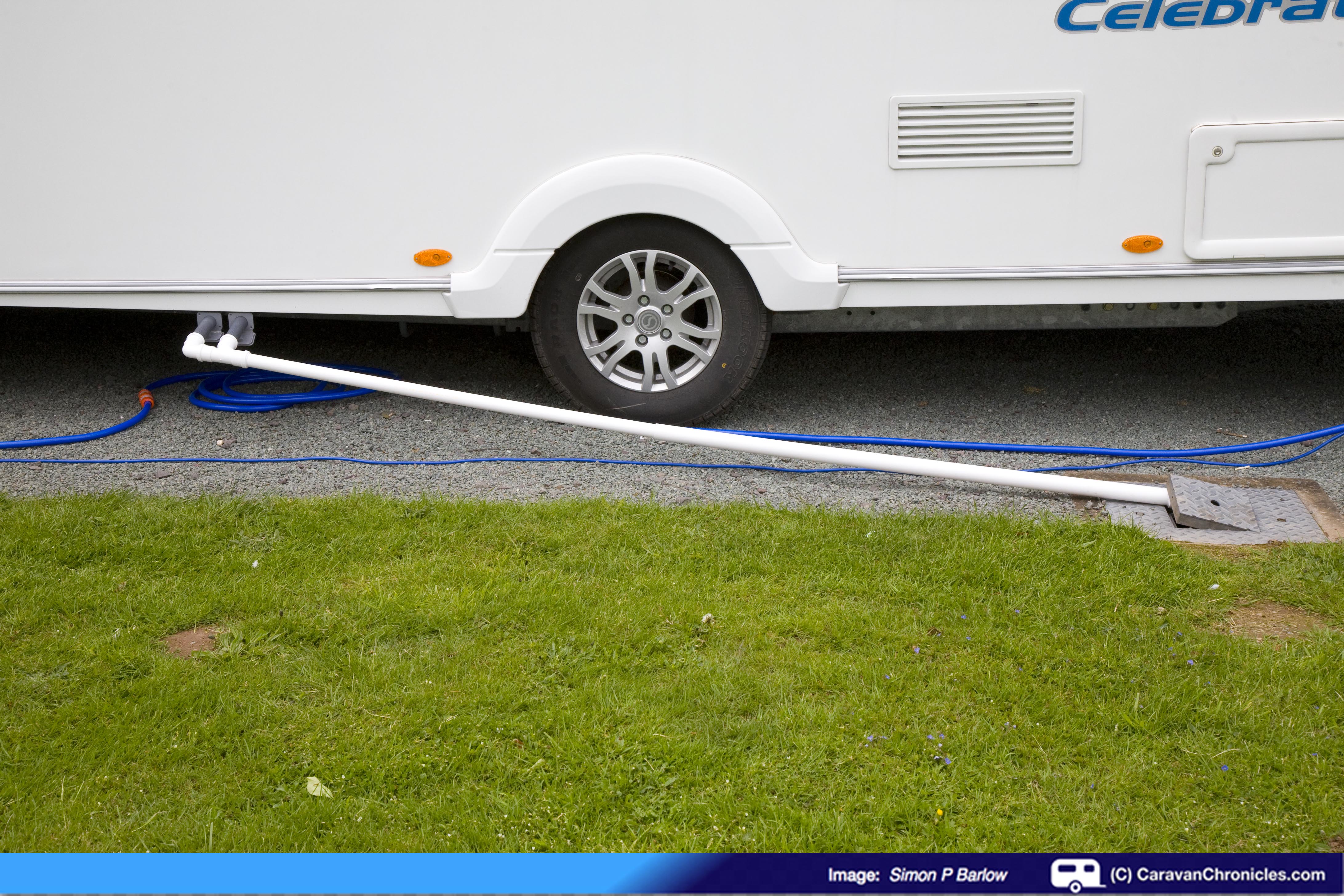
‘My’ drainages system being used at Stanmore Hall
I used the flexible pipes of the ‘Y’ adaptor that came with the caravan to connect up a manifold to join both caravan drain outlets. There is enough flexibility in these pipes to enable the outlet run to be skewed away from the van. I cut the two 3 metre lengths of pipe down so they could easily fit in the gas locker.
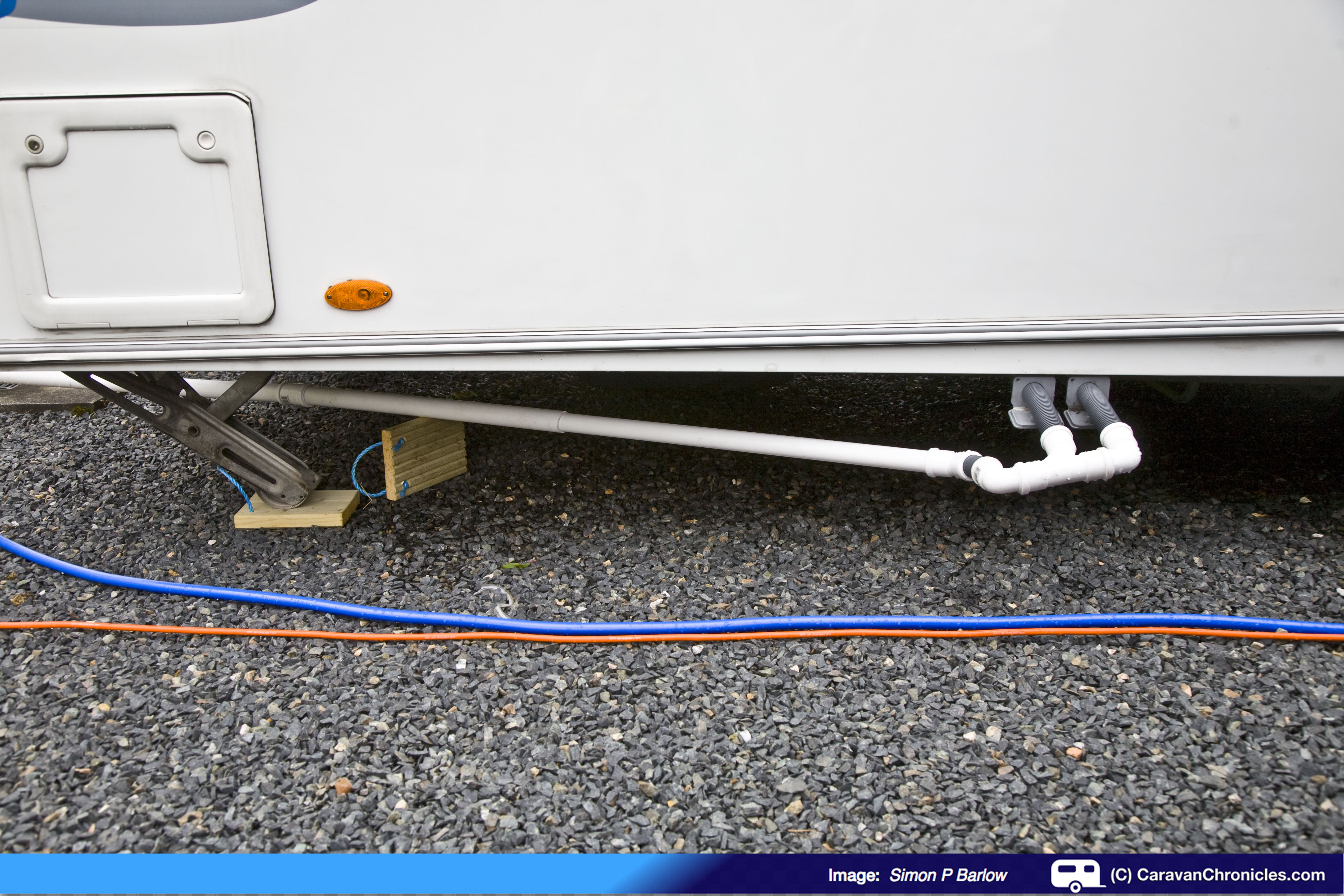
This is the set up used at Troutbeck Head CC site….
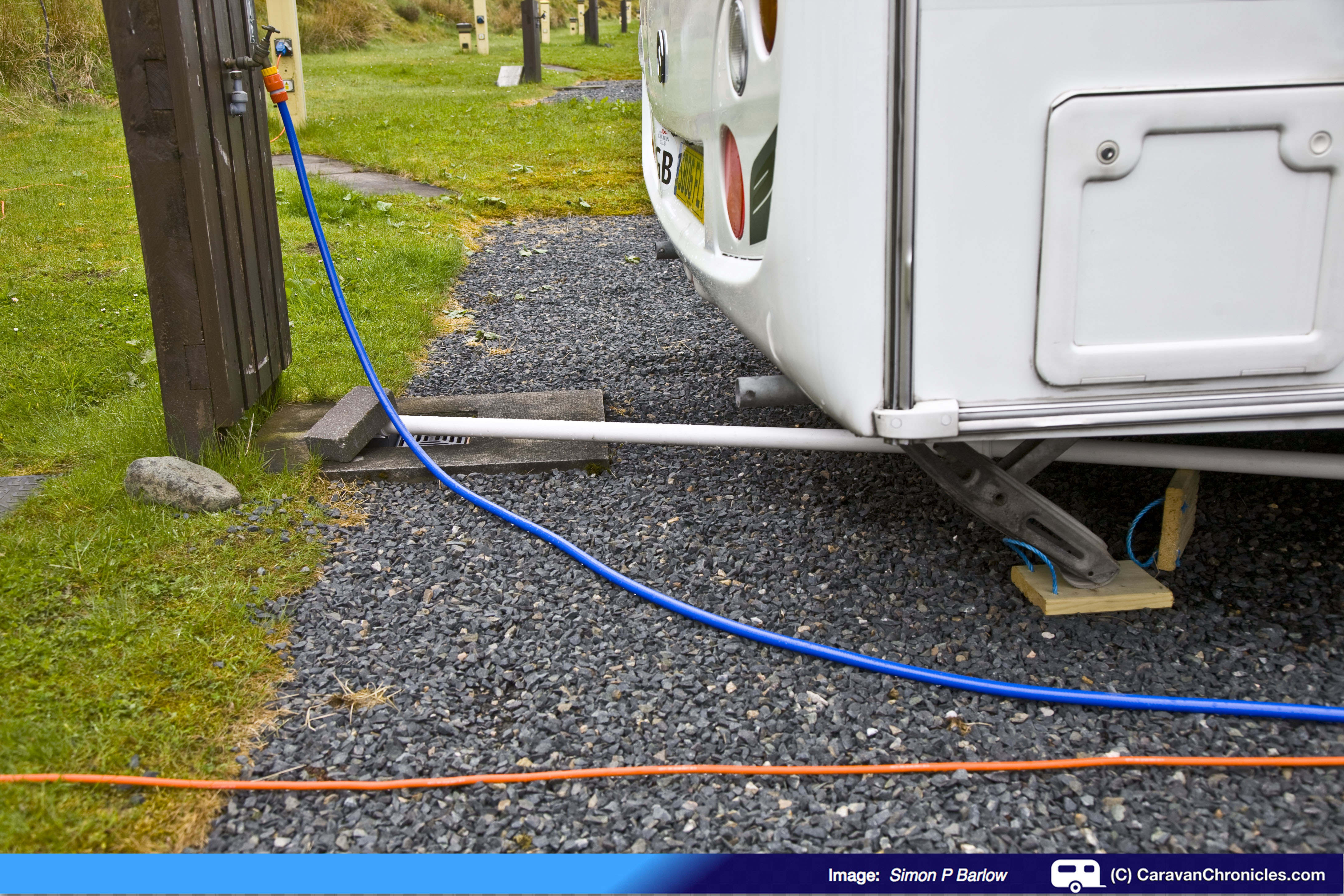
As the drain for the pitch was directly at the rear of the caravan, I used a length of flexible to add on a 45 degree bend so the pipe would run rearwards…..
I joined on a short length of pipe to my main “trombone’ sliding section with an adaptor and for good measure, I used a spare block of wood to support he extended length….
At the drain end, I use a 90 degree bend to point the flow down into the drain….. with a handy brick to keep it in place!
The original collection of fittings and lengths of pipe came to less than £12, and so far this system has allowed us to use all the serviced pitches we have been on, with one exception… Lady Heyes… for some reason the two pitches we have been on there, the EHU post and drain have been on the awning side of the van. Ho Hum…. you can’t win them all.
In use we haven’t had any problems and both the main sink, bathroom sink and shower drain easily. When we are breaking camp, the pipes are easily cleaned with running water and being white, its easy look down them to check they are clean. All the fittings are kept in a bag in the gas locker along with the two 2 metre and two 1 metre lengths of pipe. As the two sizes slide inside each other there is only really two lengths to deal with.
I hope it gives you some ideas on how you can connect up to a fully serviced pitch. If you have any ideas that would improve my system… let me know, anything to make things easier!
I already had a 2 into 1 adaptor supplied with the caravan that used the normal ribbed flexible pipe, so I used two of the three lengths of flexible pipe off this to make the connections between van and my system. I can always revert to the adaptor in the future if required. By using the flexible pipe as a connection to my ‘manifold’ it allows me to use it with the wastehog if required and I can just bend the manifold upward to remove the wastehog for emptying without having to disconnect anything.
The biggest advantage of using standard plumbing items is I can always go to a DIY store and add to the system if we find a pitch that I can’t connect too. I’m just looking now for something similar to a small awning pole bag that can take pipes at 2 metres length… or even the possibility of storing longer lengths along one of the caravan chassis rails.
Total price for this setup was £11.60. You can find everything here at Screwfix Direct
OK so you are driving along following your sat nav and you come up on a road restriction. Right, hands up those that can tell me the height, width and length of your towing vehicle and caravan? No hesitating now!
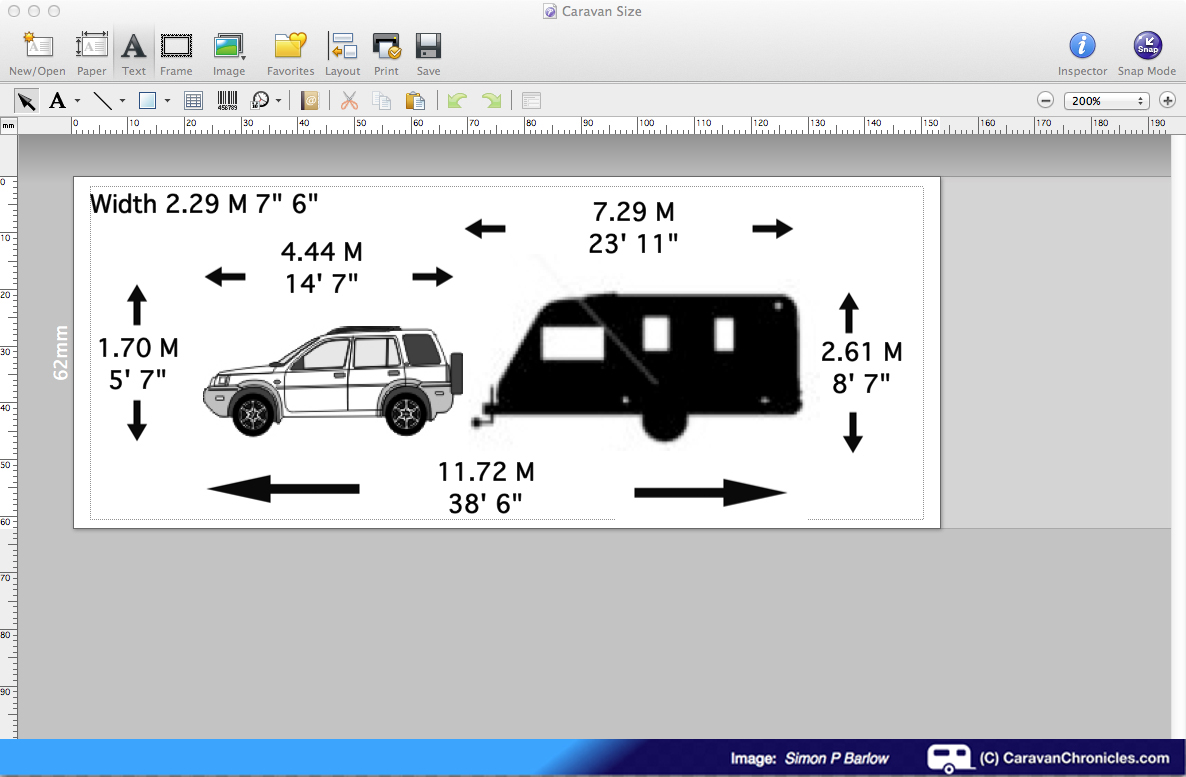
Hands down. I’ll bet not many of you could. Not wanting to appear on YouTube as the next “fail” trying to extract my caravan from a low bridge or narrow road, a while ago I made a small ‘aide memoire‘ to stick on the back of my sun visor.
In the Caravan Chronicles office we have a Brother QL560 label printer that just happens to come with a bit nifty label creating software and it only took five minutes to produce a label that Leonardo would be proud off….
Creating the caravan size label
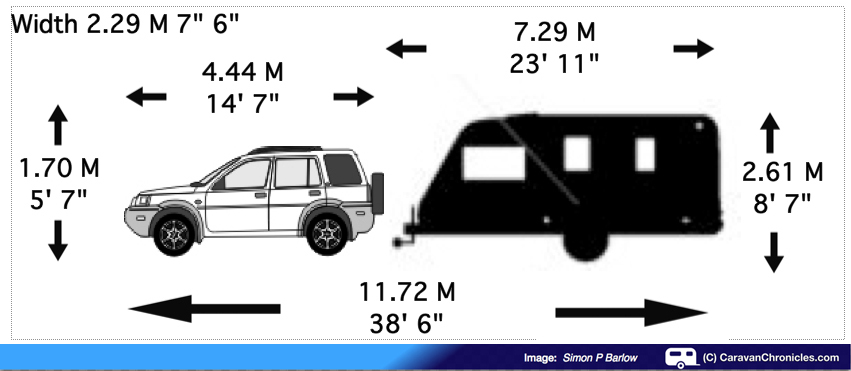
I included all the relevant sizes for the tow vehicle and caravan and the total length of the combined outfit. It is thermally printed on a self adhesive label and securely attached to the rear of my sun visor. Here’s a close up:-
So it’s easy to check on both the tow vehicle (it’s amazing how many car parks have a barrier that I can only just squeeze under!) and on the caravan. It also gives me the total length of the outfit when coupled.
So if you have nothing to do this weekend because you’re not away in the ‘van, get the handbooks out for the tow vehicle and caravan and make yourself a label.
In the next version I make I might include the tyre pressures and axle weights too. Although then it can become a bit cluttered… maybe another label for the passenger side…. Hmm.
No, I don’t mean getting your departure instructions from ATC….! One of the little jobs on my list was to make a new bracket to hold the 13 pin socket to the tow bar. The existing one was slightly bent from having to reverse the Rotary Christmas Float into a tight space last Christmas and it was also a bit low. I didn’t want the bottom of the socket to be the first point of contact with the ground if travelling down a deep rutted track.
The old bracket was slightly bent and low
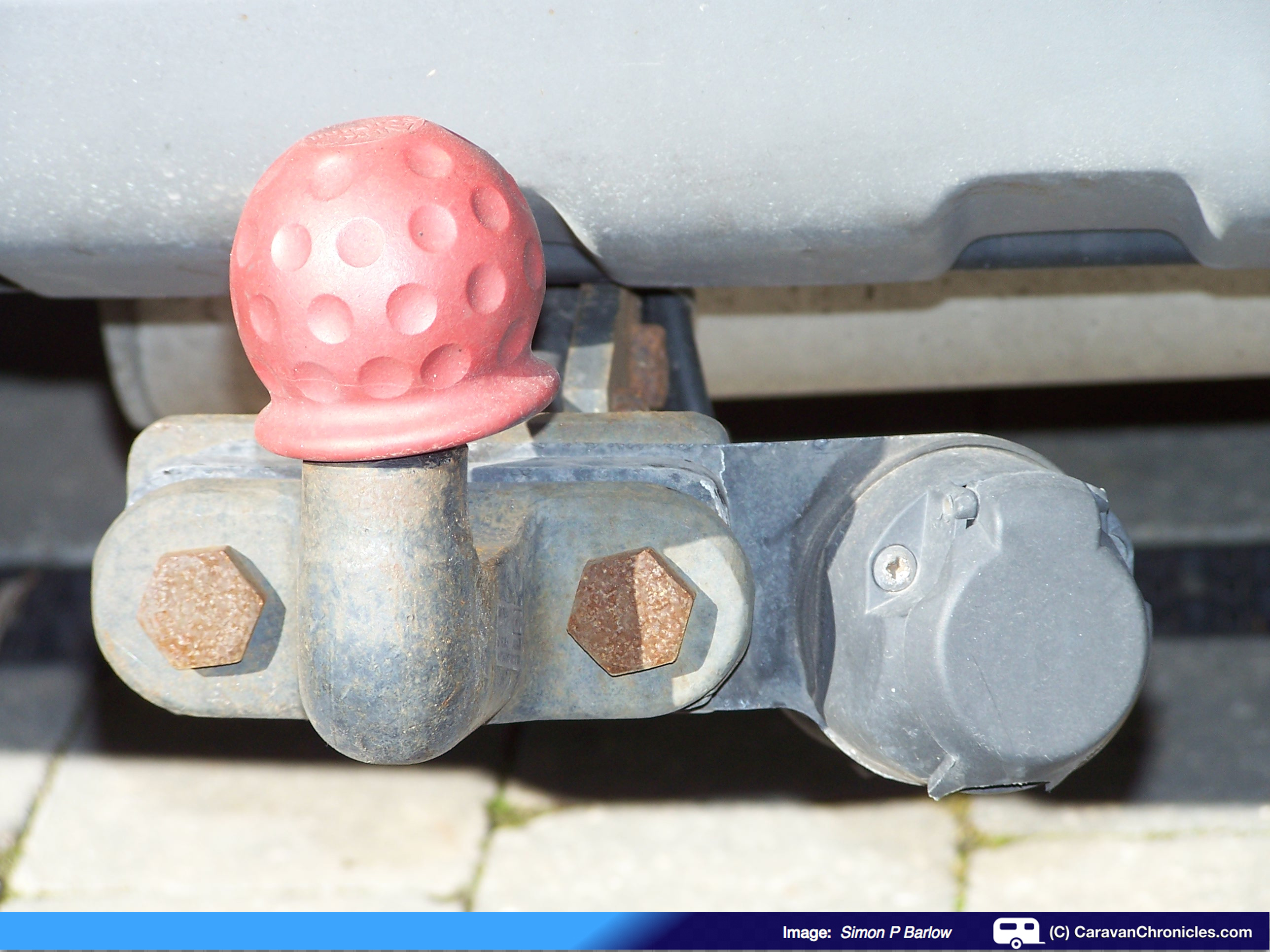
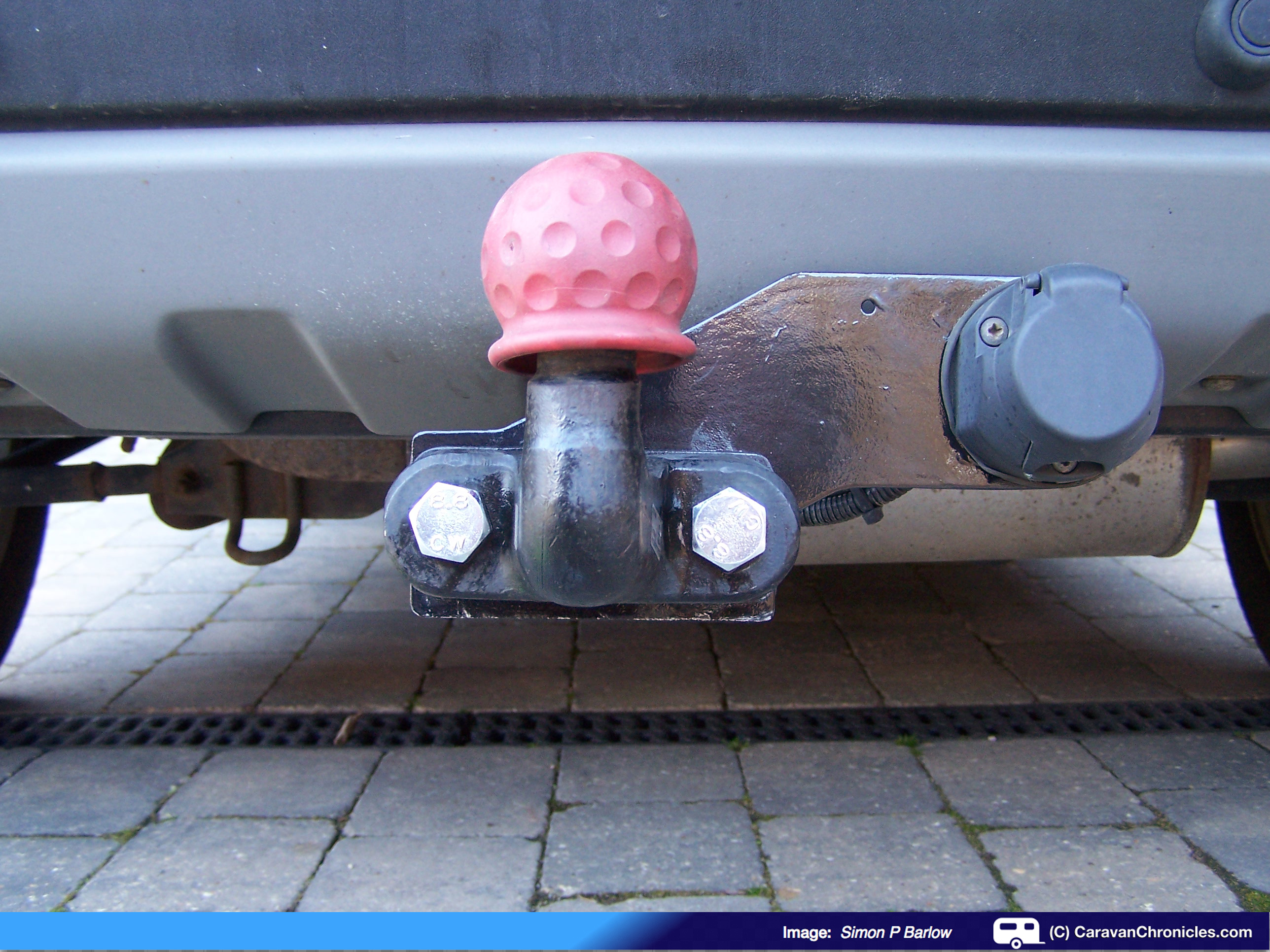
I wanted to move the socket up so it would be at least above the bolts for the tow ball and at the same time distance it from the tow ball so there was less chance of the 13 pin plug coming into contact with the A frame of the caravan (or Santa’s sleigh!) when manoeuvring.
The original bracket was pressed out of 1.3mm thick steel and I guess it was designed to have a bit of ‘give’ in it so it would bend rather than be rigid enough to cause damage to the plug and socket.
I needed something a bit more substantial due to the extended distance the socket was going to be from the main tow bracket mounting, but still retaining enough ‘give’ if required. I happened to have some pieces of 1.9mm thick steel that were originally cable entry plates for computer racks.
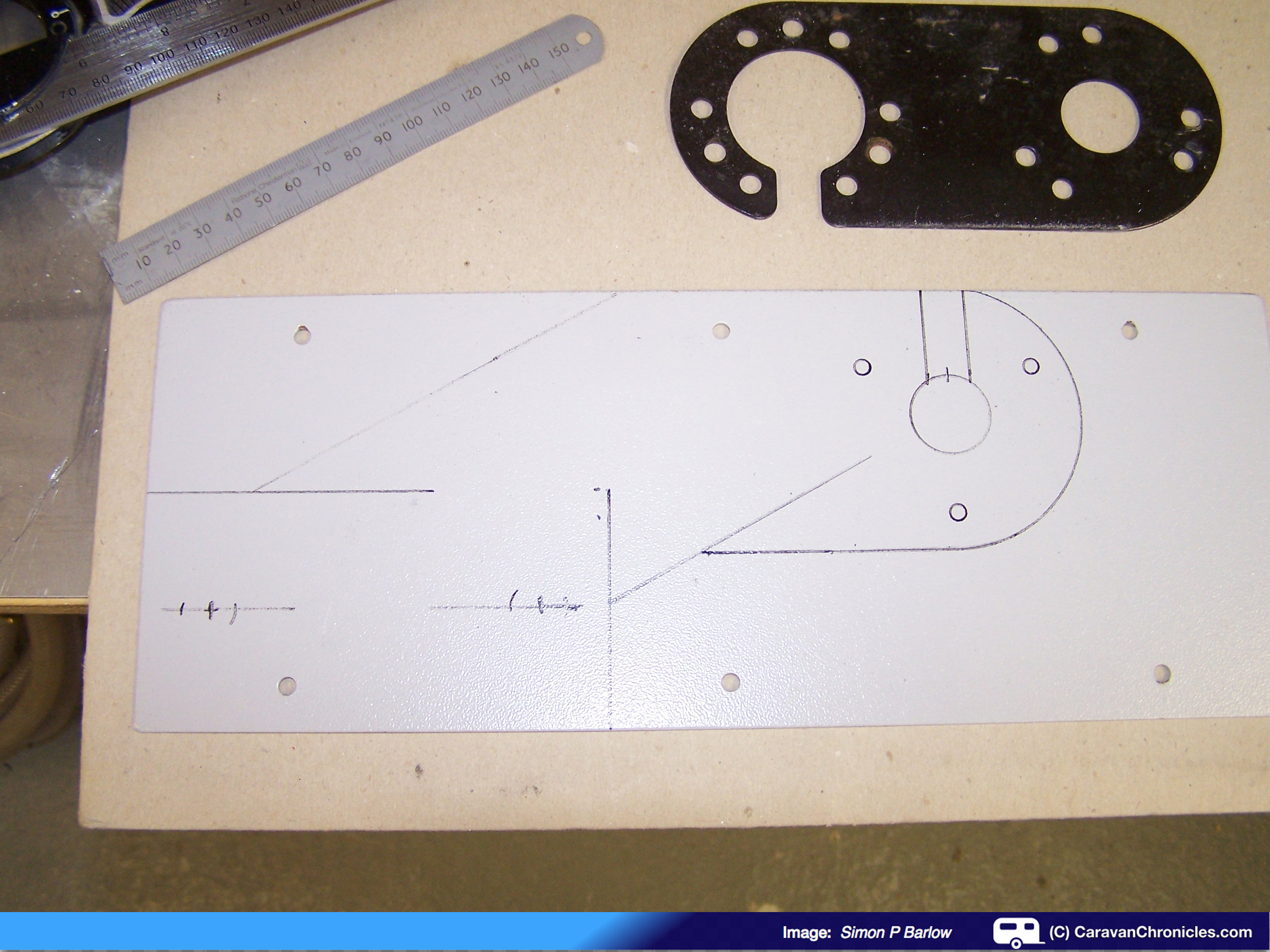
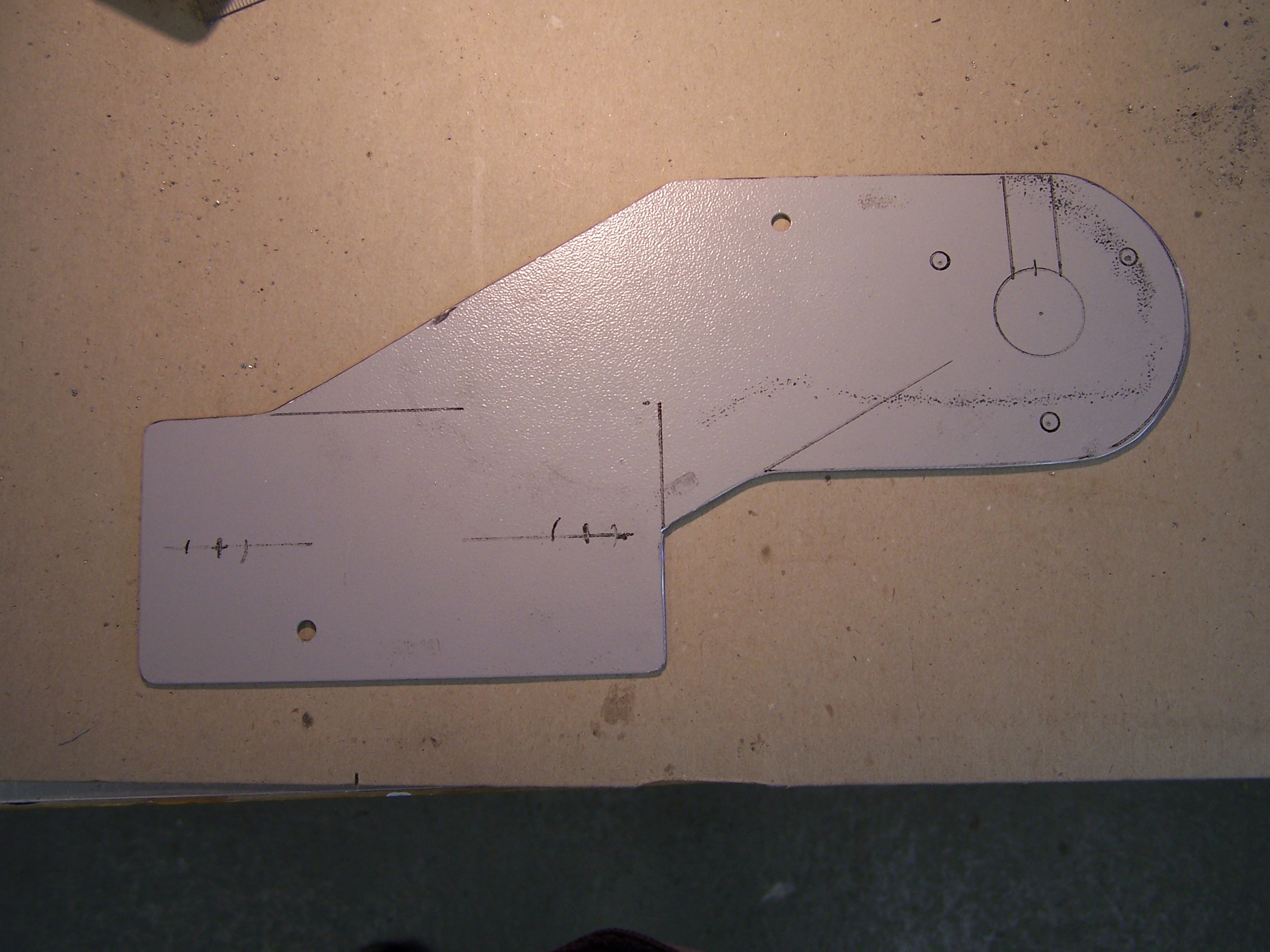
I measured the mounting plate that the tow ball fits onto, 65mm x 135mm, and using a plate that was originally for adding a 12S socket to an existing 12N fitting as a guide marked out the position of where I wanted the socket to be. Again using the extension plate as a guide for width, I marked two lines at 30 degrees… one up from the centre line of the tow ball mounting bolts and the other the same width as the plate. Fortunately the steel stock I had was just the right height! I also marked out the slot I would need to slide the cable through as I wanted to make it so it could be installed/removed without having to disconnect the 13 pin socket.
The next step was to cut out the plate. The easiest way would have been to use a plasma cutter…. unfortunately not a bit of kit I have in my workshop (Sue thinks I already have more kit than ‘International Rescue’) so it was a bit trimming with a band saw.
Once cut out, I could now mark on the locations of all the holes and centre punch them ready for drilling, and set about draw filing all the edges. Once all the edges were flat and rounded off it was over to the pillar drill to create some holes. I used a stepped taper drill as there was less chance of grabbing that a large diameter drill bit would do.
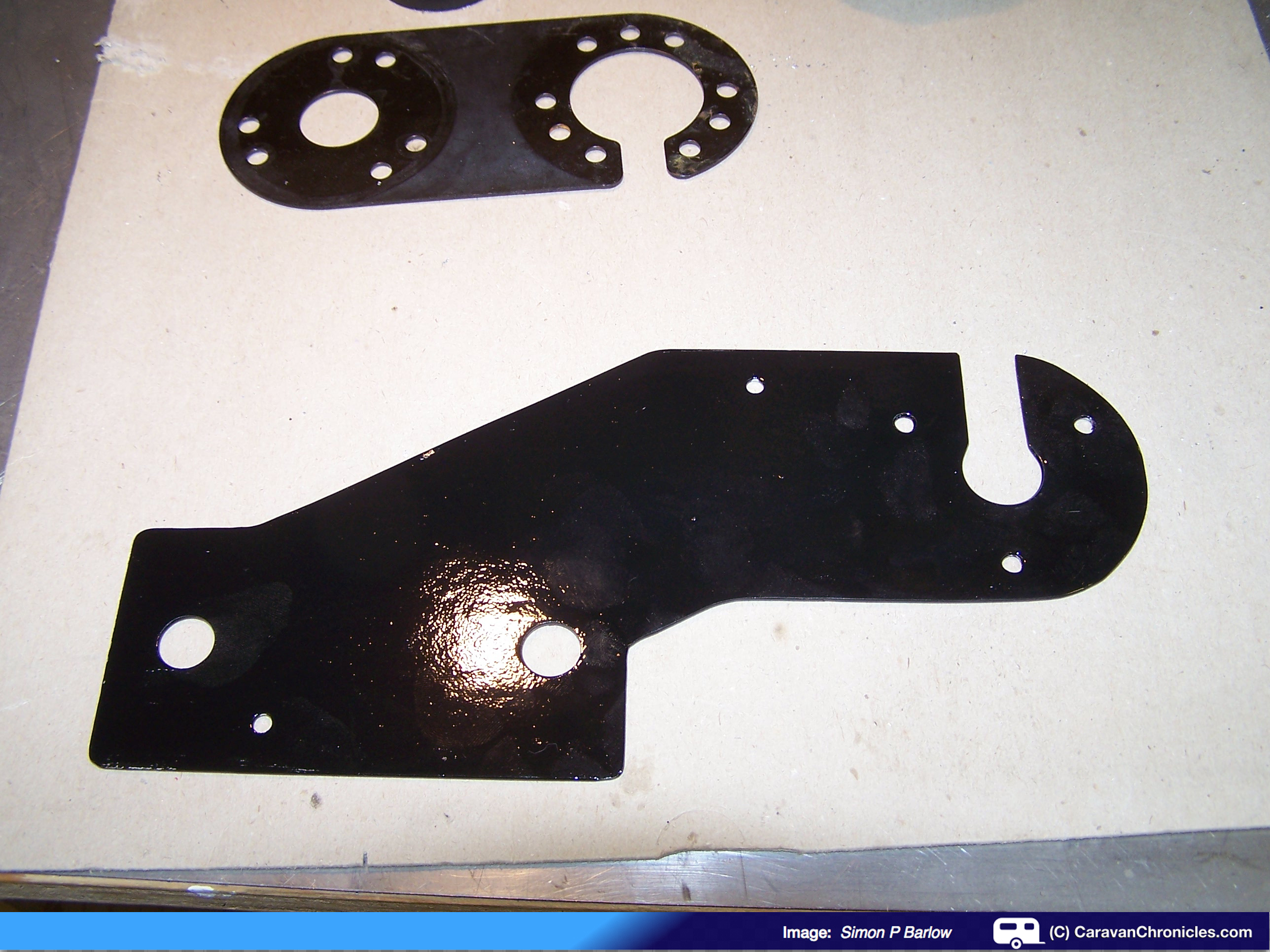
With the holes drilled, back to the band saw to cut out the slot and some more filling to smooth and round off the edges of the slot so it could not cause chafing on the cable.
When assembled, there is a small plate that mounts on the back between the two top mounting bolts for the 13 pin socket. This effectively bridges the gap caused by cutting the cable slot.
A quick coat of FORTRESS Black Gloss Metal Paint and it was left a few hours to dry.
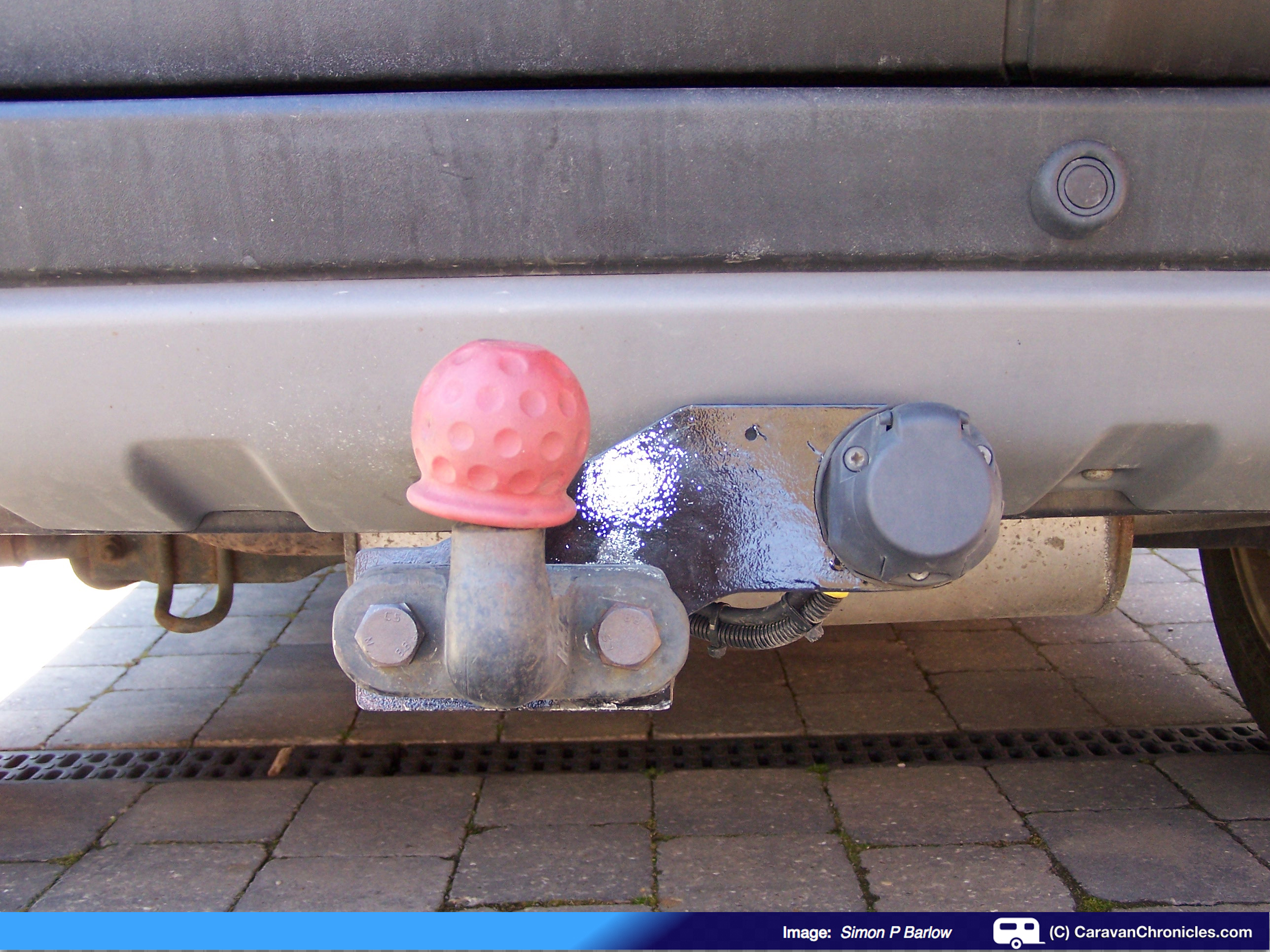
The finished bracket installed on the Freelander. The whole job only took and hour (excluding paint drying) and the result is now the socket and cables are clear of the bottom of the tow bracket so there will be less chance of catching it when off roading. The extra spacing will also allow a bit more articulation of the caravan’s A frame without touching socket. The distance is not too much so that the cable from the caravan risks hanging below the coupling too.
The other advantage of raising the 13 pin socket up is the fact it is now less likely to get sprayed with water from under the vehicle when travelling on wet roads, so hopefully reducing future maintenance.
One thing I did find in removing the tow ball to mount the bracket is one of the split washers on the back of the bolts holding the tow ball on had a crack in it. Split washers for this type of application are not reusable items and each time the tow ball is removed and replaced, the split washers should be replaced. I inspected the bolts and nuts closely as they were installed back in 2006 when we bought the Freelander. There was a slight amount of surface rust on the shanks. I used a rotary wire brush in the pillar drill to clean them up and inspecting with a magnifying glass I could see slight pits in the surface. As these take all the strain of towing, I’ve decided the next job this weekend is to replace them with two new bolts and nuts, and of course new split washers. For the sake of a few pounds, it’s better to be safe than sorry.
Before the new bolts are installed and the cable tied up securely
Hope this was a useful little project.
S
UPDATE – 4 May 2013
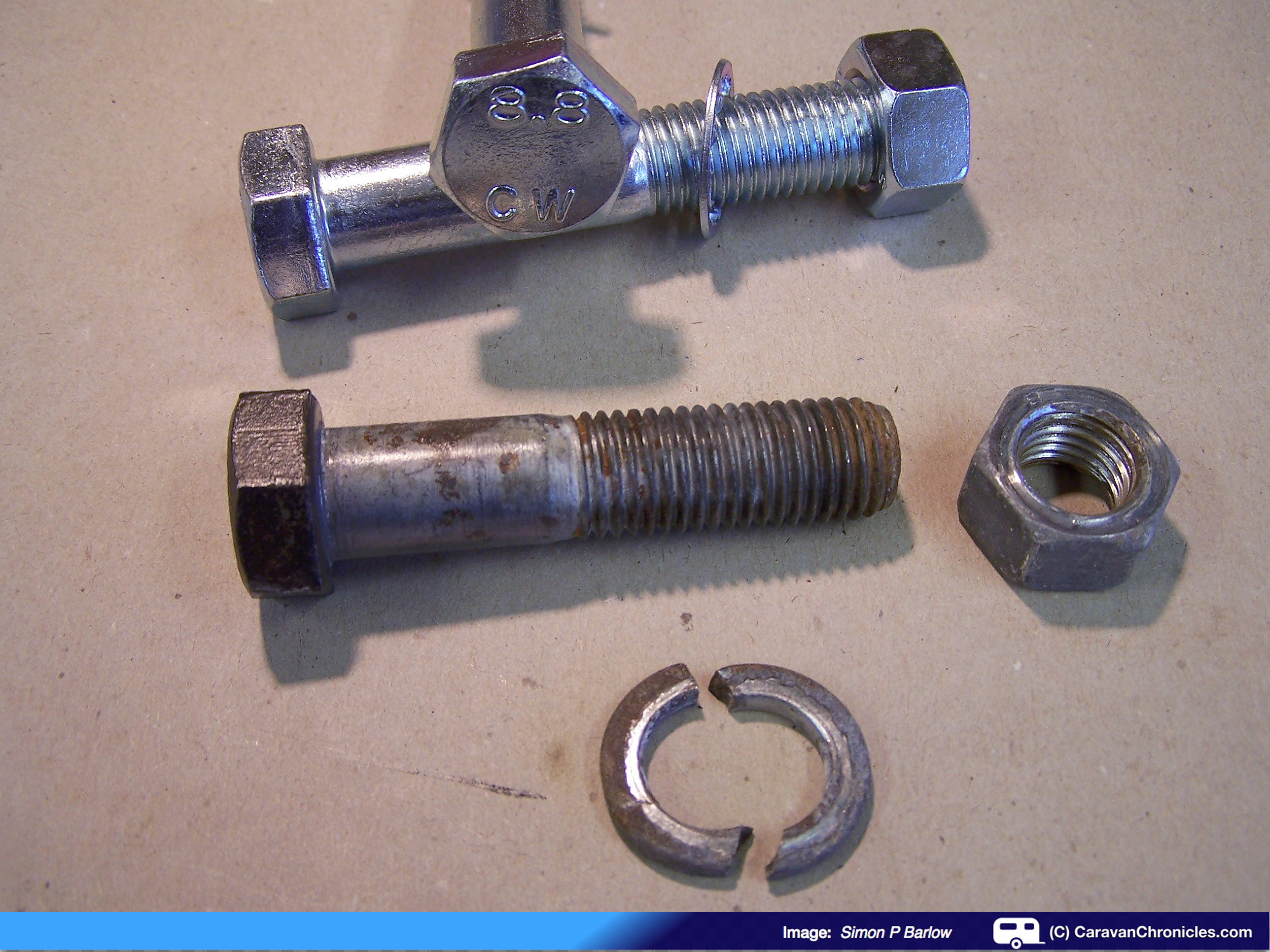
I have just replaced the bolts holding the tow ball casting on to the tow bar frame. When slackening off one of the old bolts, the split washer that I’d noticed a crack in yesterday fell to the floor in two pieces.
Click on image to enlarge
I checked in my “machinist’s handbook” for the correct bolts to select. The original bolts were M16. As the original bolts were only 60 MM, I wanted to make sure the shank of the new bolts passed through as much of the holes as possible leaving the shortest amount of thread in the hole. The correct bolts were 90mm, M16 x 2 8.8 High Tensile. You can see the difference in the new and old bolts in the photo above, along with the old split washer that fell off. I also checked on the correct washer for the application, and again referring to my machinist’s handbook as I would be tightening to the maximum torque of 214 Nm (76KN) it recommended using star washers.
Job done. All I have to do now is check the torque after about 25 to 50 miles of towing once the star washers have bedded in a little.
Only a few days to wait as we are off to Troutbeck Head CC site in a few days time.
As promised in my previous post, here’s an update on the recent lighting upgrade and details of a problem we had with our Flojet water pump while away.
First the lighting upgrades. You may remember in my “Let there be light… or at least a little more light…” post I wanted to improve the light above the cooker area as it was a bit dark peering into the bottom of saucepans on the hob. I swopped out the single 12 volt 8 watt fluorescent unit for a double 8 watt fitting and installed an identical one above the hob area.
Good even bright light over the sink/prep area and the cooktop
Well it was a great success! My alter ego “One Hairy Caravanner” does not have any excuses for not being able to see right into the bottom of every pan! Having the advantage of being able to switch between one or two tubes above the sink/prep area and the hob area is great too.
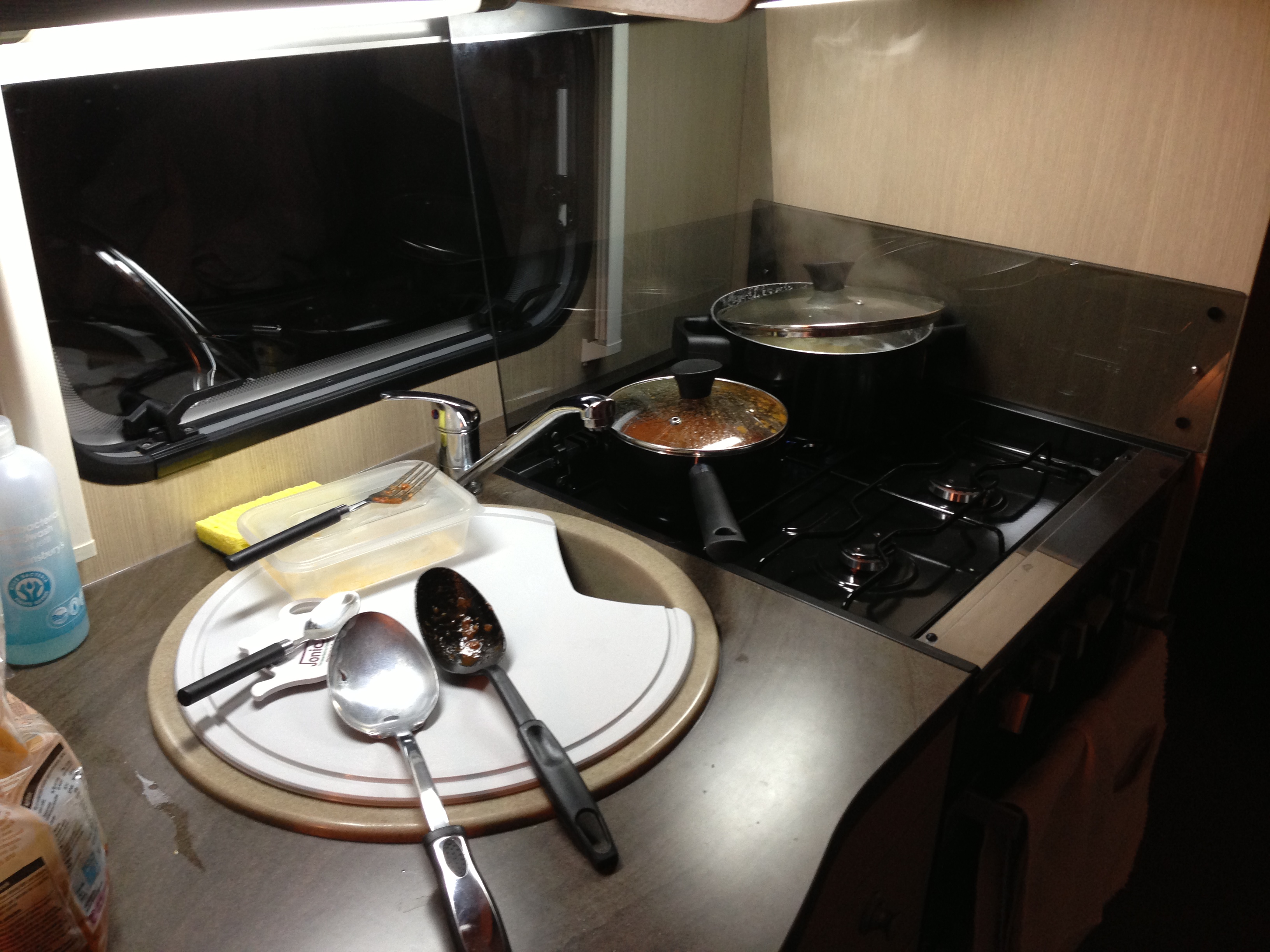
The light output from the two fittings was even and well diffused although the colour temperature was a little cool, which is fine for task lighting in the kitchen. Once the prep is done, it’s easy to just switch from two tubes to one therefore reducing the power being consumed which is important if you are running on battery alone. All in all, for us a simple little project well worth doing.
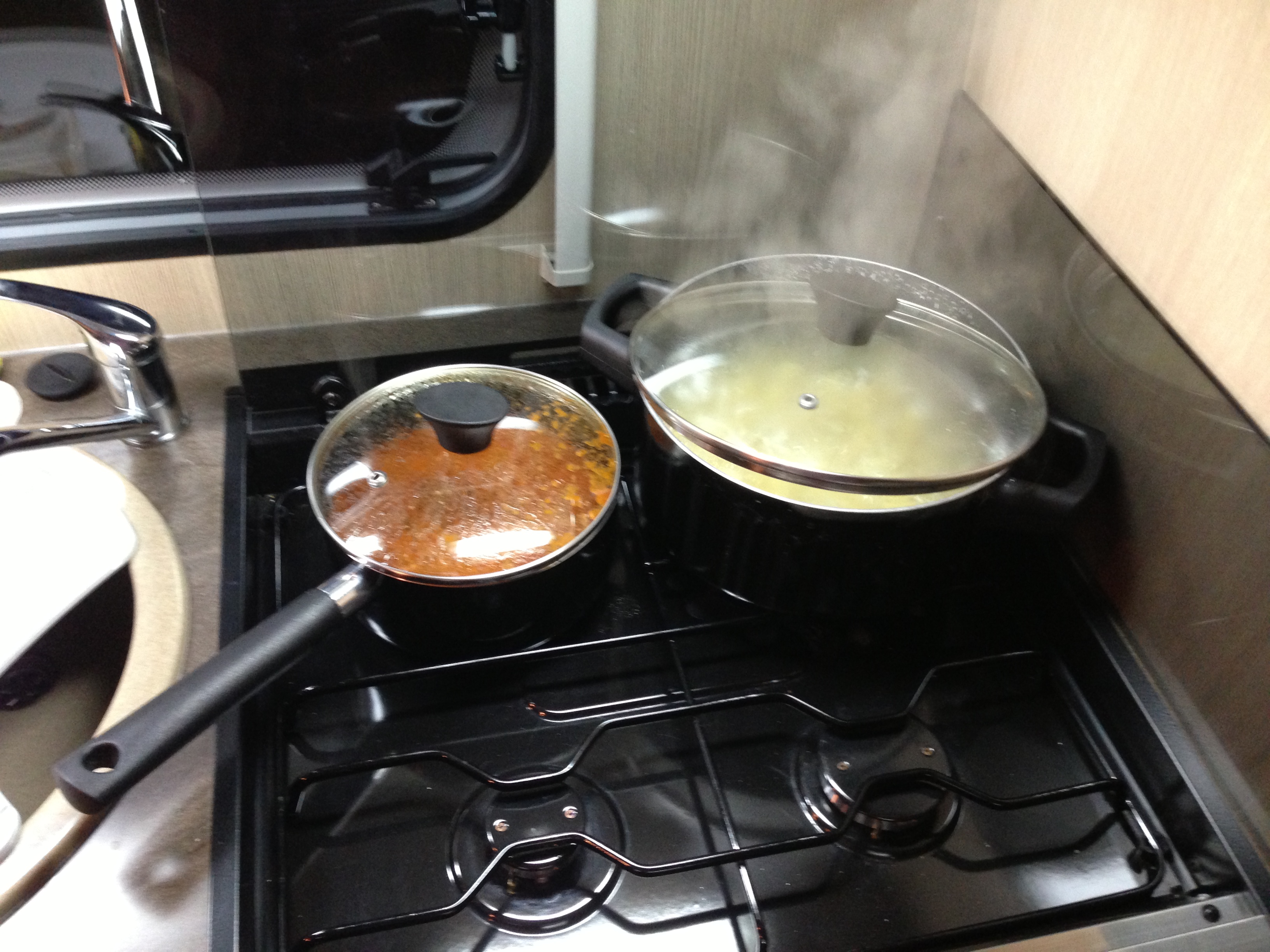
No more cooking in the darkness! Again bright diffused task lighting right above the cooking area. (That’s OHC’s Spicy Tuna Pasta cooking by the way)
The other light I installed just above the heating and water heater controls works well too (“Let there be light… part two”). It was now so much easier just to flip a switch to clearly see the controls and as we store the drinks bottles in the recess… we could check on the contents so much more easily! It’s also handy when coming back to the caravan in the dark. Switching on the light from the doorway provides adequate illumination to enter the caravan to turn the main lights on.
Something else we need to update you on as well is our recent purchase of Jonic bedding. After our initial problem (“Things that make you go Hmm…”) we received a replacement mattress cover and two replacement bottom sheets. Not wanting to wash the sheets first in case we needed to return them, we took one of the sheets with us to check to see if it would fit. We compared the corner seam on the Jonic sheet we had fitted against one of the replacement sheets. There was an obvious difference. The replacement sheet corner seam was about three inches longer which ment the fitted sheet would wrap nicely under the mattress. So a huge 10/10 for Jonic’s customer service! We also have to report that the 10+5 duvet, even though light in weight, kept us warm even when the outside temp was down to 1 or 2 degrees at night.
The only other update was about the little device I made in “A little winter warmer…” the inside cover for the bathroom roof vent. Well I am happy to report that too was a success. We were only using the electric towel rail to maintain the temp bathroom once we had used the blown heating system in conjunction with the electric towel rail to get the bathroom to a comfortable temperature despite the outside temperature being only 1 or 2 degrees at night.
OK… now to the problem!
The problem we had on the last trip was to do with the Flojet water pump. When we turned any of the taps on, there was a delay in the pump kicking in.
How it should work
As it is a pressure water system, the pump should run to pressurise all the water in the pipes. Once a certain pressure is reached, the pump switches off. Now turn a tap on and as the water starts to flow through the tap, the pressure in the pipes drops and this drop should trigger the pressure switch to turn on the water pump, maintaining an even flow until the tap is turned off again, when the pump will continue to run until its pre set pressure is reached and it shuts off.
What was actually happening
When we turned a tap on, initially water would flow then reduce to a tiny trickle and stop within a couple of seconds. It would then take 15 or 20 seconds for the pump to start and water would flow again. Turn the tap off and the pump would continue to run until the system was back up to pressure and the pressure switch shut the pump down.
I suspected that the pressure switch was at fault, but not having the paperwork with me for the pump and it still being inside the two-year warranty period, I didn’t want to go poking around while on site. When we returned, a quick posting on “Swift Talk” forum soon got a reply from Swift’s Ash Dhir who posted a link to a page that gave me the info to solve the problem. A couple of other people also posted that they had similar problems and Ash’s info worked for them… and someone else also provided a helpful bit of advice regarding the pressure release valve on the water heater. If you want to know more… sign up to Swift Talk!
So now I have the fix, I’ll be toddling off to the van in the next day or so to do a spot of screw turning. I’ll let you know how I got on.
To help keep the dreaded damp at bay, caravan manufacturers make sure that there is always a good airflow through the caravan. In floor cupboards where there is any gas appliances installed, there have to be “gas drops” that allow any leaking gas to escape through the floor, they also install under floor vents in other lockers to encourage a flow of air to reduce any chances of condensation. Now it’s not much good if the vents are only in the floor, there has to be something at roof level as well.
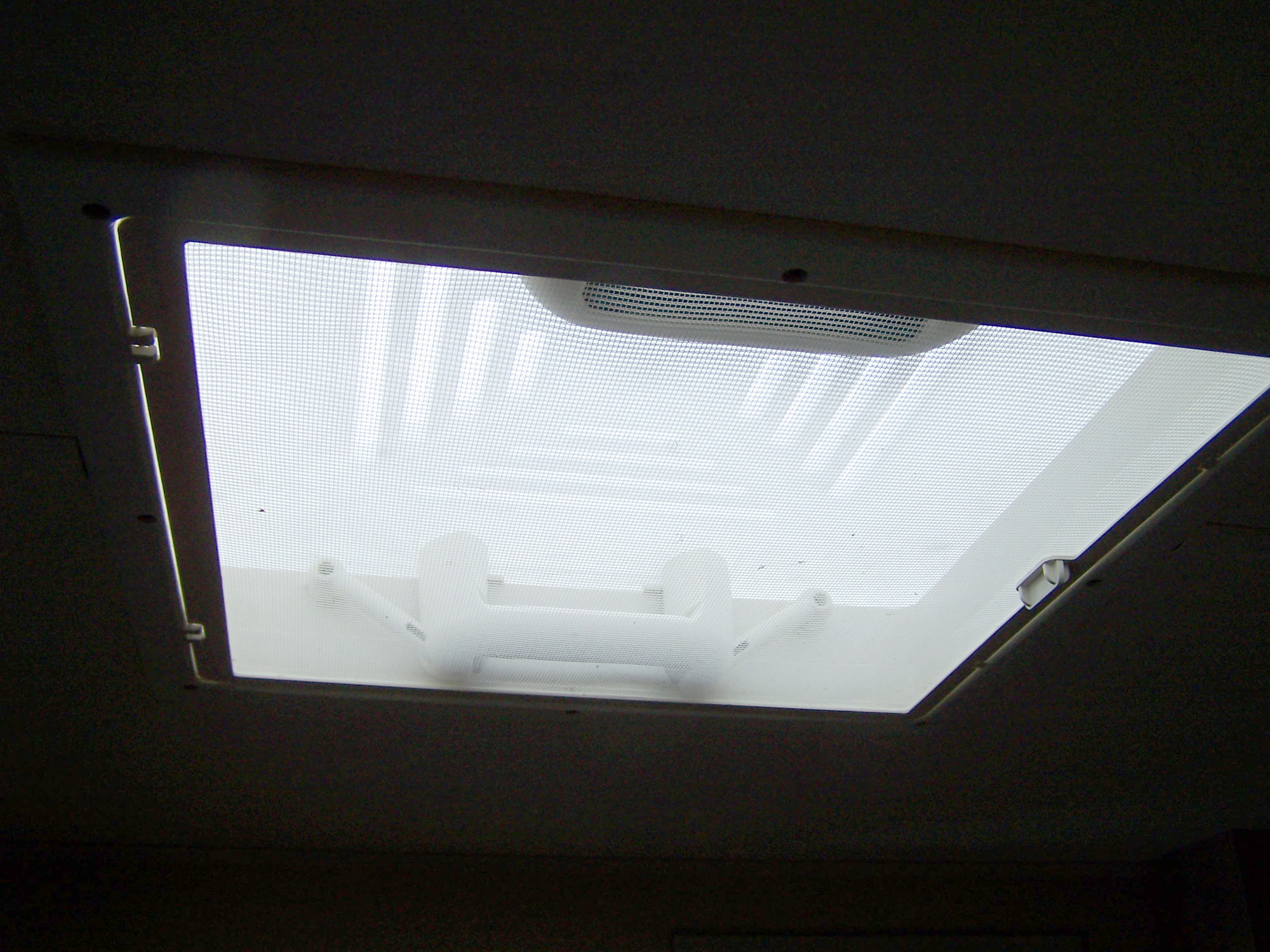
A roof light with permanent ventilation and fly screen built in.
The easiest way of achieving this is to use roof lights that have permanent ventilation built in. All UK built caravan will have one or two roof lights that have this feature. These vents use an effect long well-known to the little prairie dog in America. They dig a ‘U’ shaped burrow with two openings. Round one opening, they pile up the soil so it is higher than the other opening, When a gentle breeze blows across the two holes, because one opening is higher than the other it creates a pressure differential between the two and has the effect of moving the air through the burrow. This is exactly the same effect as a chimney on a fire-place. The caravan roof vents work in exactly the same manner, when a breeze blows, the pressure across the roof vent is slightly lower than the floor vents and has the effect of moving air through the caravan.
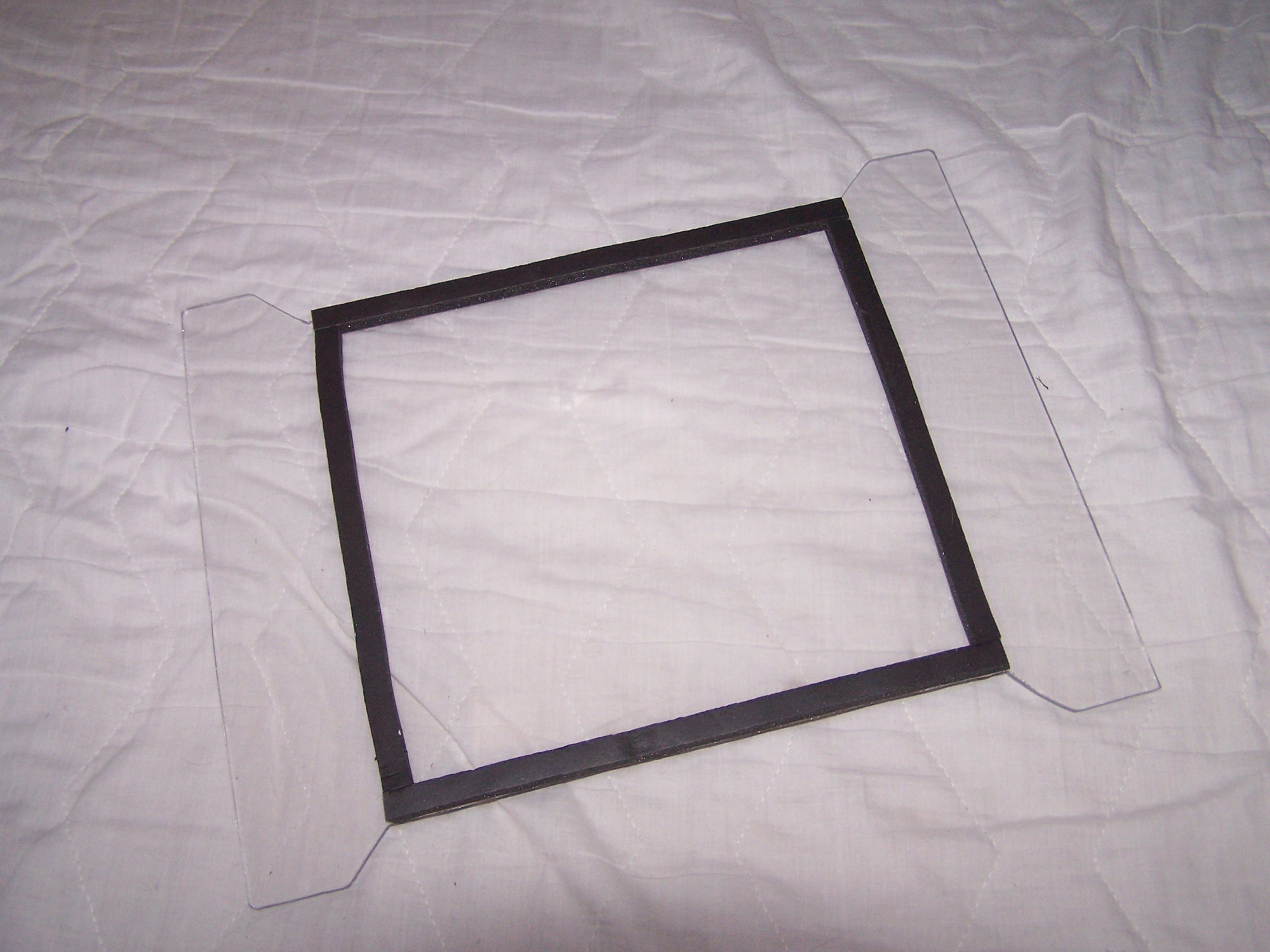
This is all good stuff and prevents stale air in the caravan and helps reduce condensation. However, at times we really don’t appreciate this, especially in winter. Our caravan has two of these vented roof lights, one in the bedroom area and the other in the rear bathroom. When we arrive on site, one of the first things we want to do is warm the van up to a temperature that is comfortable so I wanted to reduce the cold airflow through the van. I didn’t however want to block up any of the floor vents, so while cutting the plastic for the shelf fronts (see Caution contents may have moved ) I came up with this little do-hickey…..
4mm PVC sheet with a foam self adhesive sealing strip
It is cut out of 4mm thick clear acrylic sheet and to provide a seal to the top of the roof light I used a self adhesive 10mm wide foam strip available from B & Q.
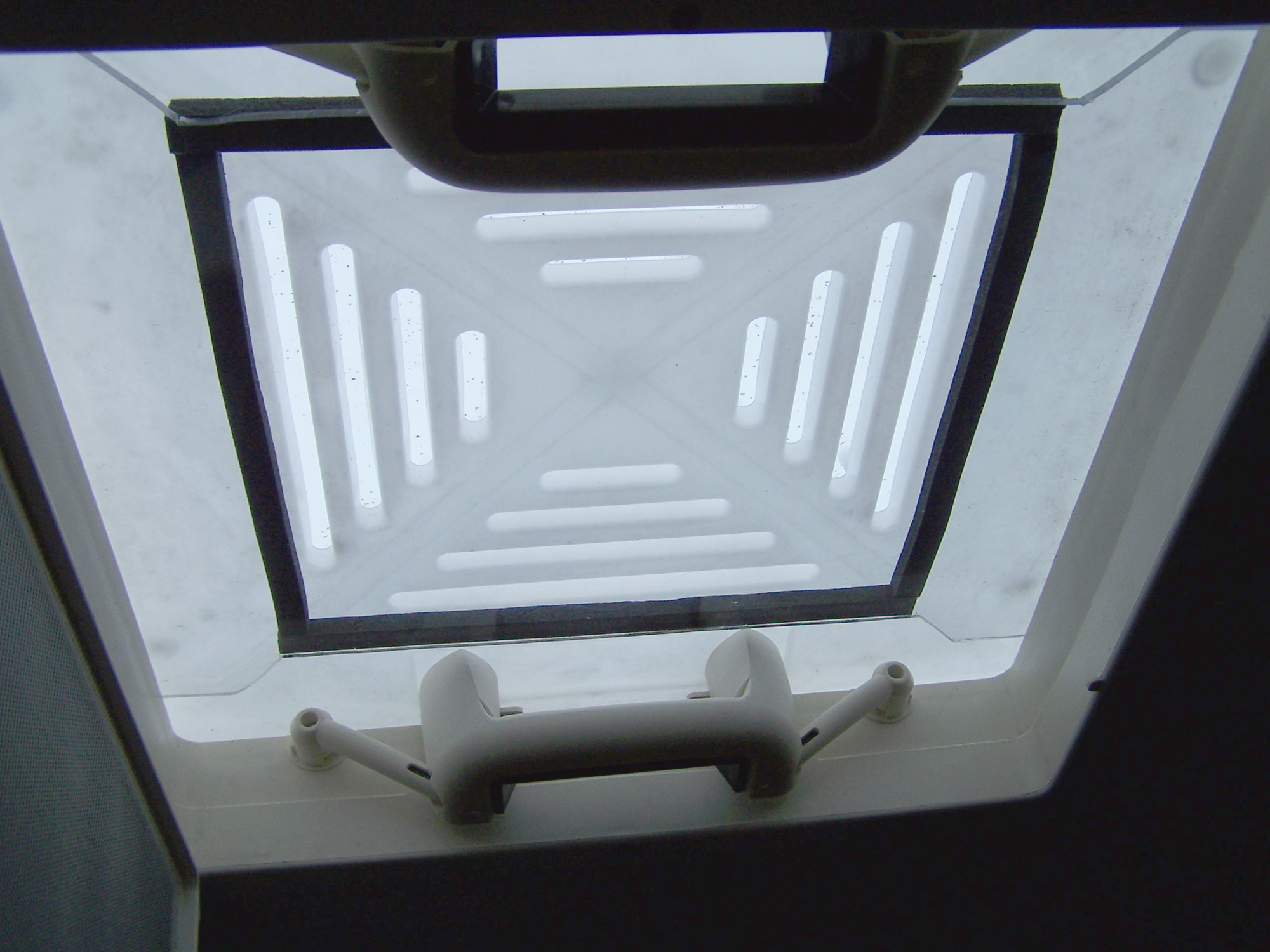
To install the do-hickey all I have to do is open the fly screen and feed one end into the gap between the frame and roof light lift it up so that the foam strip contacts the top of the roof light and slide it back slightly so the other end rests on the other side of the frame.
My do-hickey in place
In a quick test, I could warm the bathroom up to a useable temperature using just the blown air heating system in about half the time it took before in similar outside temperatures so I am hoping it will save a little on gas. I know that the electric towel rail we installed can just about keep it warm enough when its down to freezing outside, I’m hoping that this will allow it to be maintained at a slightly higher temperature in similar conditions.
I must stress though, we will only use this for warming the van up. When we have showers etc and when the van is in storage it will not be installed.
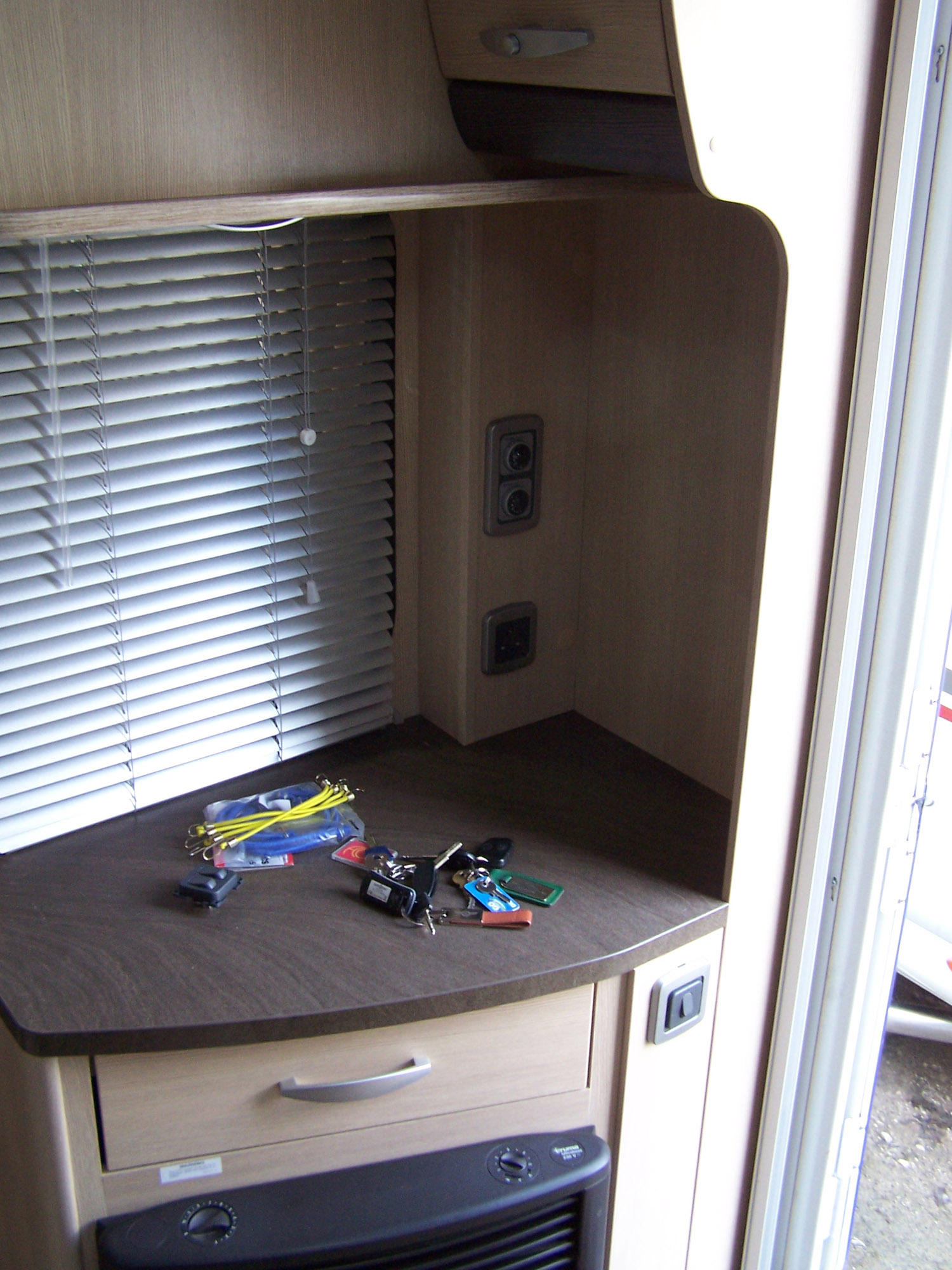
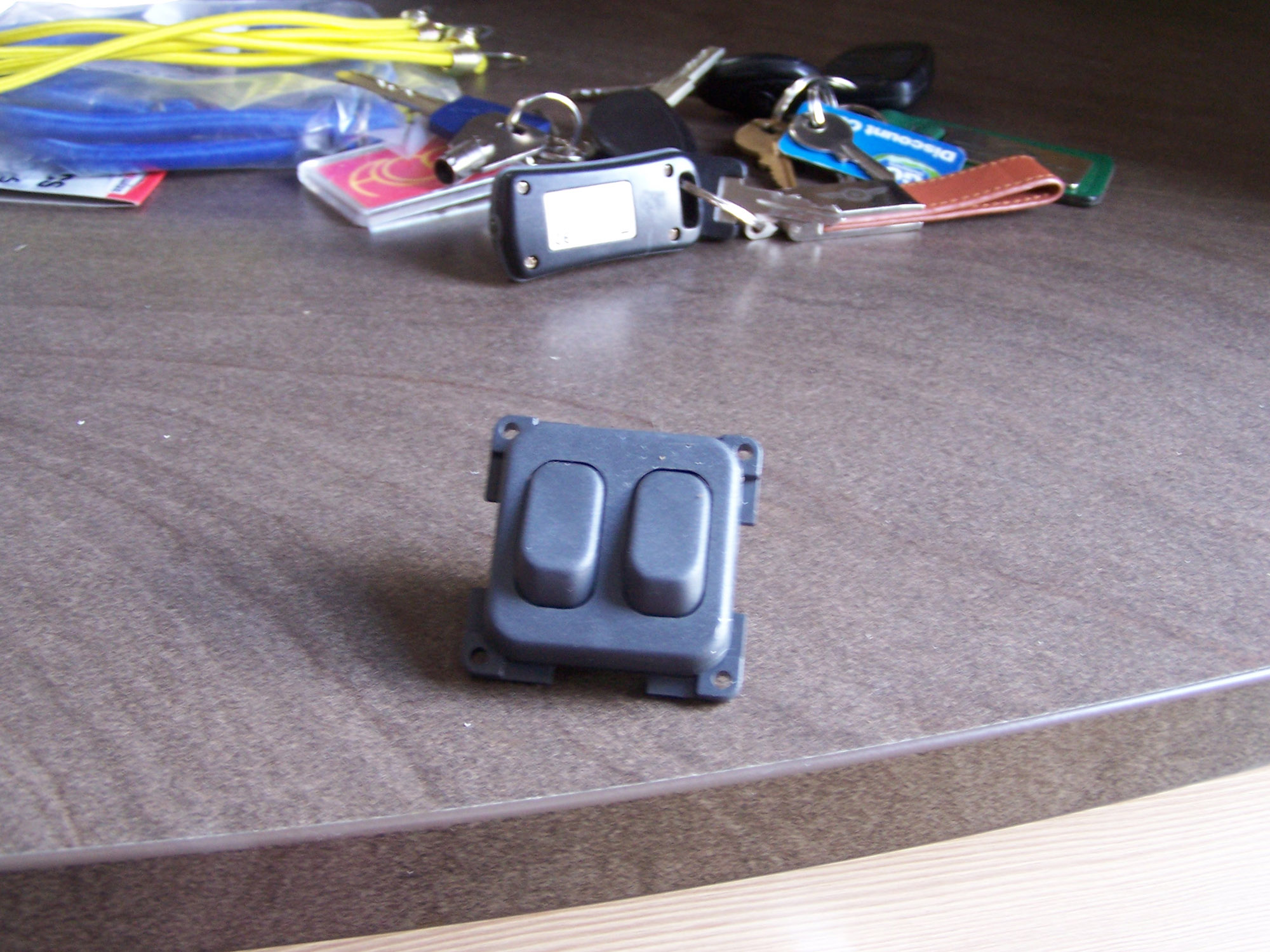
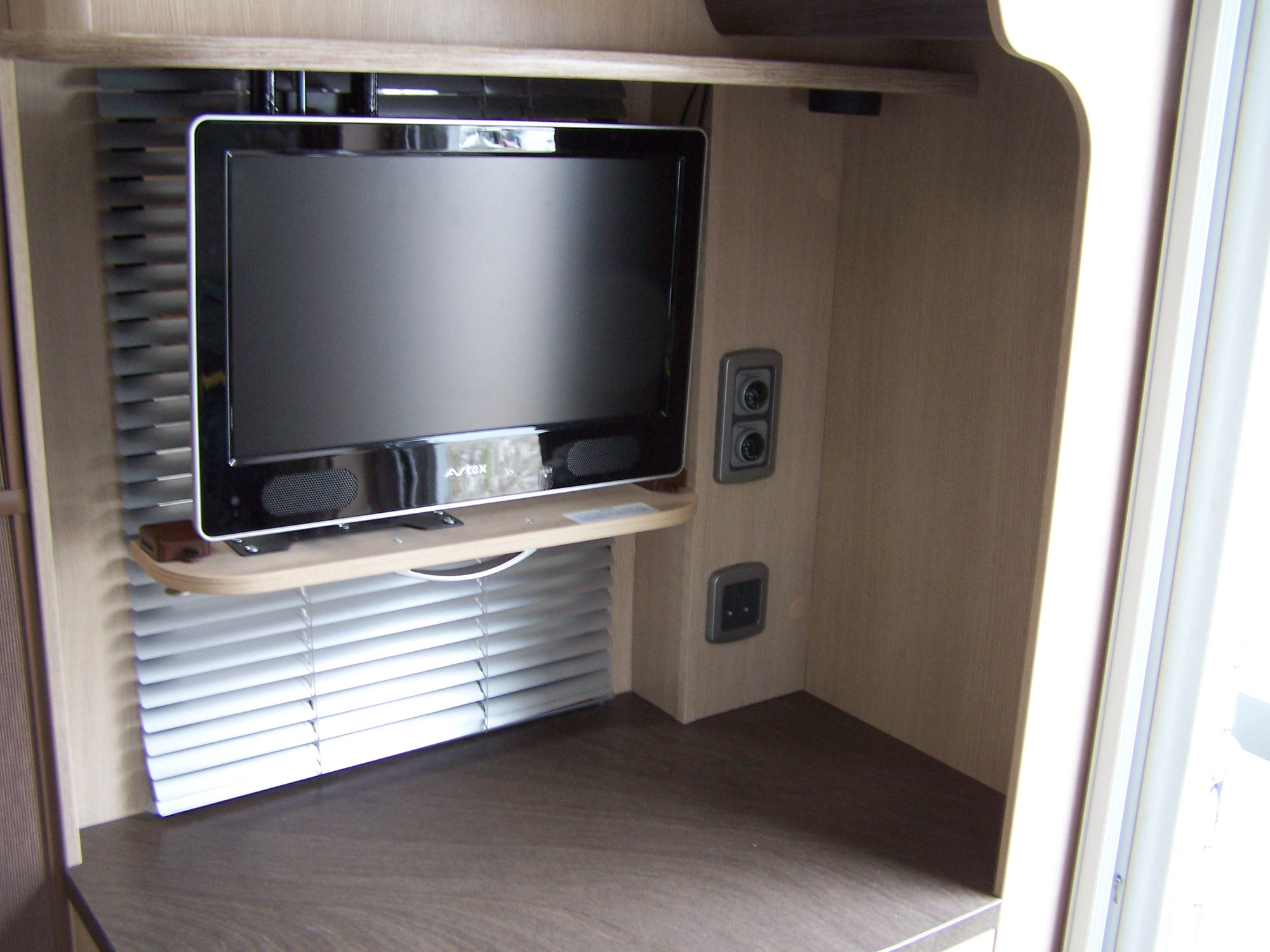
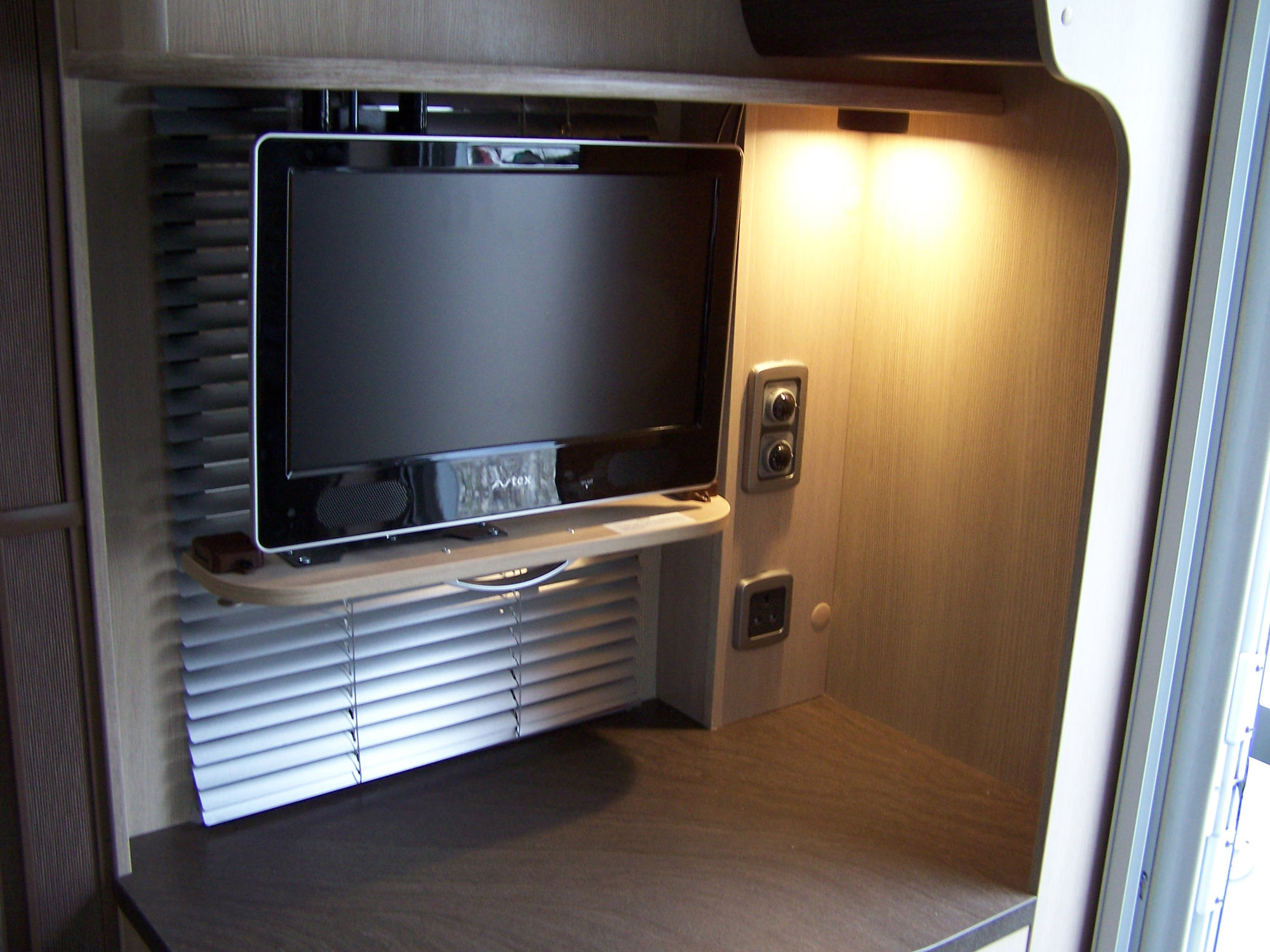
Illuminated with success installing the additional light above the cooker (see Let there be light…. or at least a bit more light!) there was another area that needed some light shed upon it. The corner adjacent to the main door of the caravan, where the drop down TV resides is, as we in the north of England call it “a bit dimpsey” ( a bit dark) This is evident when you have to get a torch out at night to see to adjust the controls for the water heater and blown air heating system. It would also be handy to be able to switch on a bit of light when entering the caravan in pitch blackness. I suspect that caravan designers don’t work at night therefore only ever see the requirement for illumination when ‘accent lights’ are needed to show off their latest feature. However, handily they had installed a light switch for the awning right next to the door so upgrading this to a twin switch would allow us to switch on the new light from outside and at least partially light the doorway while we got inside and turned on the other lighting. A bit of swift keyboard action soon had a twin switch ordered from Leisure Shop Directsoon had a replacement CBE twin switch on its way to us.
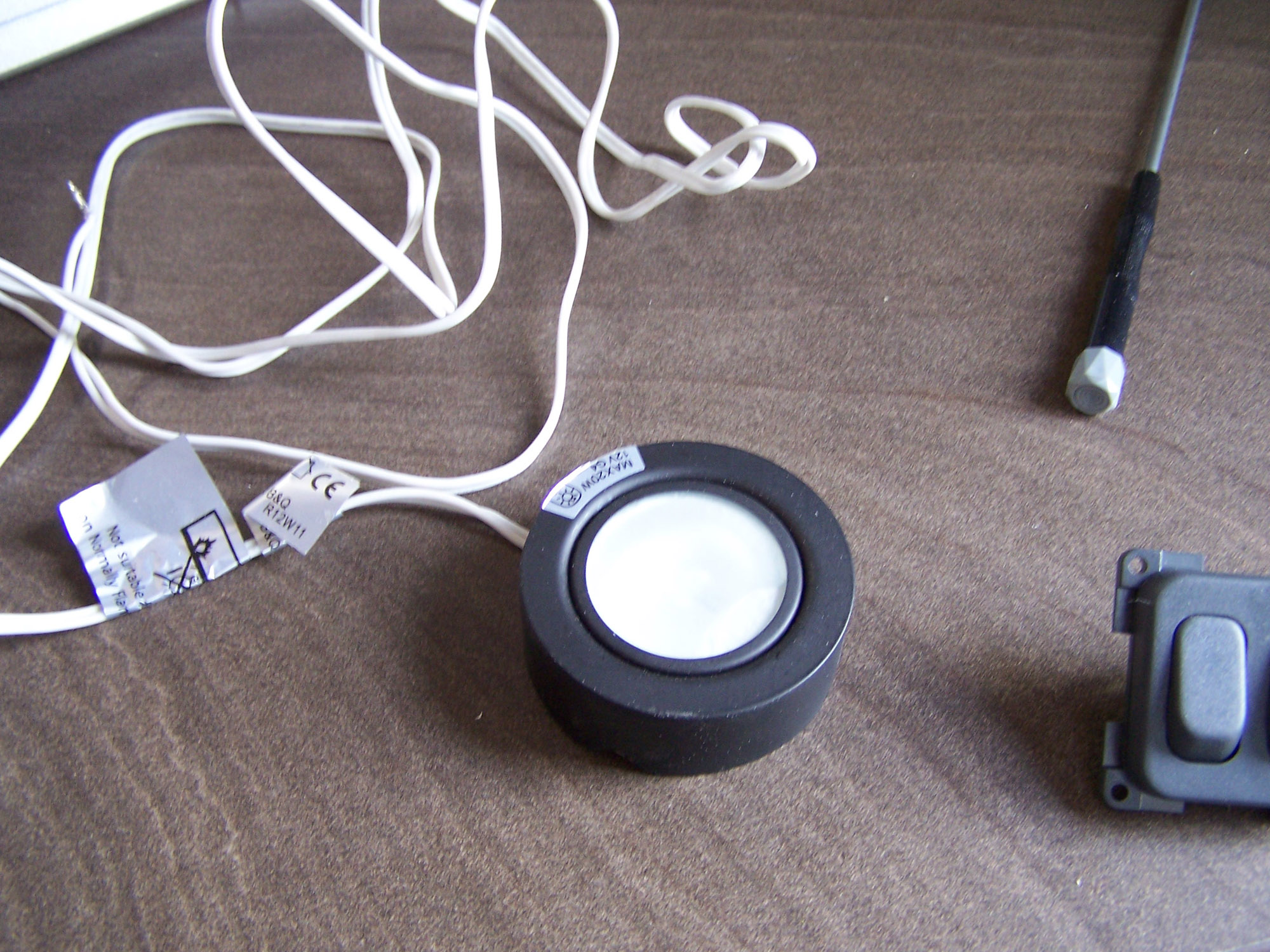
I sourced a suitable 12 volt 10 watt light from B & Q…. it’s intend to be a cabinet light run off a small transformer. The first step was to remove the existing switch from the fitting. CBE fittings are great in the fact they are so adaptable and easy to work on. A small flat blade screwdriver to pop off the front trim and remove two screws soon had the switch free to work on.
Cabinet light from B & Q
The next step was to install the light. This involved drilling a small hole for the cable to pass through into the space above the light where the cable could then be routed behind the 12 volt TV socket and Mains socket in the cupboard above. I needed to remove the existing 12 volt socket and aerial connections to get access to the duct that runs down to the cabinet that houses the heater. There are already a number of cables running down this route, so I guessed that there would be an easy way through. A large nut tied to a length of fine cord and lowered down easily found its way through and I could pull it through the switch opening. Tying the other end of the cord on to the wire from the light allowed me to pull the end of the cable through the switch opening.
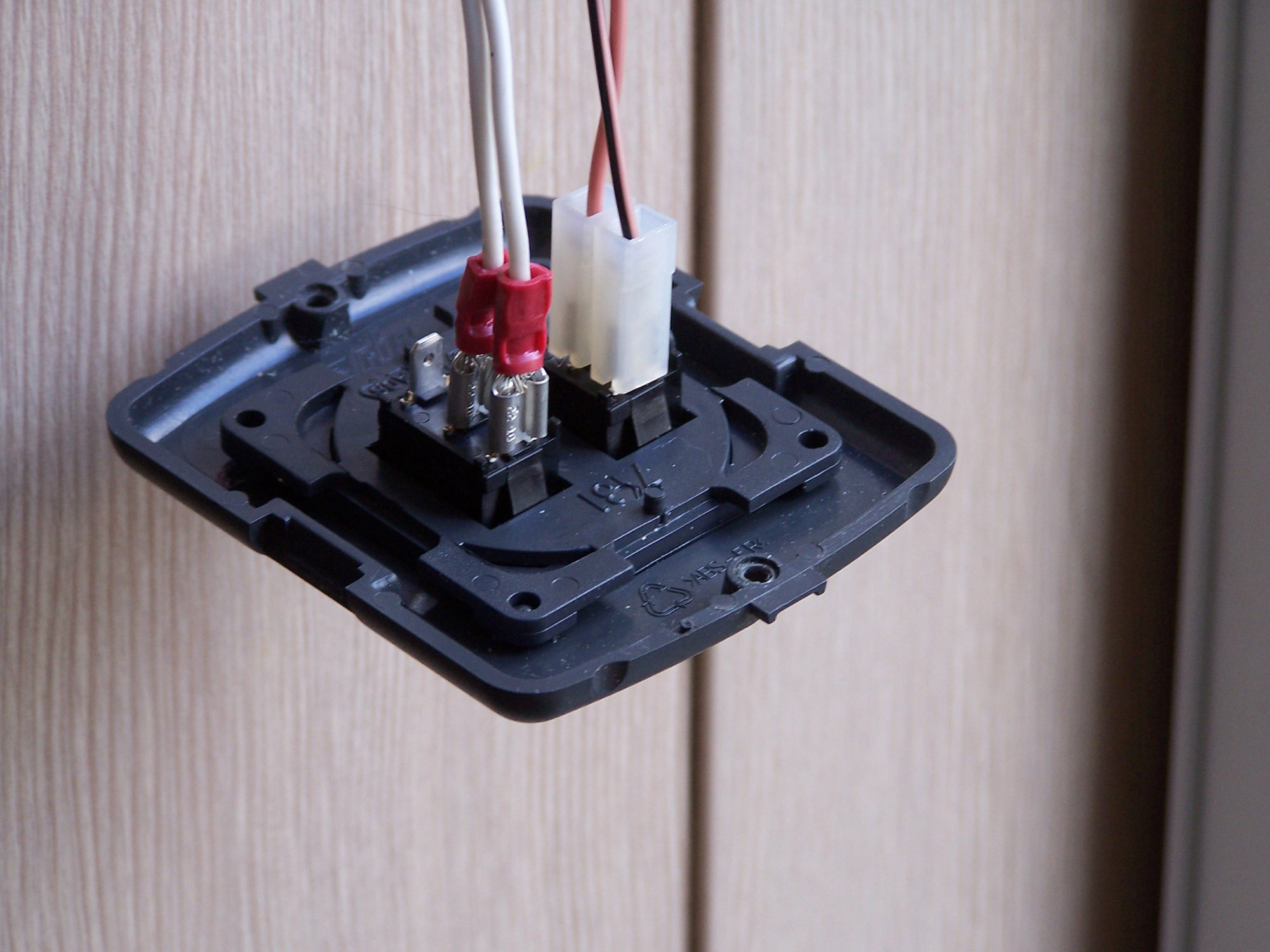
The new twin switch with the awning cables and the new light cables installed
It was a simple matter now to remove the old single switch from the mounting plate and pop in the new twin switch. I transferred the awning light wires over to the new switch. Next I crimped two spade terminals on to the wire and pushed these on the the connectors on the back of the second switch. I slid some heat shrink tube over the terminals of the new light to finish off with (not shown in photo).
Next, I now needed to pick up a 12 volt supply. As I’d just pulled the cable straight through from the light to the switch, I could break into the cable anywhere to supply power. The best place would be in the top cupboard and take a feed off the 12 volt TV socket. I used a couple of ‘piggy back’ spade connectors to make the connection and included an automotive ‘in line’ blade fuse holder with a 2 amp fuse on the positive lead. As the light was only 10 watts, the current would only be 0.8 to 0.9 amps, so a 2 amp fuse would be fine. The cable that came with the light fitting was rated at 5 amp so I don’t anticipate any safety issues. The only downside is it’s a bit of a fiddle to get to the fuse holder as you have to remove the 12 volt socket. Last job was to check everything with a multimeter before turning on the power.
Before….
After….
To complete everything only took around 45 minutes and the whole project cost under £15. So now when we come back to the caravan in the dark, we can easily turn on the awning light and an interior light before entering the caravan…. and when in the middle of the night I am prompted by an elbow in the ribs to increase or decrease the heating I can simply turn on the light without dazzling.
When I first thought of this little project, I did start looking at LED fittings to save power for when we are just running on battery. As the light is only for occasional use, the power issue is not critical. The cost of a similar LED fitting would have been around £20 to £25 (at the time of writing) however, as this fitting uses a standard “G” type bulb. I can buy a replacement LED bulb for around £6, so in the near future, it will be a simple task to replace the bulb with a LED unit and it will still be less than a similar LED fitting. My friend Peter ( “Bailey Oklahoma” for those that follow the caravanning forums) has good contacts for LED replacement ‘bulbs’ for use in caravans.




 Caravan Chronicles